
Seatbelt Myths That Have Persisted for Decades

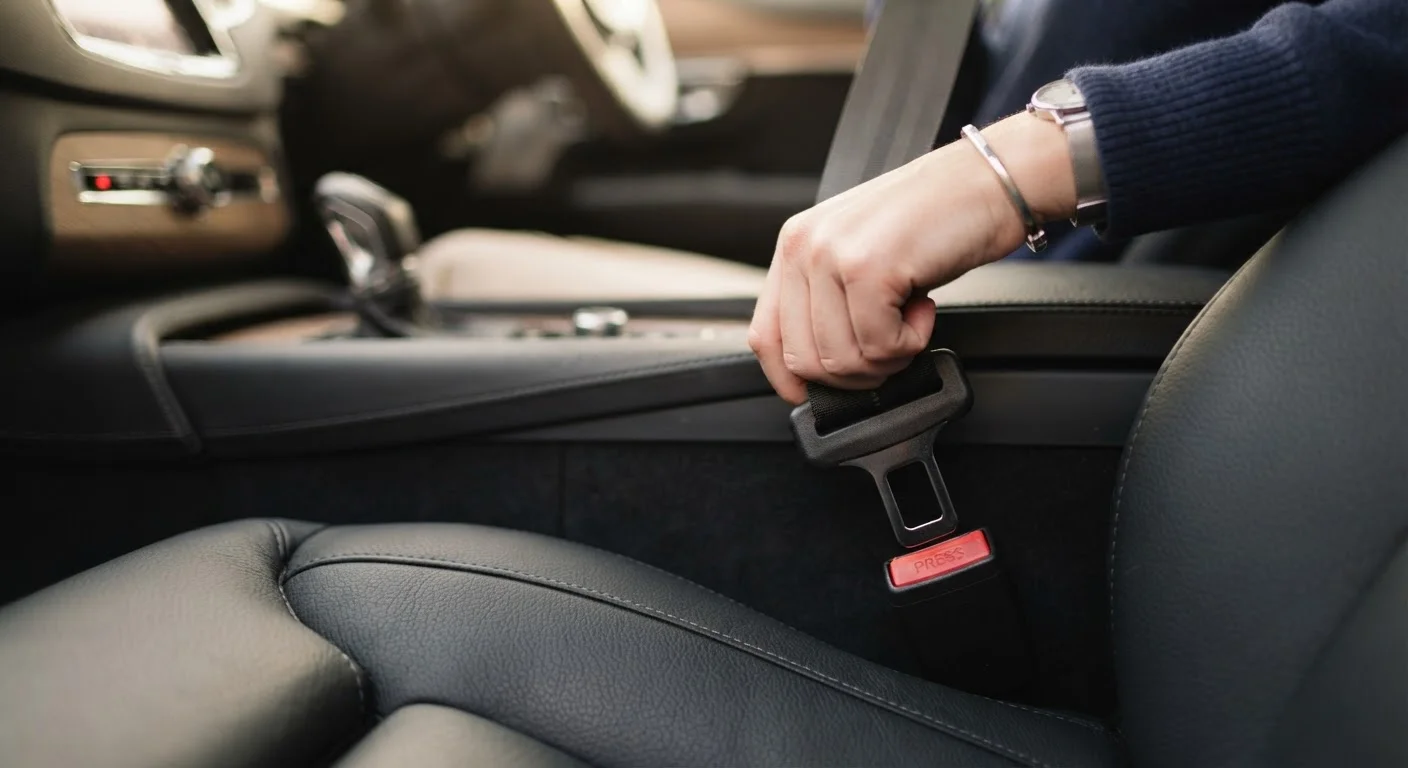
Photo: TrendingResults.net | Discover More, Trend More editorial
Key Takeaways
- Being 'thrown clear' in a crash is nearly always fatal - seatbelts keep you inside the vehicle for good reason.
- Most fatal crashes happen within 25 miles of home, making short-trip seatbelt use just as critical.
- Airbags are designed to work with seatbelts, not replace them - unbelted occupants face greater injury risk from airbag deployment.
- Seatbelts are engineered to accommodate pregnancy safely; experts recommend wearing them throughout gestation.
- Modern seatbelt pretensioners and load limiters have addressed many historical comfort and injury concerns.
Why Seatbelt Myths Persist
Decades after seatbelt laws became standard across the United States, a stubborn cluster of myths continues to influence driver behavior. Some originated from early crash experiences before modern belt engineering existed. Others spread through word-of-mouth stories that felt emotionally convincing, even when the underlying logic was flawed. Whatever their source, these misconceptions carry real consequences - according to the National Highway Traffic Safety Administration (NHTSA), seatbelts saved an estimated 14,955 lives in a single recent year, and thousands more deaths occurred among unbelted occupants who might have survived.
Understanding where these myths come from - and why the data contradicts them - is an important part of building safer habits behind the wheel. Just as drivers benefit from questioning assumptions about vehicle maintenance (see our piece on brake maintenance myths that put drivers at risk), they deserve equally clear information about occupant restraints.
Myth
If I'm in a serious crash, I'm better off being thrown clear of the vehicle.
Fact
Being ejected from a vehicle dramatically increases the likelihood of death. Staying inside a structurally intact cabin is far safer.
This myth likely stems from rare, anecdotal accounts where someone survived after being thrown from a wreck. In reality, ejection is one of the most dangerous outcomes in any crash. Ejected occupants may be struck by their own vehicle, other vehicles, or hard surfaces - with no cabin structure to absorb energy. NHTSA data consistently shows that ejected occupants are roughly three times more likely to die than those who remain inside the vehicle.
Myth
I only drive short distances, so I don't need to bother with a seatbelt.
Fact
The majority of fatal crashes occur close to home, often at low speeds and on familiar roads.
Studies by traffic safety researchers have found that a significant proportion of fatal and serious-injury crashes take place within a few miles of the driver's home. Familiarity with a route can breed inattention, and intersections near neighborhoods carry real risk. There is no crash-free distance threshold - the decision to buckle up should be automatic regardless of trip length.
Myth
Airbags will protect me, so a seatbelt is redundant.
Fact
Airbags are supplemental restraints specifically designed to work alongside seatbelts, not as standalone protection.
The term "SRS" - Supplemental Restraint System - printed on most airbag covers reflects this design intent. Without a seatbelt, an occupant can move too far forward before the airbag deploys, causing the bag to strike the face or chest with greater force than intended. Unbelted occupants can also pass under or around a deploying airbag entirely. In some configurations, an unbelted occupant is at greater risk of serious injury from airbag deployment than a belted one.
Myth
Pregnant women should avoid wearing a seatbelt to protect the baby.
Fact
Medical and safety experts consistently recommend that pregnant women wear seatbelts throughout pregnancy, with proper positioning.
The lap belt should be positioned below the belly, across the hip bones, and the shoulder belt should cross between the breasts and to the side of the abdomen - never behind the back or under the arm. Skipping the belt entirely exposes both the mother and fetus to far greater risk in a collision. Crash forces transmitted to an unrestrained pregnant occupant can cause placental abruption and other severe injuries. Any concerns about individual fit or comfort should be discussed with a healthcare provider.
Myth
Seatbelts can trap you in a burning or submerged vehicle.
Fact
This scenario is statistically rare, and a seatbelt is far more likely to keep you conscious and capable of escaping than to trap you.
Fires and submersions combined account for a very small fraction of crash fatalities. Far more commonly, an unbelted occupant is rendered unconscious or killed on impact - eliminating any possibility of self-rescue. For those genuinely concerned, inexpensive seatbelt cutters and window-breaking tools are widely available and can be kept in a vehicle's center console as a precaution. Wearing a belt remains the overwhelmingly safer choice.
Myth
Older seatbelt designs were dangerous, so modern belts can't be trusted either.
Fact
Contemporary seatbelt systems include pretensioners and load limiters that significantly reduce belt-related injuries compared to early designs.
Early lap-only belts did sometimes cause abdominal injuries in severe crashes - a legitimate historical concern. Modern three-point lap-and-shoulder belts use pretensioners that remove slack instantly at impact and load limiters that control the force applied to the chest, reducing rib and sternum injuries. These engineering advances make today's belts substantially safer than their predecessors, and ongoing vehicle safety standards continue to refine restraint system performance.
What the Evidence Actually Shows
The research on seatbelt effectiveness is among the most consistent in traffic safety science. Lap-and-shoulder belts reduce the risk of death for front-seat passenger car occupants by approximately 45%, and for light-truck occupants by around 60%, according to NHTSA data. These are not marginal gains - they represent the single most impactful action an occupant can take before a vehicle moves.
~45%
Reduction in front-seat fatality risk
NHTSA estimates seatbelts reduce the risk of death for front-seat car occupants by approximately 45% in crashes.
~15,000
Lives saved by seatbelts annually
NHTSA data attributes roughly 14,955 lives saved in a single year directly to seatbelt use among vehicle occupants.
3x
Higher death risk when ejected
Occupants ejected from vehicles in crashes are approximately three times more likely to die than those who remain inside.
It is also worth noting that seatbelt protection is not limited to highway speeds. Physics does not distinguish between a 25 mph neighborhood collision and a freeway crash - the forces involved at lower speeds are still sufficient to cause serious head, chest, and abdominal injuries in unrestrained occupants. The vehicle stops; an unbelted body keeps moving until it strikes the dashboard, windshield, or another passenger.
For drivers who want to go deeper on road-safety knowledge and habit-building, the same evidence-based mindset applies across many automotive topics - including common myths about car buying that cost shoppers money.
No Seatbelt Substitutes Exist
The content on this site is provided for informational purposes only and should not be considered a substitute for professional advice. While we strive to provide accurate and up-to-date information, we make no guarantees regarding its completeness or accuracy. Always consult a qualified professional for advice specific to your circumstances before making any decisions.