
Conventional vs. Synthetic Motor Oil: What the Difference Actually Means for Your Engine

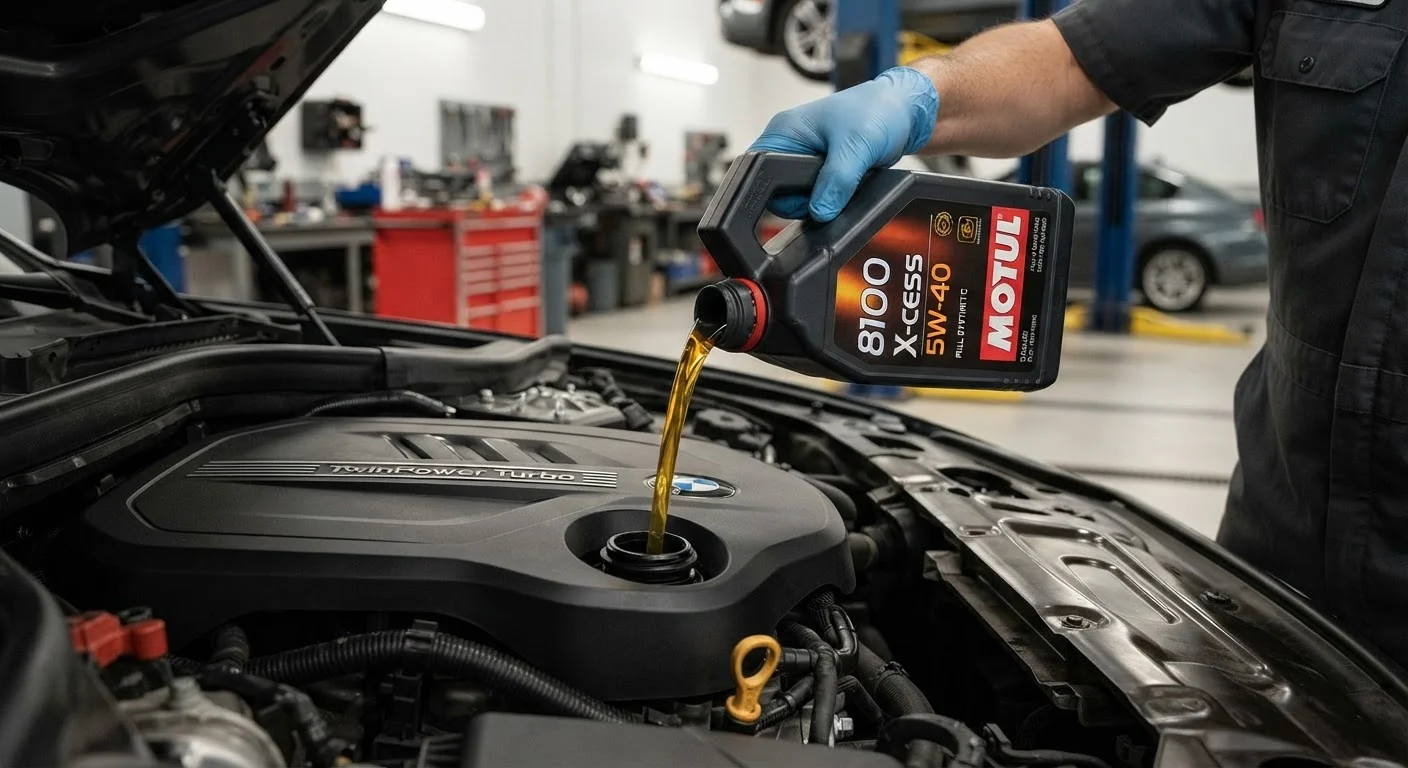
Photo: TrendingResults.net | Discover More, Trend More editorial
Key Takeaways
- Conventional oil is refined from crude oil; synthetic is chemically engineered for more uniform molecular structure.
- Synthetic oil generally lasts longer between changes - often 7,500 to 10,000+ miles versus 3,000-5,000 for conventional.
- Your owner's manual is the definitive authority on which oil type your engine actually requires.
- Switching to synthetic in an older engine is usually safe, but consult a mechanic if the vehicle has high mileage or known seal issues.
- Higher upfront cost of synthetic can be partially offset by fewer oil changes over time.
Where These Oils Come From
Both conventional and synthetic motor oils start with a base oil, but how that base is produced makes all the difference. Conventional oil is refined directly from crude petroleum. During refining, impurities are removed, but the result is still a mix of hydrocarbon molecules of varying sizes and shapes - which affects how consistently the oil performs under stress.
Synthetic oil, by contrast, is chemically synthesized - often starting from crude oil compounds but then broken down and rebuilt at the molecular level. This process creates a much more uniform molecular structure, which translates into more predictable, stable performance across a wide range of temperatures and conditions. Full synthetic oil is entirely engineered this way; synthetic blend oils mix both conventional and synthetic base stocks as a middle-ground option.
How They Perform Inside Your Engine
Motor oil has one fundamental job: reduce friction between moving metal parts while carrying heat and contaminants away from critical engine components. Both oil types accomplish this, but they do so with different levels of efficiency and durability.
Conventional oil performs adequately under normal operating conditions but can thicken in cold weather (making cold starts harder on your engine) and break down more quickly under sustained high heat. Synthetic oil maintains a more stable viscosity - that is, its resistance to flow - across a broader temperature range. On a frigid morning, synthetic circulates through the engine faster, reducing the critical seconds when metal parts are running with minimal lubrication.
| Criterion | Conventional Oil | Synthetic Oil |
|---|---|---|
| Base source | Refined crude petroleum | Chemically engineered base stocks |
| Molecular consistency | Variable molecular sizes | Uniform molecular structure |
| Typical change interval | 3,000-5,000 miles | 7,500-15,000 miles |
| Cold-weather performance | Thickens more in cold temps | Flows readily in cold temps |
| High-heat stability | Breaks down faster under heat | Resists breakdown better |
| Cost per quart | Lower upfront cost | Higher upfront cost |
| Best engine match | Older, simpler engines | Modern, turbocharged engines |
Turbocharged engines are a clear example of where this matters most. Turbochargers spin at extremely high RPMs and generate intense heat. When you shut off a turbocharged engine, oil can linger in the hot turbo housing and begin to break down - a process called coking. Synthetic oil resists this breakdown far better than conventional, which is why most turbocharged vehicles from the factory specify full synthetic.
To understand what happens when oil protection fails entirely, see our guide to what skipping oil changes does to your engine.
Change Intervals, Cost, and Practical Trade-Offs
The most common consumer question is simple: is synthetic worth the extra money? The honest answer depends on your vehicle and driving habits.
2-4x
Longer interval: synthetic vs. conventional
Industry guidance generally places full synthetic change intervals at two to four times longer than conventional, depending on vehicle and driving conditions.
~$70-$100
Typical full synthetic oil change cost
Costs vary by region, vehicle, and service provider; conventional oil changes typically run $35-$55, though prices fluctuate.
0W-20
Common factory-spec viscosity for newer engines
Many late-model vehicles specify thinner, low-viscosity grades like 0W-20 that are formulated specifically for synthetic oil use.
Conventional oil change intervals are typically recommended every 3,000 to 5,000 miles, though many modern engines running conventional oil can safely go to 5,000 miles. Full synthetic intervals are commonly 7,500 to 10,000 miles, with some manufacturers and oil types supporting up to 15,000 miles under normal conditions. Fewer changes per year can offset the higher per-quart cost of synthetic - though the math varies by vehicle, oil brand, and local labor rates.
There is also a compatibility consideration for older, high-mileage engines. Some older engines with worn seals have adapted to conventional oil over time. Switching to synthetic in these cases is generally safe but can occasionally surface pre-existing leaks that conventional oil's slightly higher viscosity was masking. If your vehicle has significant mileage or a known sealing history, a conversation with a trusted mechanic before switching is worthwhile. Our overview of DIY maintenance versus professional service can help you decide when to handle this yourself and when to get a shop involved.
Viscosity Grade Matters as Much as Oil Type
Ultimately, the single most reliable source for which oil your engine requires is your owner's manual. Manufacturers specify the oil type and viscosity grade (such as 5W-30 or 0W-20) based on how the engine was engineered. Using the specified oil - whether conventional or synthetic - is the baseline for protecting your warranty and your engine's longevity.
The content on this site is provided for informational purposes only and should not be considered a substitute for professional advice. While we strive to provide accurate and up-to-date information, we make no guarantees regarding its completeness or accuracy. Always consult a qualified professional for advice specific to your circumstances before making any decisions.