
Why Your Grocery Cart Doesn't Reflect Your Nutrition Goals

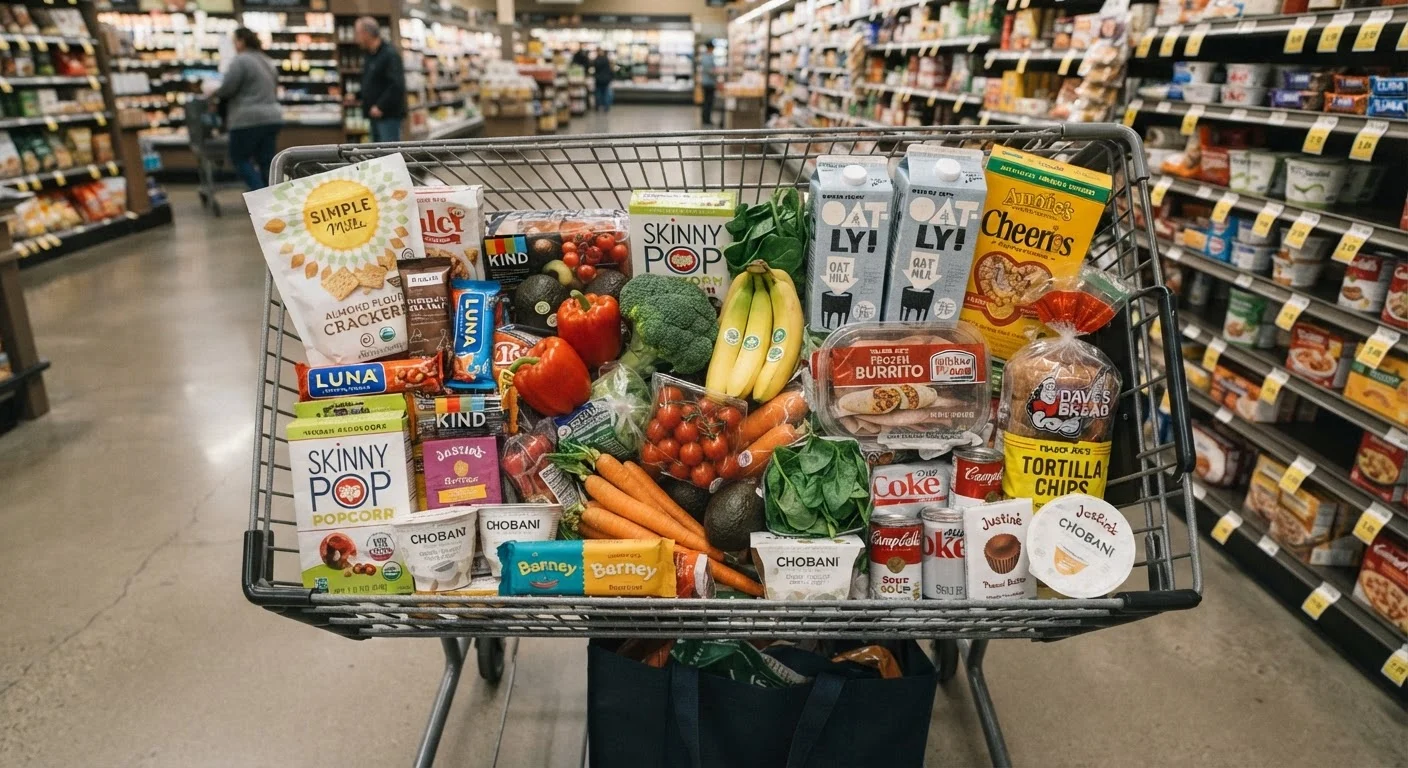
Photo: TrendingResults.net | Discover More, Trend More editorial
Key Takeaways
- Front-of-package health claims are not a reliable guide to a food's actual nutritional value.
- Shopping without a plan increases impulse purchases that drift from your nutrition intentions.
- Highly processed foods can displace whole foods even in carts belonging to health-conscious shoppers.
- Reading the full nutrition label - not just the front - is a foundational skill for informed grocery shopping.
- Small, consistent cart adjustments tend to produce more lasting dietary change than dramatic overhauls.
The Gap Between Intention and the Checkout Line
Most people who care about eating well don't struggle with knowing that vegetables matter or that excess sugar is worth limiting. The difficulty is that supermarkets are engineered environments - lighting, shelf placement, and packaging are all optimized to influence behavior. Good intentions can erode before you reach the checkout line.
Understanding why the cart drifts from your nutrition goals is more useful than generic advice to "eat more whole foods." The mistakes below are common precisely because they aren't obvious. They happen to informed, motivated shoppers - not just people who aren't paying attention.
~70%
Of U.S. grocery store space devoted to processed foods
Research published in nutrition journals consistently finds that ultraprocessed products dominate American supermarket shelf space, making intentional navigation essential.
60%+
Of calories in the average American diet from ultraprocessed foods
A study published in BMJ Open found that ultraprocessed foods accounted for more than 60% of total energy intake in U.S. adults, underscoring how store layout shapes eating patterns.
Common Mistakes That Undermine Your Cart
Each of the following patterns tends to undercut nutritional quality quietly - without feeling like a lapse in the moment. Recognizing them is the first step to correcting course.
Trusting front-of-package health claims without reading the full label.
Shopping without a list or a loose meal framework in mind.
Avoiding the store perimeter but not questioning what fills the middle aisles.
Buying "health halo" products that crowd out genuinely nutrient-dense foods.
Letting budget concerns push all whole foods out of the cart.
It's also worth noting that nutritional needs aren't static. If your household includes people at different life stages, how nutrient needs shift across life stages can inform which foods deserve priority in your cart at any given time.
Labels Can Mislead Even Careful Shoppers
Rebuilding the Cart Around What Actually Works
Fixing grocery habits doesn't require a complete overhaul on the first trip. Small, deliberate changes - reading one more label, adding one more vegetable, replacing one processed staple - compound over time into a meaningfully different pattern of eating.
If you're also thinking about how energy balance fits into your overall approach, keep in mind that food quality and calorie quantity are related but distinct considerations. A cart full of lower-quality "diet" products can satisfy calorie math while still falling short on nutrients that support long-term health.
Don't Confuse Low-Calorie With Nutritious
The goal isn't a perfect cart - it's a consistently better one. Awareness of the gaps between your nutrition goals and your shopping habits is, on its own, a meaningful starting point.
This article is for general informational and educational purposes only and is not a substitute for personalized nutrition or medical advice. Consult a qualified healthcare professional or registered dietitian for guidance specific to your health needs.
The content on this site is provided for informational purposes only and should not be considered a substitute for professional advice. While we strive to provide accurate and up-to-date information, we make no guarantees regarding its completeness or accuracy. Always consult a qualified professional for advice specific to your circumstances before making any decisions.