
What Is Compound Interest and Why Does It Matter So Much?

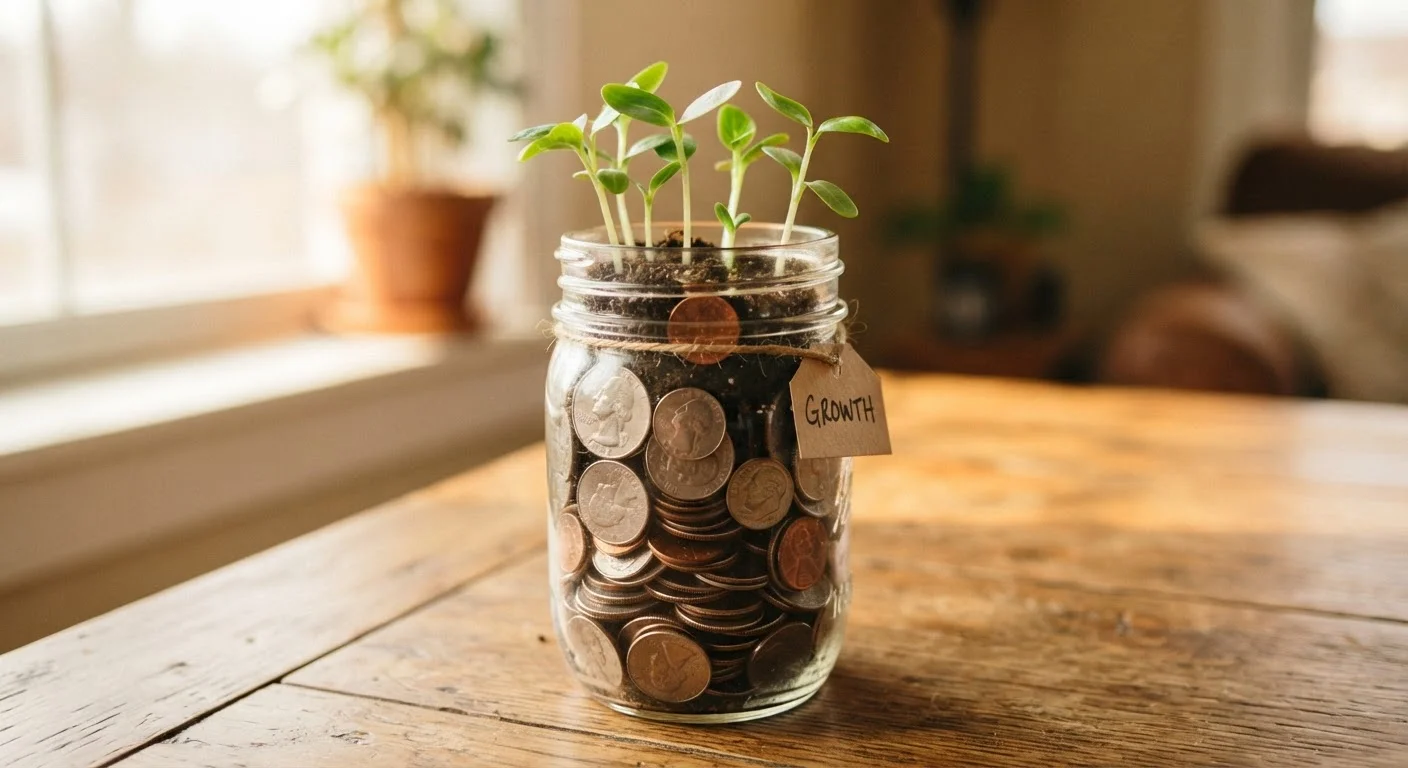
Photo: TrendingResults.net | Discover More, Trend More editorial
Key Takeaways
- Compound interest earns returns on both your principal and previously earned interest.
- The earlier you start saving, the more compounding works in your favor.
- Compounding frequency - daily vs. monthly vs. annually - affects how fast your balance grows.
- Compound interest works against you on debt, not just for you in savings.
- Time in the market or savings account generally matters more than the amount you start with.
How Compound Interest Actually Works
At its simplest, compound interest means your interest earns interest. Suppose you deposit $1,000 into a savings account with a 5% annual interest rate. After the first year, you earn $50 in interest, bringing your balance to $1,050. In year two, you don't earn interest just on $1,000 - you earn it on the full $1,050. That extra $2.50 might seem trivial, but stretch this process over decades and the difference becomes significant.
The mathematical formula behind compound interest is: A = P(1 + r/n)nt, where A is the final amount, P is the principal, r is the annual interest rate, n is how many times interest compounds per year, and t is time in years. You don't need to memorize this - the important insight is that time and compounding frequency are both powerful variables.
$74,000+
Growth of a single $5,000 deposit over 40 years
Based on a hypothetical 7% average annual return, illustrating compounding's long-run effect - past performance does not guarantee future results.
Rule of 72
Years to double money at a given rate
Divide 72 by your annual interest rate to estimate doubling time - a widely used shorthand in personal finance education.
Daily
Most common compounding frequency in savings accounts
Many U.S. savings accounts and high-yield accounts compound interest daily, credited monthly, which marginally accelerates growth over monthly compounding.
Why Starting Early Makes Such a Difference
Time is the most powerful ingredient in compound interest. A person who begins saving at 25 and stops at 35 - contributing for just 10 years - can end up with more at retirement than someone who starts at 35 and saves continuously for 30 years, assuming identical rates of return. This counterintuitive result comes entirely from giving compounding more time to work.
This is why financial educators consistently emphasize starting early over saving perfectly. You don't need to deposit a large sum to benefit - consistent, modest contributions made over time often outperform sporadic large ones. To understand which savings vehicles offer compounding benefits, see our comparison of savings accounts, CDs, and money market accounts.
“Compound interest is the eighth wonder of the world. He who understands it, earns it; he who doesn't, pays it.”
— Widely attributed to Albert Einstein, Quote commonly cited in personal finance education - original attribution is debated by historians
Compound Interest as a Double-Edged Mechanism
Compound interest isn't always working in your favor. The same mechanism that grows savings can rapidly accelerate debt. On revolving credit like credit cards, interest is typically calculated daily on your outstanding balance. When you carry a balance month to month, that accrued interest gets added to what you owe - and future interest is then calculated on that larger total.
This is why a credit card balance of $3,000 at a high interest rate can feel nearly impossible to pay down with minimum payments alone. For a closer look at how this works, our article on how interest compounds on revolving debt breaks down the mechanics in detail.
Understanding compounding on both sides of the ledger helps you make more informed decisions - maximizing it as a savings tool while minimizing its impact when carrying debt.
Making Compound Interest Work for You
There are a few practical ways to put compounding to work. First, prioritize accounts that compound frequently - daily compounding is generally more favorable than annual compounding. Second, reinvest any earnings rather than withdrawing them; every dollar you take out is a dollar that stops compounding. Third, be consistent: regular deposits, even small ones, keep adding to the base that interest is calculated on.
If you're newer to saving, common missteps that trip up new savers are worth reviewing before you get started. And for those looking at higher-earning options, high-yield savings accounts can amplify compounding by offering better rates - though conditions apply. Building long-term saving habits alongside an understanding of compound interest is one of the most durable financial strategies available to everyday Americans.
This article is for general informational and educational purposes only and does not constitute personalized financial or investment advice. Consult a qualified financial professional regarding decisions specific to your circumstances.
Frequently Asked Questions
The content on this site is provided for informational purposes only and should not be considered a substitute for professional advice. While we strive to provide accurate and up-to-date information, we make no guarantees regarding its completeness or accuracy. Always consult a qualified professional for advice specific to your circumstances before making any decisions.