
The Phone Battery Myths Most People Still Believe

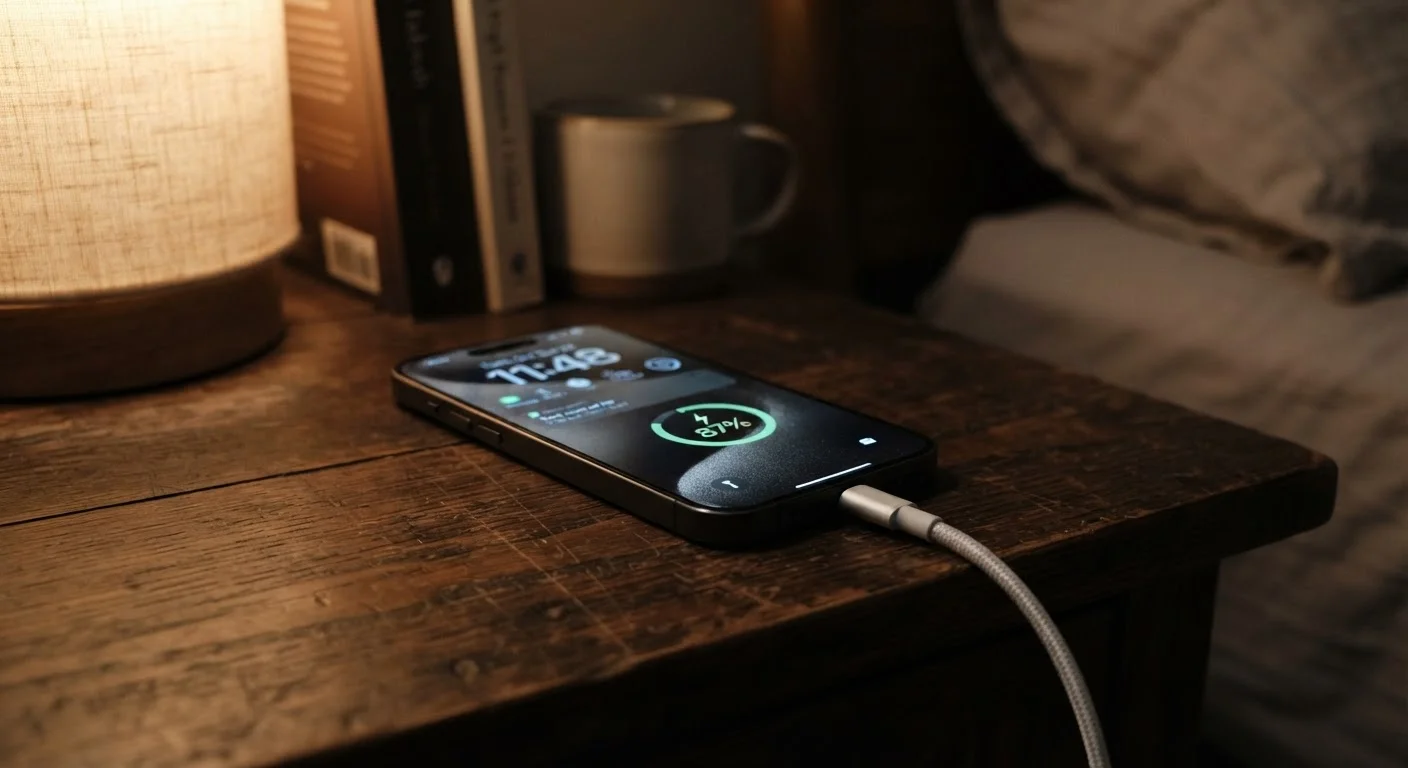
Photo: TrendingResults.net | Discover More, Trend More editorial
Key Takeaways
- Modern lithium-ion batteries do not need to be fully drained before recharging.
- Overnight charging is generally safe on modern smartphones with built-in charge management.
- Keeping your battery between 20% and 80% extends its long-term health more than full cycles.
- Heat - not charging habits - is the single biggest threat to battery longevity.
- Third-party chargers are not automatically damaging, but quality and certification matter.
Why Battery Myths Persist
Most phone battery advice circulating online traces back to a real but obsolete technology: nickel-cadmium (NiCd) batteries, which powered devices in the 1980s and 1990s. Those batteries genuinely suffered from a "memory effect" that required periodic full discharge cycles to maintain capacity. Smartphones today use lithium-ion (Li-ion) or lithium-polymer (LiPo) chemistry - fundamentally different technologies that respond poorly to the same treatment.
The result is a generation of well-meaning but counterproductive habits. Understanding what actually governs Li-ion battery health lets you make smarter decisions - both in how you use your current phone and in evaluating a device's long-term value before you buy it.
Myth
You should drain your phone battery to 0% before charging it to preserve battery health.
Fact
Full discharge cycles stress lithium-ion cells. Partial, frequent top-ups are actually better for longevity.
This advice was valid for nickel-cadmium batteries but is actively harmful for lithium-ion chemistry. Li-ion cells experience measurable stress at the bottom of their charge curve. Repeatedly running to 0% accelerates capacity fade. Battery researchers refer to the ideal operating window as roughly 20%-80% state of charge, where chemical strain is minimized.
Myth
Leaving your phone plugged in overnight ruins the battery by overcharging it.
Fact
Modern smartphones stop actively charging once full; software-managed trickle and pause cycles prevent overcharge damage.
Lithium-ion batteries cannot absorb charge indefinitely - the charge controller hardware cuts power when the cell reaches capacity. Many current operating systems add an additional layer called optimized or adaptive charging, which learns your routine and delays the final charge increment until just before you typically wake up, reducing the time spent at 100%.
Myth
Third-party chargers always damage your battery and void your warranty.
Fact
Charger quality and certification matter far more than brand origin; many third-party chargers are engineered to the same protocols as original equipment.
A charger that implements USB Power Delivery (USB-PD) or the manufacturer's licensed fast-charge protocol correctly is functionally equivalent to the original. The risk with cheap, uncertified chargers is not brand identity but the potential absence of the safety circuitry - such as overvoltage protection - that prevents power irregularities from reaching the battery. Look for recognized safety certification marks rather than dismissing all non-OEM accessories outright.
Myth
Closing background apps constantly improves battery life significantly.
Fact
Force-closing apps can actually increase battery consumption because relaunching an app from scratch uses more power than resuming a cached one.
Mobile operating systems are designed to manage memory and background processes automatically. When you force-close an app, the system has to reload it entirely on next launch - a CPU-intensive process. Background apps in a suspended state consume negligible power. The habit of constant force-closing is more effort than it is worth and may produce the opposite of the intended effect.
Myth
Fast charging is bad for your battery and you should always use slow charging to protect it.
Fact
Fast charging generates more heat during the charging session, but modern charge controllers limit fast-charge protocols to safe temperature and voltage ranges.
The marginal impact of occasional fast charging on long-term capacity is small when the phone's thermal management is functioning normally. The more significant variable is heat - if your device gets very hot during fast charging, that heat (not the speed itself) is what accelerates degradation. For overnight or non-urgent charging, a standard-speed charger does produce slightly less heat and is a reasonable choice, but habitual fast charging is not the battery emergency many people believe it to be.
What Actually Damages Your Battery
Across all the myths below, one pattern emerges: the real enemies of lithium-ion batteries are heat and extreme charge states - not the everyday charging habits most people worry about.
~500
Typical Li-ion full charge cycles before noticeable capacity loss
Battery manufacturers generally rate lithium-ion cells at 300-500 full charge cycles to approximately 80% of original capacity, though real-world results vary by usage pattern and temperature.
35°C / 95°F
Temperature threshold that accelerates battery degradation
Apple's published battery care guidance, echoed by multiple battery researchers, identifies sustained exposure above this temperature as a primary driver of capacity fade.
Prolonged exposure to temperatures above 95°F (35°C) accelerates chemical degradation inside the battery cell. This means leaving your phone on a hot car dashboard or using it heavily while it charges (which generates heat) does more measurable damage than overnight charging ever will. Similarly, routinely running your battery to 0% or keeping it pinned at 100% for extended periods places stress on the cell chemistry that compounds over hundreds of cycles.
Most current flagship devices include charge-management software that slows or pauses charging when the battery nears full - particularly during overnight charging - which is why the old fear of "overcharging" is largely a non-issue on modern hardware. Just as financial myths can delay sound decisions (as explored in our look at common investing misconceptions), battery myths can lead to habits that quietly cost you device lifespan and money.
Practical Habits That Actually Help
Replacing myth-driven habits with evidence-based ones is straightforward once you know what Li-ion chemistry actually responds to:
- Target the middle range. Aim to keep your battery between roughly 20% and 80% when possible. Many phones now allow you to set an 80% charge limit in settings.
- Avoid heat exposure. Remove thick cases during intensive tasks or fast-charging sessions if your phone runs noticeably warm. Don't leave devices in direct sunlight or hot vehicles.
- Use appropriate charging hardware. Chargers certified by bodies such as UL or meeting the USB Power Delivery standard are built to communicate safely with your phone's charge controller. Uncertified, very low-cost chargers may lack the circuitry to do this reliably.
- Occasional full cycles are fine. Calibrating your battery gauge once every few months with a full 0-100% cycle can help, but making it a daily routine is unnecessary and mildly counterproductive.
These habits apply whether you're extending the life of a phone you already own or evaluating how well a prospective purchase is likely to hold up over two to three years of use.
Battery Health Is a Real Resale and Repair Factor
The content on this site is provided for informational purposes only and should not be considered a substitute for professional advice. While we strive to provide accurate and up-to-date information, we make no guarantees regarding its completeness or accuracy. Always consult a qualified professional for advice specific to your circumstances before making any decisions.