
Single-Line vs. Family Plan Pricing: When Sharing Actually Saves You Money

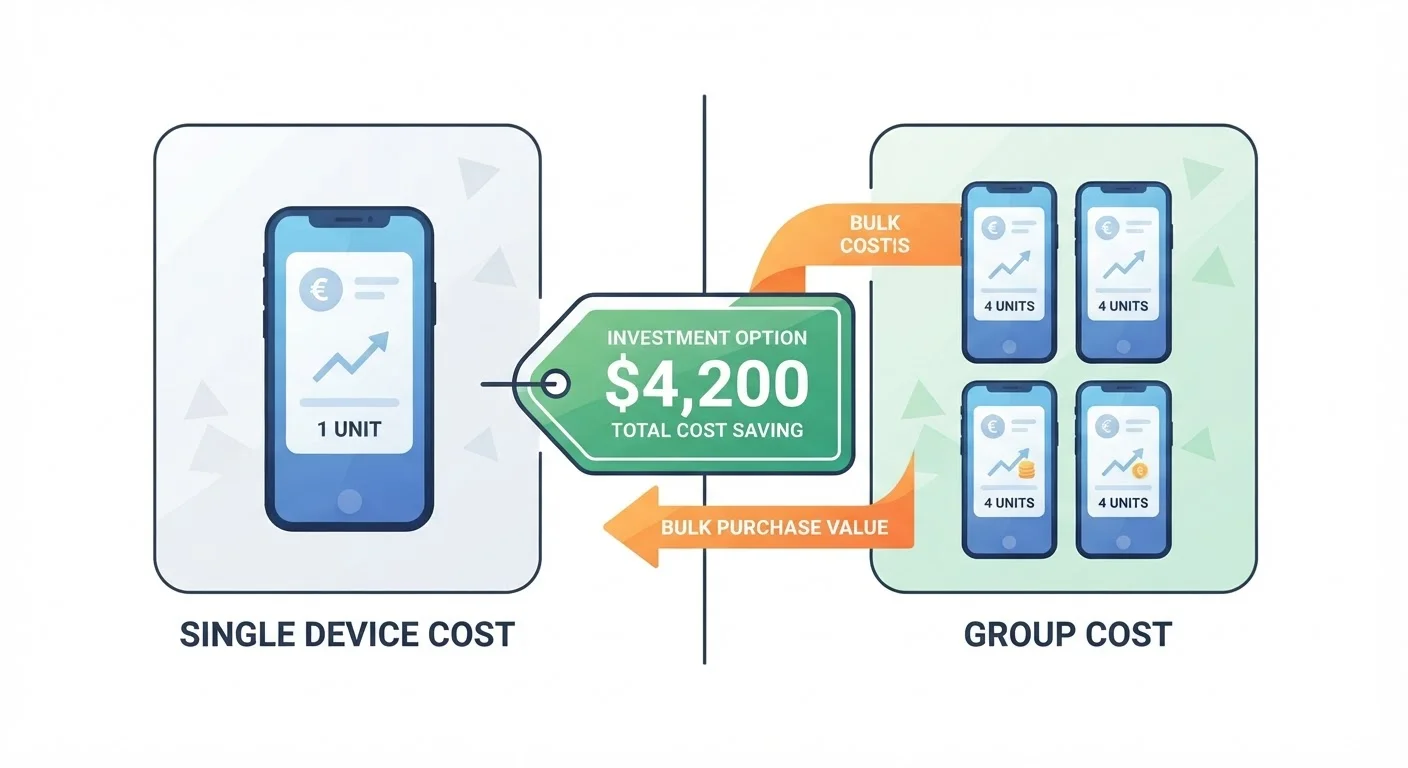
Photo: TrendingResults.net | Discover More, Trend More editorial
Key Takeaways
- Family plans lower the per-line cost, but total monthly spend is higher - the savings are relative, not absolute.
- The break-even point for a family plan typically kicks in at three or more lines on most major carriers.
- Hidden fees, line access charges, and device financing costs can close the gap significantly.
- Light data users may save more on a single prepaid plan than on a shared unlimited family account.
- Mixing and matching plan tiers is possible on some carriers, which can shift the math further.
The Per-Line Math: What Carriers Are Actually Advertising
Carrier ads often lead with a per-line price - something like "$25 per line for four lines" - which sounds dramatically cheaper than a $60 single-line plan. But that framing can mislead. The $25 figure is the average cost per line when you buy four, not a standalone option. Your actual monthly bill would be $100 before taxes, fees, and any device payments.
The real comparison isn't "$25 vs. $60" - it's "$100 for four people vs. $60 for one person." From a total-spend perspective, the family plan costs more. From a per-person perspective, it costs less. Both are true simultaneously, and carriers lean hard on the version that sounds more impressive.
Before reading any plan comparison at face value, nail down the details that actually matter, including what's baked into the advertised price and what isn't.
| Criterion | Single-Line Plan | Family Plan (4 lines) |
|---|---|---|
| Monthly total bill | Lower overall spend | Higher overall spend |
| Per-person cost | Higher per person | Lower per person |
| Account complexity | Simple, one account owner | One owner manages all lines |
| Flexibility to switch | Easy, no coordination needed | Affects all lines on account |
| Works for light data users | Yes, with plan flexibility | Less ideal; often unlimited-only |
| Autopay requirement | Often required for best rate | Often required for best rate |
| Savings at 2 lines | N/A | Modest; often not worth it |
| Savings at 4+ lines | N/A | Significant per-person savings |
Where the Break-Even Point Actually Sits
For most major postpaid carriers, the per-line cost drops noticeably as you add lines - but the steepest drop happens between two and four lines. A single line might run $65-$80 per month on an unlimited tier. Two lines often land around $55-$60 each. At four lines, that figure can fall to $30-$40 per line.
The break-even question is: at what line count does the family plan's total cost, divided among participants, beat what each person would pay independently? Typically, this threshold appears at three lines. Below that, the savings are modest or nonexistent once you factor in taxes and fees - which add roughly 10-25% to wireless bills depending on your state.
~10-25%
Typical tax and fee addition to wireless bills
State and local taxes, regulatory fees, and surcharges vary significantly and are rarely included in advertised plan prices.
3 lines
Common break-even threshold for family plans
Industry analysts generally observe that per-line savings on family plans become meaningful compared to individual plans starting at the third line.
24-36 months
Typical device financing commitment tied to promotions
Many family plan promotional offers require installment agreements on new devices, locking in the plan relationship for two to three years.
There's also the question of what tier you're comparing. A family plan based on premium unlimited may not be the right benchmark if some household members would be fine with a basic data plan. Light users often overpay on shared unlimited plans when a simpler, lower-cost single line would cover their actual needs.
Hidden Costs That Quietly Shrink the Savings
Per-line prices are just the starting point. Several factors can erode the apparent advantage of a family plan:
- Line access fees: Some carriers charge a separate monthly fee per line on top of the plan rate, which adds up across four or five accounts.
- Device financing: Family plans often come bundled with phone upgrade promotions that require trading in recent devices or committing to a 24-36 month installment agreement.
- Autopay and paperless discounts: Many advertised per-line prices require autopay enrollment. Missing a payment can temporarily remove that discount.
- Mixed tier pricing: If not everyone needs the same plan tier, some carriers allow mixing - but this complicates billing and may reduce the overall discount.
For a structured approach to cutting through these variables, the practical framework for evaluating wireless plans offers a useful method for any household size or budget.
When a Single-Line Plan Actually Wins
There are clear scenarios where staying on a single line - or keeping separate lines - makes financial and practical sense:
- Couples with different carrier preferences: If one person prioritizes network coverage in rural areas and the other wants a specific international plan, separate accounts may serve both better than a compromise family tier.
- Roommates and non-family groups: Family plans require one person to be the account owner. That creates responsibility asymmetry - late payments by one person affect everyone's service.
- Prepaid single-line plans: Prepaid options from smaller carriers (which often run on the same major networks as postpaid plans) can undercut even family plan per-line rates for light to moderate users, without contracts or credit checks.
The same analytical instinct applies beyond wireless. Cost-sharing arrangements - whether for phone plans or group travel budgets - often look attractive in the abstract but require careful per-person math to evaluate honestly.
This article provides general information about wireless plan pricing structures and is not a recommendation of any specific carrier, plan, or service. Prices, terms, and availability vary by provider and are subject to change. Always verify current pricing directly with carriers before making a decision.
The content on this site is provided for informational purposes only and should not be considered a substitute for professional advice. While we strive to provide accurate and up-to-date information, we make no guarantees regarding its completeness or accuracy. Always consult a qualified professional for advice specific to your circumstances before making any decisions.