
Night Driving Risks That Daylight Hours Don't Prepare You For

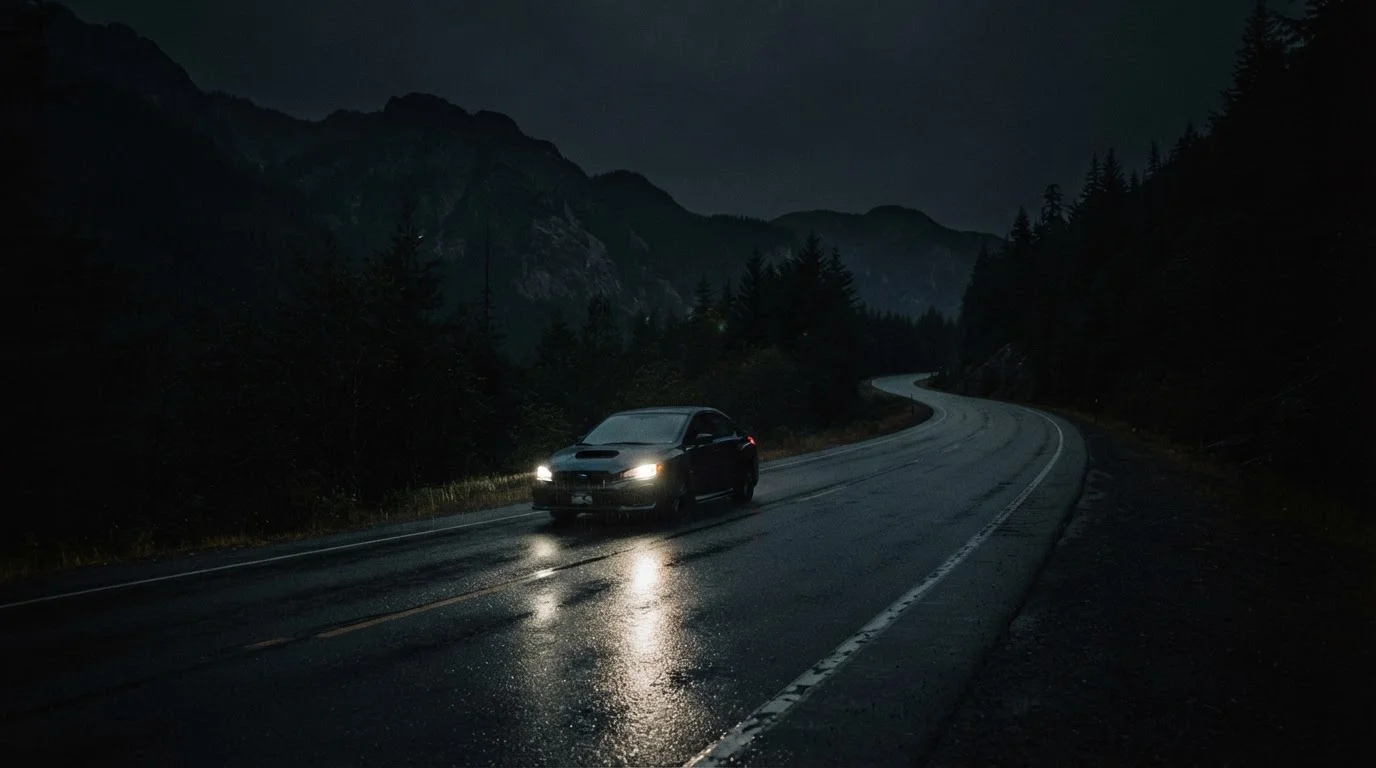
Photo: TrendingResults.net | Discover More, Trend More editorial
Key Takeaways
- Fatal crash rates are significantly higher at night despite lower overall traffic volume.
- Human vision degrades substantially in low-light conditions, reducing both depth perception and peripheral awareness.
- Impaired and drowsy drivers are far more prevalent on roads between midnight and 4 a.m.
- Headlight aim, cleanliness, and high-beam discipline directly affect how much danger you can see in time.
- Adapting your following distance and speed for darkness is essential, not optional.
Why Night Driving Is a Different Challenge Entirely
Most American drivers log thousands of miles in daylight, building confidence in their ability to read traffic, spot hazards, and react in time. That confidence doesn't always transfer after dark. According to the National Safety Council, roughly half of all traffic fatalities occur at night - even though far fewer miles are driven during those hours. The math is stark: nighttime driving is disproportionately deadly.
The reasons aren't mysterious, but they are layered. Reduced visibility, physiological changes in how your eyes work at night, and the increased likelihood of sharing the road with impaired or fatigued drivers all compound simultaneously. Understanding each risk individually - and how they interact - is the first step toward managing them. The list below covers the specific hazards that catch drivers off guard after sunset.
Your eyes genuinely struggle in low light
Human vision is optimized for daylight. At night, the eye's cone cells - responsible for sharp, color-accurate detail - become far less effective, and the rod cells that take over in darkness don't provide the same resolution or depth perception. This means you're often seeing less clearly than you feel like you are.
Peripheral vision also narrows in low light, a condition sometimes called tunnel vision. Add to this the time it takes your eyes to fully adapt after being exposed to oncoming headlights - typically several seconds - and you have a vulnerability window that most drivers underestimate. Avoid staring directly at oncoming headlights; instead, shift your gaze to the right edge of your lane until they pass.
Your peripheral vision narrows significantly in darkness, creating blind zones you may not notice.
Headlight glare impairs both you and oncoming drivers
Modern vehicles increasingly use high-intensity LED and HID (high-intensity discharge) headlights. While these improve the driver's own forward visibility, they can be blinding to oncoming traffic when misaimed or used improperly. Even correctly aimed lights can temporarily impair another driver's vision for several seconds after passing.
High beams are a specific concern. They should be used on dark, unlit roads with no approaching traffic - but switched to low beams as soon as another vehicle appears, in either direction. Many drivers forget that high beams also blind drivers ahead through their rearview mirrors. Check your headlight aim periodically; even minor misalignment sends light into oncoming eyes rather than down the road.
High beams should drop to low beams the moment another vehicle appears - in either direction.
Your stopping distance exceeds your headlight range
Standard low-beam headlights illuminate roughly 160-250 feet ahead, depending on the vehicle and conditions. At 60 mph, a car travels approximately 264 feet per second - meaning you're already past the edge of your visible range before you've had time to perceive a hazard, decide to brake, and actually stop. This is sometimes called overdriving your headlights.
The practical fix is to reduce speed at night so that your stopping distance stays within what your headlights can reveal. On dark rural roads especially, slowing by 10-15 mph can meaningfully close the gap between what you can see and what you need to react to. This is also why adjusting speed to match visibility is a core principle across all low-visibility conditions.
At highway speeds, your car can outrun your headlights - you may not see a hazard until it's too late to stop.
Impaired drivers are significantly more common at night
The overlap between late-night hours and impaired driving is well documented. The National Highway Traffic Safety Administration (NHTSA) consistently reports that alcohol-involved fatal crashes are concentrated in overnight hours, particularly between midnight and 3 a.m. on weekends. This doesn't mean every driver you encounter is impaired, but the statistical likelihood is meaningfully higher than at midday.
Recognizing the signs of impaired driving - weaving between lanes, inconsistent speeds, unusually slow or fast driving, delayed response to signals - gives you time to create distance. Stay back, don't attempt to pass aggressively, and if a driver appears dangerously impaired, find a safe place to pull over and contact authorities.
Alcohol-involved fatal crashes concentrate heavily in late-night hours, especially on weekends.
Drowsiness peaks during overnight driving hours
The body's circadian rhythm creates natural drowsiness troughs between roughly 2 a.m. and 6 a.m. Driving during this window - even after what feels like adequate sleep - carries meaningful fatigue risk. Drowsiness impairs reaction time, decision-making, and lane tracking in ways that mirror alcohol impairment. Research has drawn direct comparisons between moderate sleep deprivation and measurable blood alcohol levels.
Warning signs include difficulty keeping your eyes open, missing exits, drifting lanes, or having no memory of the last few miles. If you experience these, pulling off safely and resting is the only reliable remedy. Coffee and opening windows provide only brief and unreliable relief. For a deeper look, see how drowsy driving compares to drunk driving.
Driving between 2 and 6 a.m. aligns with the body's deepest circadian drowsiness trough.
Pedestrians and cyclists are far harder to see
At night, pedestrians and cyclists become dramatically harder to detect, particularly those wearing dark clothing or traveling without lights or reflective gear. A pedestrian in dark clothing may be visible from as little as 55 feet away under low-beam headlights - a distance that, at 40 mph, allows almost no stopping margin.
Residential streets, intersections, and areas near bars or restaurants carry elevated pedestrian risk after dark. Slowing down in these zones, scanning actively rather than focusing only on the road ahead, and being alert for movement at the edges of your headlight range are all practical responses. Blind spot awareness is equally important here - a pedestrian or cyclist alongside your vehicle can be invisible in standard mirrors.
A pedestrian in dark clothing may only be visible from 55 feet away - leaving almost no time to stop.
Building Habits That Hold Up After Dark
No single adjustment makes night driving safe - it takes a combination of vehicle maintenance, situational awareness, and deliberate habit changes. Many of the risks above are addressable with knowledge alone. Keeping headlights clean and properly aimed, reducing speed to match your actual sight distance, and giving yourself extra space to react are behaviors you can adopt immediately.
Longer term, consider how your driving mindset shifts when conditions change. A defensive driving approach means anticipating hazards before they materialize - something even more critical when your visual field is cut by two-thirds. If you're a newer driver, it's also worth reviewing common first-year mistakes, many of which become more consequential after dark.
Check Your Headlights Before Night Trips
Night driving demands more from both you and your vehicle. Treat it as a distinct skill set rather than an extension of what daylight already taught you.
The content on this site is provided for informational purposes only and should not be considered a substitute for professional advice. While we strive to provide accurate and up-to-date information, we make no guarantees regarding its completeness or accuracy. Always consult a qualified professional for advice specific to your circumstances before making any decisions.