
Fitting Movement Into a Day That's Already Too Full

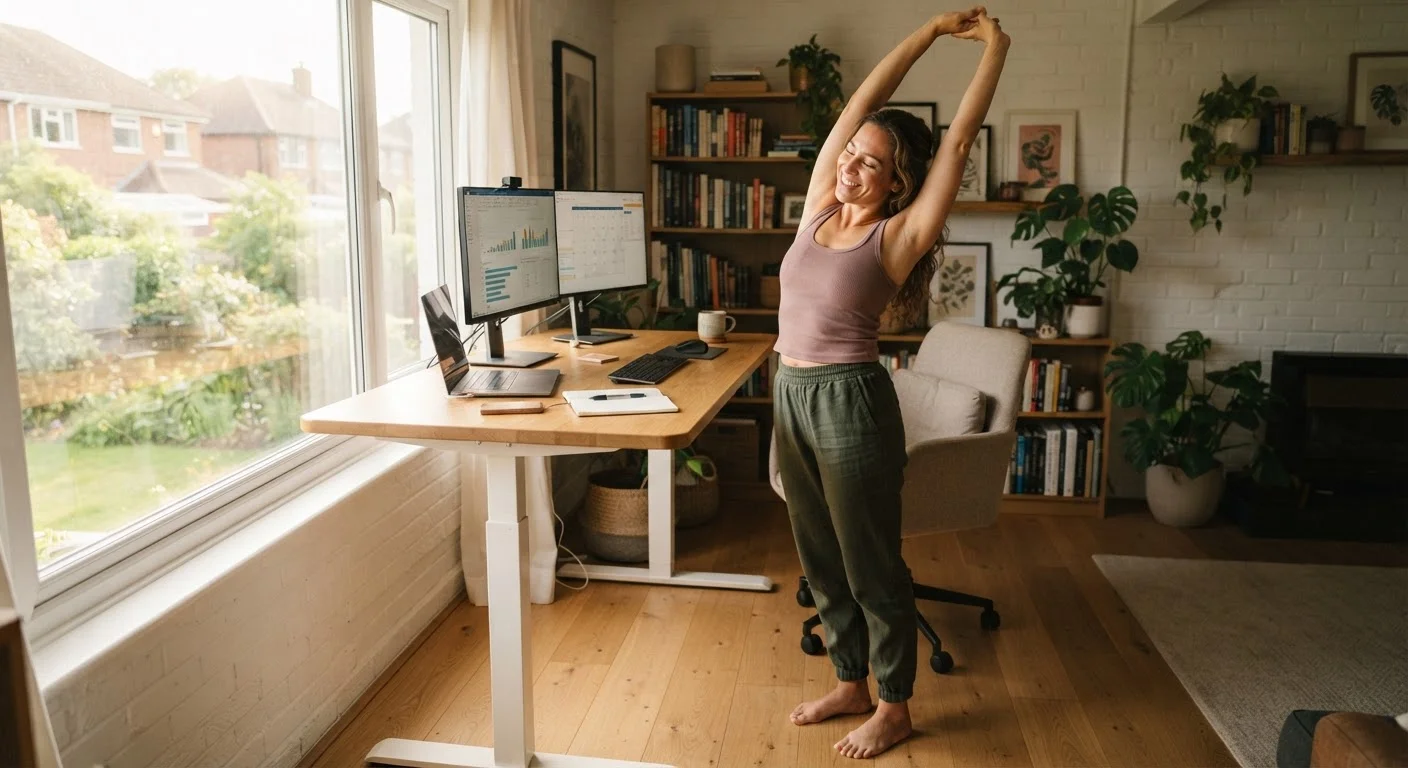
Photo: TrendingResults.net | Discover More, Trend More editorial
Key Takeaways
- Brief bouts of movement scattered throughout the day contribute meaningfully to overall physical activity levels.
- No gym, equipment, or large time blocks are required to increase daily movement.
- Anchoring movement to existing habits-called habit stacking-makes consistency far more achievable.
- Even two to five minutes of activity at regular intervals can break up prolonged sitting.
- Tracking steps or setting simple reminders lowers the barrier to getting started.
Why Small Amounts of Movement Matter More Than You Think
The idea that exercise only counts when it reaches a certain duration or intensity discourages many people before they even begin. Current physical activity guidelines from public health organizations recognize that movement accumulated across the day-not just in formal sessions-contributes to health outcomes including cardiovascular function, mood regulation, and metabolic health.
This is particularly relevant for people with genuinely packed schedules: parents managing school runs and work simultaneously, people in high-demand careers, caregivers, or anyone whose day leaves little room for discretionary time. The goal isn't to find a hidden hour-it's to use the minutes that already exist more intentionally.
Movement snacks-short activity bursts have been studied specifically in this context, with researchers finding effects on blood sugar regulation, energy levels, and even cognitive performance after sedentary periods. The evidence supports breaking up sitting, not just adding a single long workout.
Use Habit Stacking to Make It Stick
What You'll Need Before You Start
What you will need
Smartphone or Smartwatch
Set recurring movement reminders and track daily step counts without any additional equipment.
Calendar or Planner App
Block micro-movement windows into your existing schedule so they appear as commitments.
Resistance Band
Enables simple strength exercises in a small space with no setup time-useful for desk breaks.
Comfortable Walking Shoes
Keeps spontaneous walking breaks practical and comfortable throughout the day.
Check With Your Doctor First
How to Fit Movement Into Your Day
Audit where your time actually goes
Before adding movement, look honestly at your day. Review a typical 24-hour block and identify at least three transition moments-times when you move from one activity to another-or idle periods like waiting for a call to start, eating lunch, or commuting. These gaps are where movement can be inserted without displacing anything essential.
Set a recurring movement reminder every 60-90 minutes
Prolonged sitting is a distinct health concern separate from how much you exercise overall. Setting a recurring alert on your phone or smartwatch to prompt a short break interrupts long sedentary stretches. When the reminder fires, stand up and move for two to five minutes-walk to refill a water bottle, do a few shoulder rolls, or step outside briefly.
Convert one daily task into a walking version
Identify a regular activity that doesn't require you to sit at a screen-a phone call with a colleague, a casual podcast, or a lunchtime errand-and do it on foot. Walking while talking is one of the most practical ways to accumulate movement without carving out separate exercise time. Even a 10-minute walk adds up significantly across a week.
Add movement snacks at known trigger points
A "movement snack" is a brief burst of activity-typically two to ten minutes-that fits between existing commitments. Common trigger points include: before opening your laptop in the morning, right after lunch, and just before the end of the workday. Bodyweight exercises like squats, calf raises, or a short stretch sequence require no equipment and minimal space. Research reviewed in our movement snacks explainer shows these brief bursts have measurable physiological effects.
Anchor movement to an existing habit
Choose one automatic daily behavior-making coffee, brushing your teeth, or sitting down after dinner-and immediately follow it with a short movement routine. This "habit stacking" approach removes the need to rely on motivation or willpower. Start with something so small it feels almost trivial: ten bodyweight squats after your morning coffee, for example. Consistency matters far more than duration at this stage.
Track and gradually expand over time
After one to two weeks of consistent small changes, review what's working. Use your phone's step counter or a simple tally to gauge progress. Once a habit feels automatic, extend its duration slightly or add a second anchor point. Avoid trying to overhaul everything at once-gradual progression is more sustainable and reduces the risk of burnout or injury. For a broader framework, see what a balanced weekly exercise plan looks like.
Don't Let Perfect Be the Enemy of Good
Making It Last Beyond the First Week
The most common failure point isn't starting-it's continuing after the initial motivation fades. Behavioral research consistently identifies habit anchoring and low friction as the two factors most predictive of long-term adherence. If a movement habit requires significant effort to set up, it will likely be dropped when life gets stressful.
Design your approach so the default is movement, not stillness. This might mean keeping walking shoes near the door, scheduling movement reminders that recur automatically, or pairing movement with something you genuinely enjoy-a podcast, a phone call with a friend, or music you like.
If you want to build toward something more structured over time, low-impact exercise options offer a practical next step for people who want more variety without high physical demands. And if evening wind-down is a challenge, a consistent wind-down routine can help signal the end of the active day and support better sleep.
This article is for general informational and educational purposes only and does not constitute medical advice. Always consult a qualified healthcare professional before making changes to your physical activity level, particularly if you have any underlying health conditions.
The content on this site is provided for informational purposes only and should not be considered a substitute for professional advice. While we strive to provide accurate and up-to-date information, we make no guarantees regarding its completeness or accuracy. Always consult a qualified professional for advice specific to your circumstances before making any decisions.