
Home Workouts vs. Gym Workouts: Trade-Offs Worth Knowing

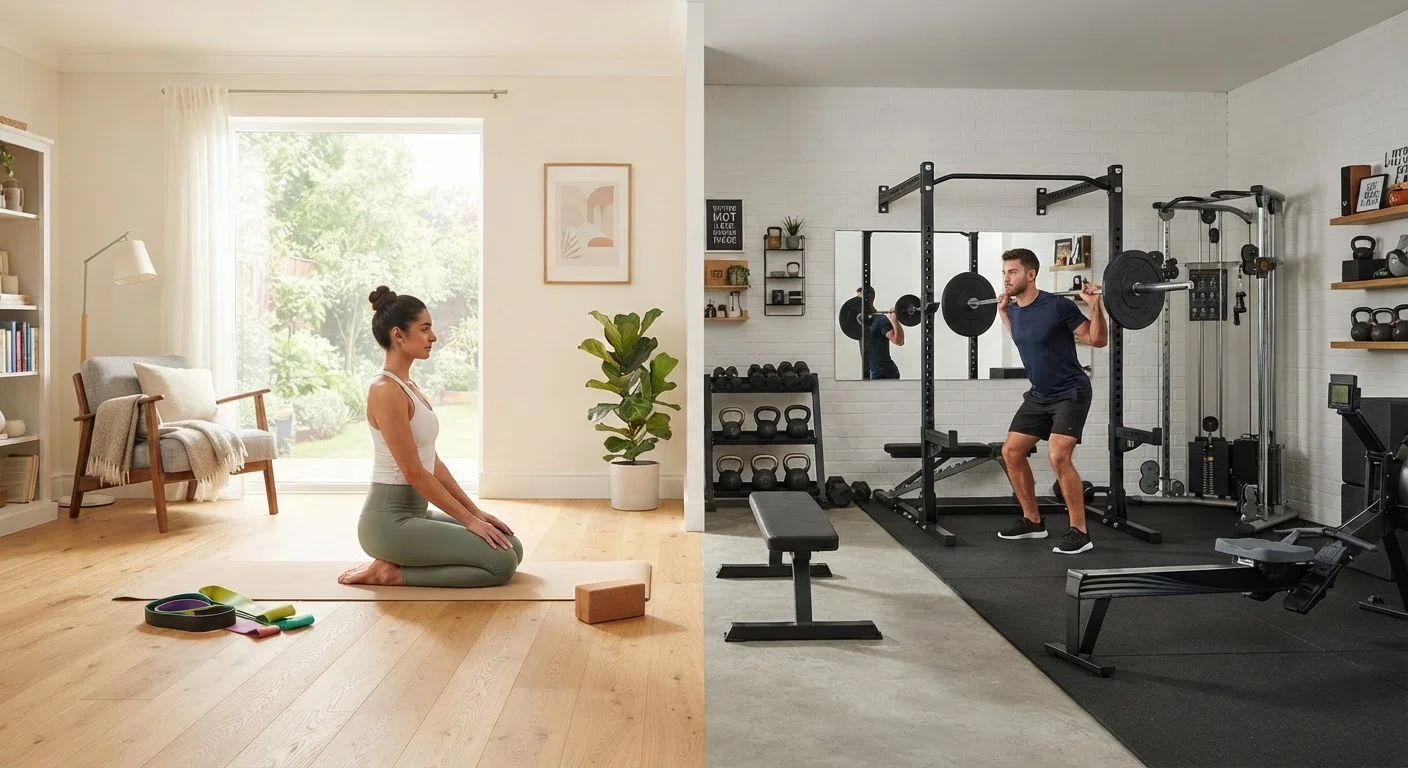
Photo: TrendingResults.net | Discover More, Trend More editorial
Key Takeaways
- Home workouts eliminate commute time and membership costs but offer limited equipment variety.
- Gyms provide access to specialized equipment and structured environments that support accountability.
- Consistency-not location-is the strongest predictor of fitness progress over time.
- Bodyweight training at home can deliver meaningful results when programmed with progressive challenge.
- A hybrid approach, combining home and gym sessions, works well for many people's schedules and goals.
Cost and Convenience: The Numbers Behind the Choice
The financial gap between home and gym training is real but often misunderstood. A typical gym membership in the U.S. runs anywhere from roughly $30 to over $100 per month depending on location and facility tier. Over a year, that adds up-and doesn't account for commute time, which research consistently shows is one of the top barriers to regular exercise.
Home workouts, by contrast, can be started with little or no equipment. Resistance bands, a jump rope, and a yoga mat represent a modest one-time investment. Even a modest set of adjustable dumbbells, purchased once, typically costs less than a few months of a mid-range gym membership.
That said, convenience cuts both ways. The same home environment that makes it easy to exercise can also make it easy to skip-there's no journey, no locker room ritual, and no psychological separation between "couch mode" and "workout mode." For many people, the act of going somewhere dedicated to exercise provides a cue their brain responds to. See how routine cues anchor lasting fitness habits for more on the behavioral side of this equation.
Equipment Access and Exercise Variety
This is where gyms hold their clearest advantage. A well-equipped facility provides barbells, cable machines, pull-up rigs, cardio equipment, and free weights across a broad range-tools that allow for precise progressive overload (gradually increasing resistance over time to drive adaptation). Certain training goals, such as building significant muscle mass or training for powerlifting, are genuinely harder to achieve without this variety.
Home training can cover more ground than many people expect, however. Bodyweight exercises-push-ups, squats, lunges, glute bridges, and rows using a low table or suspension trainer-can challenge most muscle groups effectively. Adding resistance bands extends this range considerably. Understanding bodyweight training's real advantages and limitations is worth reading before assuming equipment-free exercise can't meet your needs.
| Home Workouts | Gym Workouts | |
|---|---|---|
| Monthly Cost | Low to none (after setup) | $30-$100+ per month |
| Commute Required | No | Yes |
| Equipment Variety | Limited without investment | Extensive |
| Accountability Support | Self-directed | Trainers, classes, social environment |
| Flexibility of Schedule | High-train any time | Dependent on gym hours |
| Best For | Convenience-driven routines | Specialized or equipment-heavy goals |
For most general-health goals-improving cardiovascular fitness, building functional strength, managing weight-a thoughtfully programmed home routine is sufficient. Specialized goals may genuinely require a gym.
Accountability, Motivation, and the Social Factor
Social environment is an underrated variable in exercise adherence. Gyms offer visible effort around you, access to personal trainers, and sometimes group fitness classes-all of which research associates with higher adherence rates. Seeing others work out can provide motivational cues that are simply absent in a spare bedroom.
Home exercisers can compensate with virtual accountability: online communities, video coaching platforms, or simply scheduling workouts as calendar commitments. The key insight from behavioral science is that the environment you design matters enormously. Laying out your workout clothes the night before, keeping equipment visible, and linking exercise to an existing habit (like morning coffee) all reduce the friction that causes skipped sessions.
Design Your Environment for Success
It's also worth noting that the ideal workout structure doesn't change based on where you train. Whether you're at home or in a gym, a balanced week should include both cardiovascular activity and resistance training. See how cardio and strength training affect your body differently for a clear breakdown of why both matter.
Building a Routine That Actually Works for You
The most effective workout environment is the one you'll use consistently. A hybrid model-gym sessions for heavy lifting two days a week, home sessions for cardio or mobility work on other days-works well for people whose schedules are unpredictable. Others do best committing fully to one setting to simplify decision-making.
If you're new to structured exercise, starting at home reduces friction and lets you build baseline fitness before deciding whether a gym membership makes sense. A well-rounded weekly exercise plan can help you see how the pieces fit together regardless of where you train. Unfamiliar with terms like "progressive overload" or "sets and reps"? A practical glossary of fitness terms offers clear definitions without the jargon.
Ultimately, both environments can support meaningful, lasting improvements in health. The trade-offs are real, but they're manageable-and knowing them puts you in a better position to choose intentionally rather than by default.
This article is for general informational purposes only and is not a substitute for professional medical or fitness advice. Consult a qualified healthcare provider before beginning any new exercise program, especially if you have an existing health condition.
The content on this site is provided for informational purposes only and should not be considered a substitute for professional advice. While we strive to provide accurate and up-to-date information, we make no guarantees regarding its completeness or accuracy. Always consult a qualified professional for advice specific to your circumstances before making any decisions.