
Fixed vs. Variable Expenses: Understanding What Eats Your Paycheck

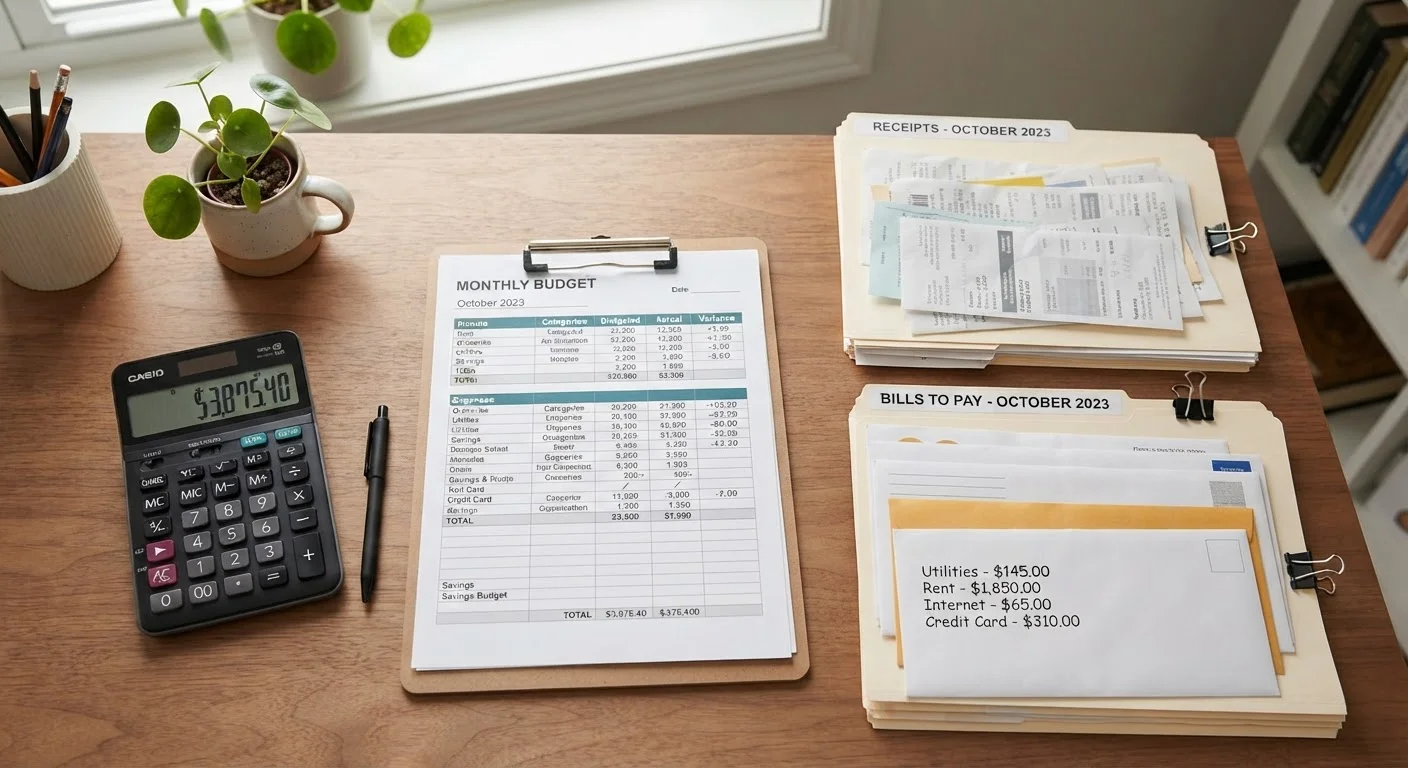
Photo: TrendingResults.net | Discover More, Trend More editorial
Key Takeaways
- Fixed expenses stay the same each month; variable expenses change based on your choices or usage.
- Fixed costs are easier to plan for but harder to reduce quickly without a major life change.
- Variable expenses offer the most immediate opportunities to cut spending when money is tight.
- Most households carry both types, and a strong budget accounts for each category separately.
- Irregular but predictable costs - like annual insurance premiums - deserve their own budget category.
What Makes an Expense Fixed or Variable
At its core, the difference is predictability. A fixed expense is one that charges you the same amount on a consistent schedule - your rent or mortgage payment, a car loan installment, or a flat-rate internet bill. You know exactly what's coming before the month starts. A variable expense, by contrast, changes from month to month depending on how much you use or spend. Groceries, gasoline, utilities on a usage-based plan, and dining out are classic examples.
This distinction matters because the two types of expenses require different budgeting strategies. Fixed costs are easy to record but difficult to adjust on short notice. Variable costs are harder to predict precisely, but they respond quickly when you change your behavior. Understanding which category each line item falls into helps you see where your money is truly locked in versus where you have genuine flexibility.
It's also worth recognizing a third category that often gets overlooked: periodic or irregular expenses. These are costs that don't hit every month - annual car registration, a bi-annual dental cleaning, holiday gifts - but are entirely predictable if you plan ahead. Treating them as surprise expenses is one of the most common reasons a budget falls apart. Vague awareness of your spending rarely accounts for these, which is why formal tracking matters.
Side-by-Side: How Fixed and Variable Expenses Compare
The table below illustrates how these two expense types stack up across common budgeting dimensions. Neither type is inherently good or bad - they simply behave differently and require different responses.
| Criterion | Fixed Expenses | Variable Expenses |
|---|---|---|
| Amount each month | Stays the same | Changes based on use or behavior |
| Examples | Rent, car loan, insurance premium | Groceries, gas, dining out, utilities |
| Ease of budgeting | Very easy - exact figure is known | Requires estimation or tracking |
| Flexibility to reduce | Low - requires a major decision | High - behavior changes work quickly |
| Impact on cash flow | Stable and predictable | Can spike unexpectedly |
| Best budget strategy | List first; treat as floor | Track closely; set spending targets |
One nuance worth noting: some expenses straddle both categories. A cell phone plan with a fixed monthly fee but data overage charges is partly fixed, partly variable. A utility bill with a flat service charge plus usage-based rates is similarly hybrid. When in doubt, budget conservatively by estimating the higher end of what you might owe.
Why Fixed Expenses Dominate Most Budgets
For many American households, fixed obligations - housing, vehicle loans, insurance premiums, and minimum debt payments - account for a substantial portion of monthly take-home pay. Because these costs don't fluctuate, they're often the first things people list when building a budget, and for good reason: they represent non-negotiable financial commitments.
~33%
Share of income spent on housing alone
The U.S. Bureau of Labor Statistics Consumer Expenditure Survey consistently shows housing as the single largest spending category for American households.
~17%
Share of spending on transportation costs
Transportation - including vehicle payments, insurance, and fuel - is typically the second-largest budget category for U.S. households, per BLS data.
50%+
Budget consumed by fixed obligations alone
Housing and transportation combined often exceed half of a household's after-tax income, leaving limited room for discretionary and savings goals.
The trade-off is rigidity. Reducing a fixed expense usually requires a significant action: moving to a less expensive home, refinancing a loan, canceling a service entirely, or renegotiating a contract. These aren't impossible moves, but they take time and planning. If your fixed costs are consuming so much of your income that little remains for saving or discretionary spending, that's a signal worth taking seriously - but the solution is rarely a quick fix.
If you carry a mortgage, the fixed-versus-variable dynamic appears there too. A fixed-rate mortgage locks in your principal and interest payment for the life of the loan, whereas an adjustable-rate mortgage (ARM) can shift after an initial period. Understanding those mortgage rate trade-offs is a separate but related exercise in budgeting for predictability versus flexibility.
Using Variable Expenses as Your Budget's Adjustment Lever
Variable expenses are where active budget management happens. Because these costs respond directly to your choices, they're the first place to look when you need to reduce spending - and the most revealing category when you're trying to understand where money actually goes.
Tracking variable expenses over two or three months often surfaces surprises. Takeout spending that felt occasional may show up as a consistent $300-plus monthly habit. Streaming subscriptions, app fees, and convenience charges accumulate quietly. Sorting these costs into needs, wants, and savings buckets is a useful next step once you have real data in hand.
For households with irregular income - freelancers, hourly workers, or gig economy participants - variable expenses take on even greater importance. When your income itself fluctuates, managing variable costs tightly in lean months is a key survival strategy. Building a budget on a variable income requires identifying exactly which expenses can flex downward when revenue dips.
Travel is a useful case study: a vacation budget contains a mix of both types. Flight and hotel bookings may function like fixed costs once confirmed, while food, activities, and incidentals are highly variable. Understanding where vacation money actually goes follows the same logic as any monthly budget - fixed anchors, variable flexibility.
This article is for general informational and educational purposes only and does not constitute personalized financial advice. Readers should consult a qualified financial professional for guidance specific to their own situation.
The content on this site is provided for informational purposes only and should not be considered a substitute for professional advice. While we strive to provide accurate and up-to-date information, we make no guarantees regarding its completeness or accuracy. Always consult a qualified professional for advice specific to your circumstances before making any decisions.