
Your First Household Budget: Where to Start When Numbers Feel Overwhelming

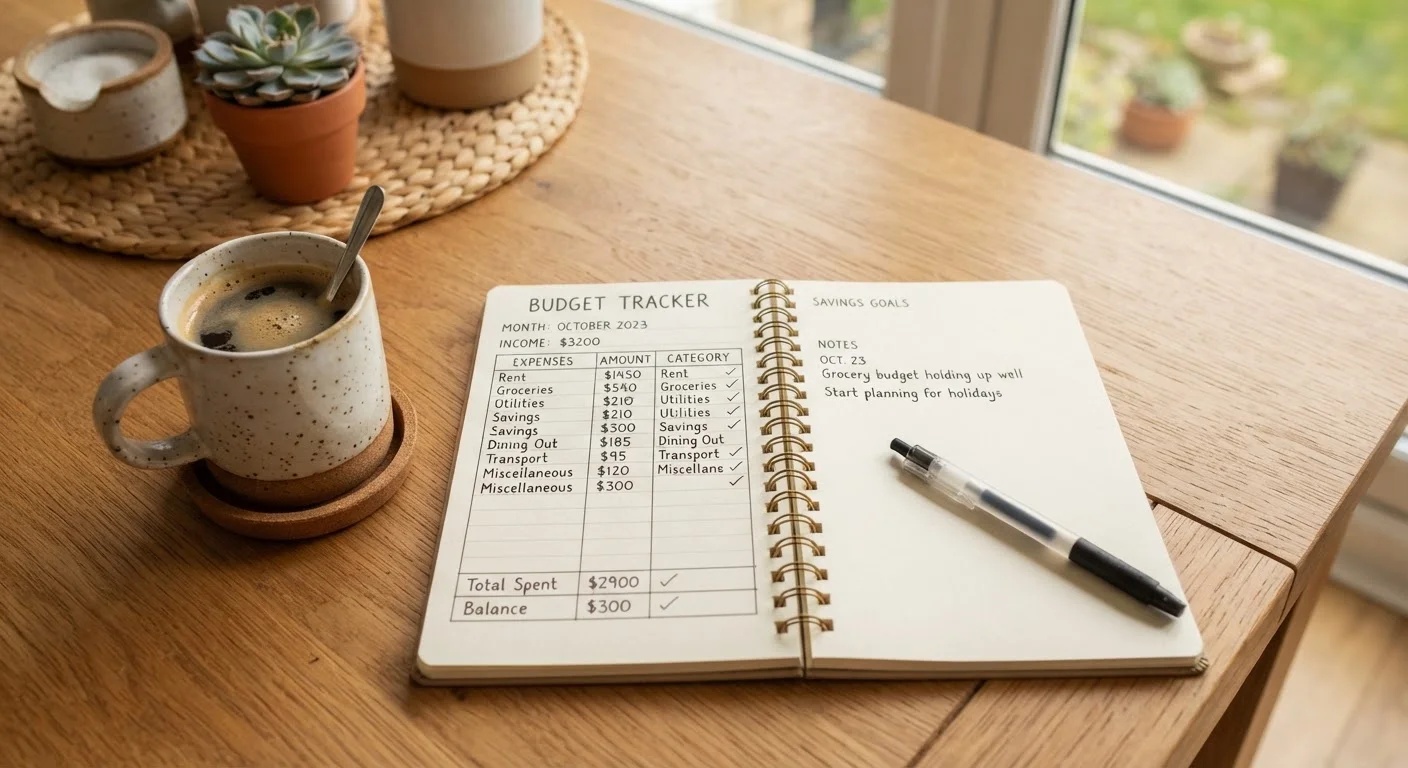
Photo: TrendingResults.net | Discover More, Trend More editorial
Key Takeaways
- A budget is simply a written plan for how your money moves - it doesn't have to be perfect to be useful.
- Understanding a few core terms - net income, fixed expenses, variable expenses - makes the process much less intimidating.
- Your first budget will be imperfect; the goal is to start, not to optimize.
- No single budgeting method works for everyone - pick the simplest one you'll actually follow.
- Regular check-ins matter more than getting every number right on the first try.
Why Budgeting Feels Hard (And Why That's Normal)
For many people, the word "budget" carries emotional weight - a sense of restriction, judgment, or past failure. That reaction is understandable, and it has nothing to do with intelligence or willpower. Most of us were never taught how household finances actually work. We absorbed mixed messages: that talking about money is impolite, that budgets are only for people in financial trouble, or that managing money is somehow instinctive.
None of that is true. Budgeting is a learnable skill, and the discomfort you feel at the start is simply unfamiliarity. If you've ever wondered whether the whole premise is flawed before you even begin, it's worth reading about common budgeting myths that hold people back.
The good news: your first budget doesn't need to be accurate. It needs to exist. Getting numbers on paper - even rough ones - is the entire goal of day one.
Start With Honesty, Not Perfection
The Core Concepts Every First-Timer Needs
Before you open a spreadsheet or download an app, a short vocabulary lesson goes a long way. Personal finance has its own language, and unfamiliar terms are one of the biggest reasons beginners stall. For a thorough walkthrough of the terminology, see budgeting terms every American should know.
Net income
The money you actually take home after taxes and other deductions are removed from your paycheck. This is the number your budget is built on - not your gross (pre-tax) salary.
Fixed expenses
Costs that stay the same amount every month, such as rent, a car loan payment, or an insurance premium. These are predictable and typically non-negotiable.
Variable expenses
Costs that change in amount from month to month, like groceries, gas, or dining out. These are the categories where you have the most control in a budget.
Discretionary spending
Money spent on non-essential wants - entertainment, subscriptions, clothing beyond basic needs. Discretionary spending is the most flexible part of any budget.
Budget surplus
When your income is greater than your total expenses for the month. A surplus gives you room to save, pay down debt, or fund other financial goals.
Budget shortfall
When your expenses exceed your income for the month. A shortfall means adjustments are needed - either reducing spending or finding ways to bring in more money.
Once these concepts click into place, the mechanics of budgeting - tracking income, categorizing expenses, and setting aside savings - become far more intuitive.
Your First Three Steps to a Real Budget
Simplicity is your friend here. Resist the urge to build a complex system on day one.
- Find your net income. Gather your recent pay stubs, bank statements, or any records of money coming in. Add up what actually lands in your account each month after taxes and deductions. If your income varies, calculate a conservative average using the last three to six months.
- List your fixed expenses. Write down every recurring cost with a predictable amount - rent or mortgage, car payment, insurance premiums, and any fixed subscriptions. These are non-negotiable line items.
- Estimate your variable expenses. Pull up two or three months of bank and credit card statements. Tally up what you typically spend on groceries, gas, dining out, and other categories that shift month to month. These estimates will be imperfect - that's expected.
Once you have these three pieces, subtract your total expenses from your net income. The result tells you whether you have a surplus (money left over) or a shortfall (spending more than you earn). Either way, you now have real information to work with instead of guesswork.
Irregular Income Requires a Different Approach
Choosing a Budgeting Method That Fits Your Life
No single budgeting approach works for everyone. The right method is the one you'll realistically maintain. Here are three common frameworks worth considering:
- 50/30/20 rule: Allocate roughly 50% of take-home pay to needs, 30% to wants, and 20% to savings or debt repayment. It's flexible and forgiving - a good starting point for most beginners.
- Zero-based budgeting: Every dollar of income is assigned a job - expenses, savings, or debt - until the balance reaches zero. This method demands more attention but leaves nothing unaccounted for.
- Envelope or category budgeting: You set a spending cap for each category and stop when the cap is reached. Traditionally done with cash, but digital versions exist. Works well for people who overspend in specific areas.
For a deeper dive into how a complete budgeting framework comes together - including income tracking, expense categories, and how to adapt as life changes - the complete household budgeting framework is a natural next step.
How to Keep Your Budget Working After Month One
The most common reason new budgets fail isn't poor math - it's poor structure. A budget built on idealized numbers rather than real spending patterns will feel impossible to follow within weeks. Understanding why most household budgets fall apart after month one can help you sidestep the most common traps.
A few habits that sustain a budget over time:
- Schedule a monthly check-in. Set aside 20-30 minutes at the end of each month to compare what you planned against what actually happened. Adjust next month's numbers accordingly.
- Account for irregular expenses. Annual or quarterly costs - car registration, holiday gifts, medical copays - catch many new budgeters off guard. Divide each by 12 and set that amount aside monthly.
- Build a small buffer. Even a modest emergency cushion of a few hundred dollars prevents one unexpected expense from unraveling your entire plan. Once your budget is stable, explore saving and investing options to put surplus money to work.
Budgeting is a practice, not a one-time event. The version you build today will look different six months from now - and that's a sign it's working, not a sign something went wrong.
This article is for general informational and educational purposes only and does not constitute personalized financial advice. Readers should consult a qualified financial professional for guidance specific to their individual circumstances.
Frequently Asked Questions
The content on this site is provided for informational purposes only and should not be considered a substitute for professional advice. While we strive to provide accurate and up-to-date information, we make no guarantees regarding its completeness or accuracy. Always consult a qualified professional for advice specific to your circumstances before making any decisions.