
Why Minimum Payments Keep People in Debt Longer Than They Expect

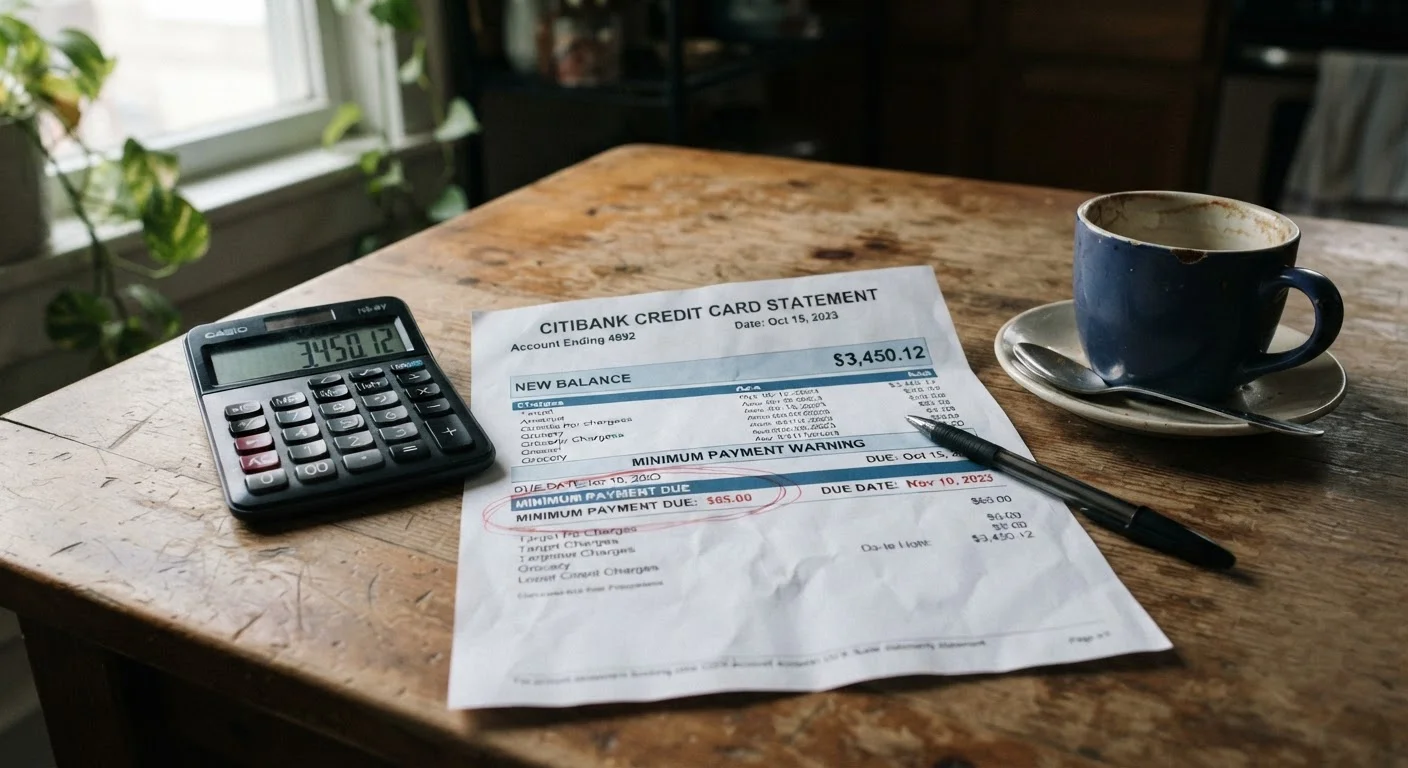
Photo: TrendingResults.net | Discover More, Trend More editorial
Key Takeaways
- Minimum payments are typically calculated as a small percentage of your balance, so they shrink as the balance decreases.
- Most of each minimum payment goes toward interest charges, leaving very little to reduce the principal.
- Carrying a high balance relative to your credit limit can also hurt your credit utilization score.
- Paying even a fixed amount above the minimum can dramatically shorten your repayment timeline.
- Understanding how daily interest accrues helps explain why balances barely move month to month.
How Minimum Payments Are Calculated - and Why That's the Problem
The minimum payment on a credit card statement is not an arbitrary figure - it is a formula. Most issuers calculate it as either a fixed flat amount (often $25 or $35) or a percentage of the outstanding balance, typically between 1% and 2%, plus any accrued interest and fees. Whichever is greater applies.
Here is where the trap forms: because the minimum is a percentage of the balance, it shrinks as the balance decreases. A cardholder with a $4,000 balance might owe a $80 minimum one month. After paying it, the balance drops modestly - but so does next month's minimum. The required payment keeps falling, extending the repayment timeline almost indefinitely.
Meanwhile, interest is accruing daily based on the balance. At a 20% annual percentage rate (APR), a $4,000 balance accumulates roughly $66 in interest per month. A minimum payment of $80 leaves only about $14 applied to principal. At that pace, meaningful debt reduction is nearly impossible without intentional intervention.
20+ years
Time to repay $5,000 at minimum payments
Consumer Financial Protection Bureau analyses have illustrated that a $5,000 balance at a typical credit card APR, paid at minimums only, can take over two decades to eliminate and cost thousands in interest.
~1-2%
Typical minimum payment as a share of balance
Most major card issuers set minimums at roughly 1-2% of the outstanding balance or a small flat dollar amount - whichever is greater - meaning the required payment shrinks as the balance falls.
20.78%
Average credit card APR (Federal Reserve, 2024)
The Federal Reserve reported average credit card interest rates near historic highs in 2024, amplifying the cost of carrying balances over extended periods.
The Mistakes That Keep Balances From Falling
Most people who get stuck in minimum-payment cycles are not being careless - they are responding to financial pressure in ways that seem rational in the short term. But several common missteps compound the problem significantly. Understanding them is the first step toward changing the outcome.
Treating the minimum payment as the 'right' payment amount.
Assuming balances will shrink quickly because regular payments are being made.
Ignoring the compounding effect of a high credit utilization ratio.
Continuing to charge new purchases while trying to pay down a balance.
Not comparing structured debt payoff strategies before choosing an approach.
This article is for general informational purposes only and does not constitute personalized financial or legal advice. For guidance tailored to your individual circumstances, consider speaking with a licensed financial professional.
What Actually Breaks the Cycle
The math of minimum payments is straightforward: the less you pay above interest, the longer you stay in debt. Breaking that pattern does not necessarily require dramatic action - it requires consistency above the minimum threshold.
A cardholder paying a fixed $150 per month on a $4,000 balance at 20% APR would pay off the debt in roughly 32 months and pay significantly less in total interest than someone whose payment tracks the shrinking minimum formula. The difference is not the amount - it is the structure of the payment.
Minimum Payments Are Designed to Last
It also helps to understand what happens when payments are missed entirely. What happens after a missed due date illustrates the downstream consequences - including fees and credit reporting - that make recovery even harder.
For readers considering more aggressive options like debt settlement, it is worth understanding the full picture first. What debt settlement actually does to your credit offers a grounded look at the trade-offs involved before agreeing to any negotiated arrangement.
New Purchases Reset Your Progress
The content on this site is provided for informational purposes only and should not be considered a substitute for professional advice. While we strive to provide accurate and up-to-date information, we make no guarantees regarding its completeness or accuracy. Always consult a qualified professional for advice specific to your circumstances before making any decisions.