
The Timeline of a Late Payment: What Happens After You Miss a Due Date

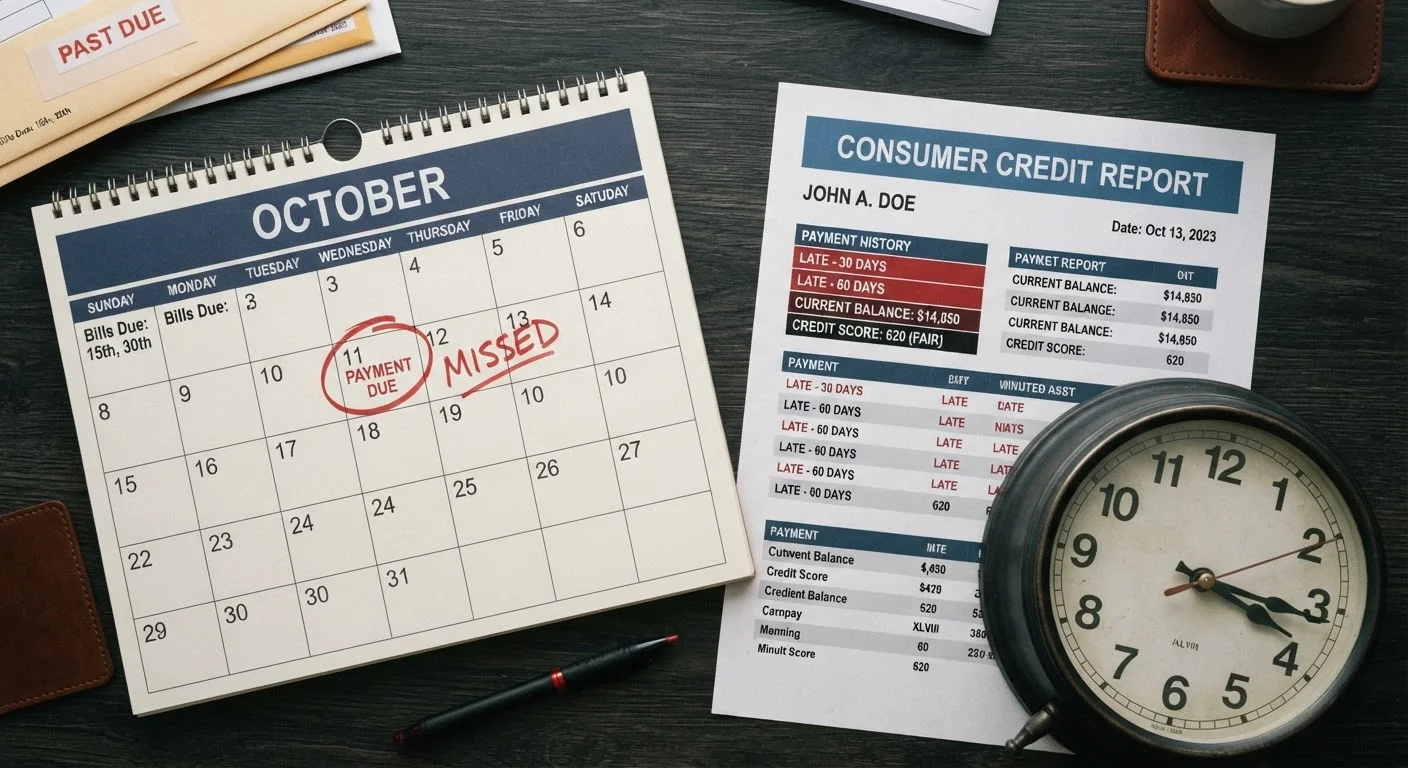
Photo: TrendingResults.net | Discover More, Trend More editorial
Key Takeaways
- Most creditors don't report a late payment to credit bureaus until it is at least 30 days past due.
- A single 30-day late payment can lower a credit score by 50 to 100 points or more, depending on the borrower's credit profile.
- Late fees and penalty APRs can kick in even before a payment is reported to the credit bureaus.
- Accounts unpaid for 180 days are commonly charged off and may be sent to a collections agency.
- The negative mark from a late payment can remain on a credit report for up to seven years.
Day One Through Day 29: Grace Periods and Late Fees
The moment a payment due date passes without a payment, the clock starts - but the most serious consequences don't arrive immediately. Many creditors build in a short grace period of a few days, though this varies by lender and is not guaranteed by law for all credit types.
What typically does arrive quickly is a late fee. Credit card issuers, for example, are permitted to charge late fees under federal guidelines. As of recent regulatory guidance, fee caps have been a subject of ongoing regulatory activity, so checking your specific cardholder agreement is always advisable.
During this first window - generally any point before the payment is 30 days overdue - the damage is still largely containable. The creditor has not yet reported the delinquency to the major credit bureaus (Equifax, Experian, and TransUnion). Making the payment before that 30-day threshold is crossed keeps the incident off your credit report entirely, though the late fee will still apply.
Act Before the 30-Day Mark
Day 30 to Day 90: Credit Bureau Reporting and Score Impact
Once a payment is 30 days past due, most creditors report it to the credit bureaus. This is the point at which a late payment officially becomes a derogatory mark on your credit report - and the impact on your credit score can be significant.
According to credit scoring models such as FICO, payment history is the single largest factor in calculating a score, accounting for approximately 35% of the total. A 30-day late payment can lower a score by 50 to 100 or more points, with the drop being sharper for borrowers who previously had high scores and clean histories.
35%
Weight of payment history in FICO score
According to FICO, payment history is the single largest factor used to calculate a credit score, outweighing credit utilization, length of history, and other variables.
7 years
How long a late payment stays on your credit report
Under the Fair Credit Reporting Act, most negative payment information, including late payments and charge-offs, can remain on a consumer credit report for up to seven years.
180 days
Typical charge-off threshold for unpaid debts
Many credit card issuers charge off accounts after approximately 180 days of non-payment, at which point the debt may be sold to a collections agency.
If the payment remains unpaid, the situation escalates in 30-day intervals. A 60-day late mark is more damaging than a 30-day mark, and a 90-day late mark is more severe still. Each increment signals to future lenders a greater level of risk. Understanding how this progression compounds is similar in logic to how deferred problems grow - just as small maintenance issues become costly over time, delayed payments accumulate increasingly serious consequences.
Some creditors may also apply a penalty APR during this period, raising the interest rate on outstanding balances. This can significantly increase the total amount owed, especially on revolving credit products like credit cards - a dynamic closely related to why minimum payments extend debt repayment far longer than expected.
Day 120 to Day 180: Charge-Offs and Collections
If a debt remains unpaid for roughly 120 to 180 days, creditors typically reach a decision point. At or around the 180-day mark, many lenders will charge off the account. A charge-off is an accounting action in which the creditor writes the debt off as a loss on their books - but this does not mean the debt is forgiven or erased.
The borrower still legally owes the balance. After a charge-off, the creditor may sell the debt to a third-party collections agency or attempt to collect the balance directly. A collections account then appears as a separate negative entry on the credit report, compounding the damage already done by the original late payment marks.
At this stage, creditors may also pursue legal remedies depending on the size of the debt and applicable state law. This can include filing a civil lawsuit to obtain a court judgment, which may allow wage garnishment or bank account levies, subject to state-specific limitations.
The Long Tail: Credit Report Impact Over Seven Years
Late payment entries - whether 30-day, 60-day, or 90-day marks - remain on a credit report for up to seven years from the date of the original delinquency, as established by the Fair Credit Reporting Act. Collections accounts and charge-offs follow the same seven-year rule.
However, the practical impact of these marks is not static. Credit scoring models are generally designed to give less weight to older negative information. A late payment from five years ago typically has less influence on a score than one from six months ago, assuming more recent behavior has been positive.
Consumers have the right to review their credit reports from each of the three major bureaus at no cost through AnnualCreditReport.com, the federally authorized source. Reviewing reports regularly helps identify any inaccuracies that may be disputed under FCRA provisions.
Your Right to Dispute Credit Report Errors
This article is for general informational purposes only and does not constitute financial, legal, or credit counseling advice. Readers facing debt challenges are encouraged to consult a nonprofit credit counselor or licensed financial professional for guidance specific to their situation.
Frequently Asked Questions
The content on this site is provided for informational purposes only and should not be considered a substitute for professional advice. While we strive to provide accurate and up-to-date information, we make no guarantees regarding its completeness or accuracy. Always consult a qualified professional for advice specific to your circumstances before making any decisions.