
Renting vs. Leasing: Is There Actually a Difference?

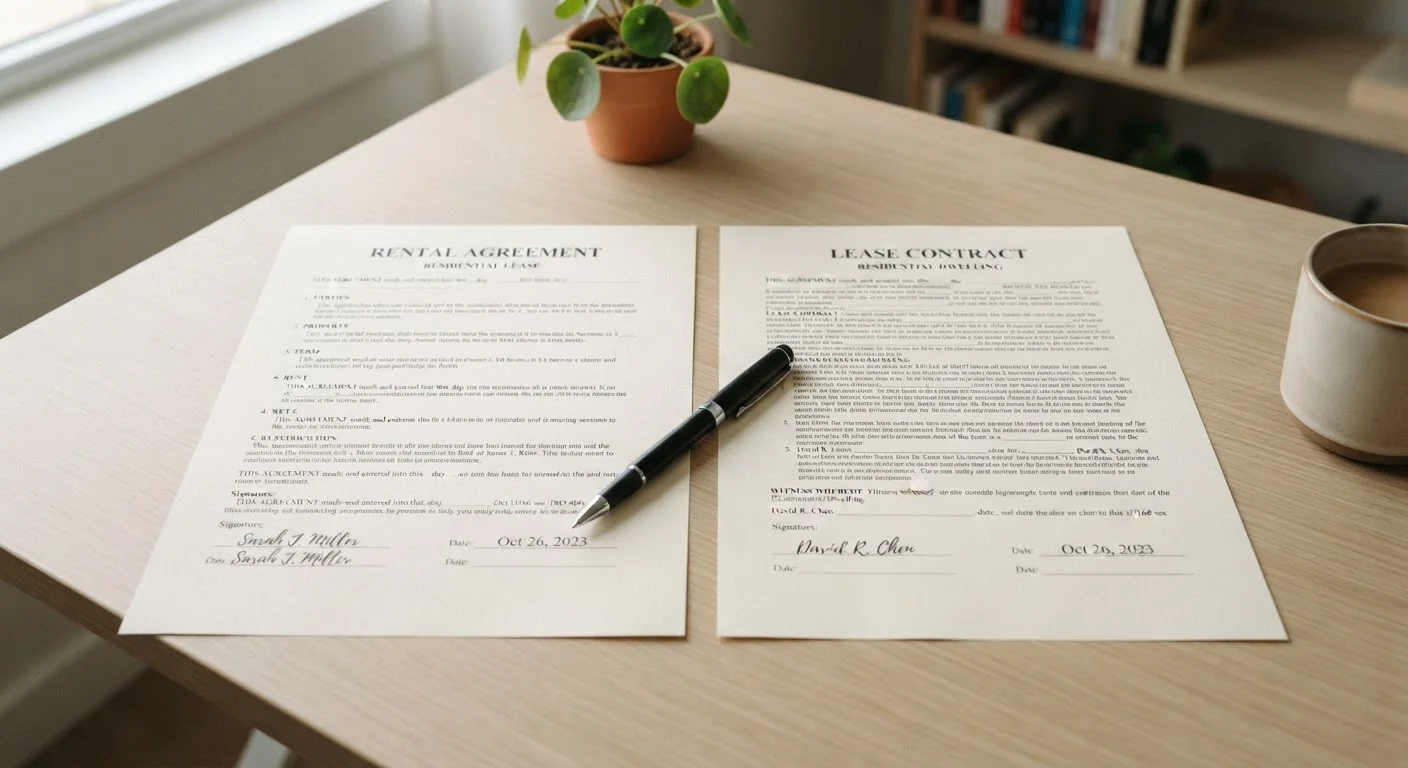
Photo: TrendingResults.net | Discover More, Trend More editorial
Key Takeaways
- A rental agreement typically runs month-to-month; a lease locks in terms for a fixed period, often 12 months.
- Both are legally binding contracts, but a lease offers stronger price and occupancy protections.
- Landlords can change rental terms with proper notice; lease terms are generally fixed until expiration.
- Breaking a lease early often carries financial penalties not present in month-to-month arrangements.
- State and local law govern both arrangements - tenant rights vary significantly by location.
How the Two Terms Are Actually Defined
In everyday conversation, people use "renting" and "leasing" as though they mean the same thing - and in casual usage, that's usually fine. But in a legal and contractual context, the two terms describe arrangements with meaningfully different structures and obligations.
A rental agreement is typically a short-term, often month-to-month contract. Either party - landlord or tenant - can end the arrangement with proper written notice (usually 30 days, though this varies by state). Because of its rolling nature, the landlord can also adjust terms - such as rent - at each renewal cycle, provided they give the legally required notice period.
A lease is a fixed-term contract, most commonly for 12 months, though six-month and 24-month leases exist. Both parties agree to terms that remain locked until the lease expires. This means your landlord cannot raise your rent or ask you to vacate mid-term without a valid legal reason, such as nonpayment or a lease violation. In exchange, you're obligated to pay rent through the end of the term - or face financial penalties if you leave early.
| Criterion | Rental Agreement | Fixed-Term Lease |
|---|---|---|
| Typical duration | Month-to-month (rolling) | 6, 12, or 24 months |
| Rent changes | Each renewal cycle with notice | Locked in until term ends |
| Early exit | 30-day notice, minimal penalty | Financial penalties often apply |
| Landlord flexibility | High - can adjust terms with notice | Low - terms fixed mid-term |
| Tenant stability | Lower - landlord can end with notice | Higher - requires cause to terminate |
| Typical monthly cost | Often higher for flexibility | Often lower for commitment |
For a broader look at what these documents actually contain, see what every first-time renter should know before signing anything.
Key Legal and Practical Differences
The core difference comes down to duration and mutability. A month-to-month rental is flexible by design; a lease is stable by contract. That distinction ripples through several areas renters care about most.
State Law Governs Both Arrangements
Rent Increases
Under a month-to-month rental, a landlord can raise rent at each renewal with adequate notice - often 30 to 60 days, depending on the state. Under a fixed-term lease, your rent is contractually set for the lease period. Rent increases can only take effect when the lease renews, not mid-term.
Early Termination
Ending a month-to-month rental simply requires giving the agreed-upon notice. Exiting a lease early is more complex. Most leases include an early termination clause that may require paying one to two months of additional rent, forfeiting your security deposit, or remaining liable for rent until the unit is re-rented. Some states limit how much landlords can collect, but it's rarely zero.
Subletting Provisions
Whether you rent or lease, subletting another person into your unit is generally governed by separate language in your agreement. What most leases say about subletting is worth understanding before you assume it's permitted.
Eviction Procedures
Both rental and lease agreements require landlords to follow state-mandated eviction processes - they cannot simply remove a tenant without legal proceedings. However, a month-to-month tenant has fewer protections at the end of a notice period, while a lease tenant cannot be displaced without cause before the term ends.
Which Arrangement Makes More Sense for You?
The right choice depends primarily on how certain you are about your plans. If you're navigating a job change, a relationship transition, or a move to an unfamiliar city, a month-to-month rental preserves your ability to adapt. You'll often pay a premium for that flexibility - month-to-month rents are frequently higher than those locked into a 12-month lease - but the financial trade-off may be worth it.
If your situation is settled and you want predictability, a fixed-term lease is generally the stronger option. It protects you from mid-year rent hikes, gives you legal standing if the landlord tries to terminate improperly, and often comes with a lower monthly rate. Comparing month-to-month versus fixed-term leases in more detail can help you map the decision to your own timeline and priorities.
It's also worth noting that renting and leasing are not the only housing decision you'll face. If you're further along in your financial planning, the broader question of renting versus buying introduces additional factors - equity, maintenance costs, and market conditions - that become relevant when a longer horizon is on the table.
44 million
US renter households
The U.S. Census Bureau estimates that roughly 44 million households in the United States are occupied by renters, underscoring how broadly these agreements affect Americans.
~1-2 months
Typical early lease termination fee
Most fixed-term leases include early termination clauses requiring tenants to pay one to two months of additional rent, though state law may cap this amount.
This article provides general educational information about rental and lease agreements and is not legal advice. Tenant rights, notice requirements, and lease enforceability vary by state and locality. Consult a qualified attorney or your local tenant rights organization for guidance specific to your situation.
The content on this site is provided for informational purposes only and should not be considered a substitute for professional advice. While we strive to provide accurate and up-to-date information, we make no guarantees regarding its completeness or accuracy. Always consult a qualified professional for advice specific to your circumstances before making any decisions.