
What Your Wireless Bill Is Actually Charging You For

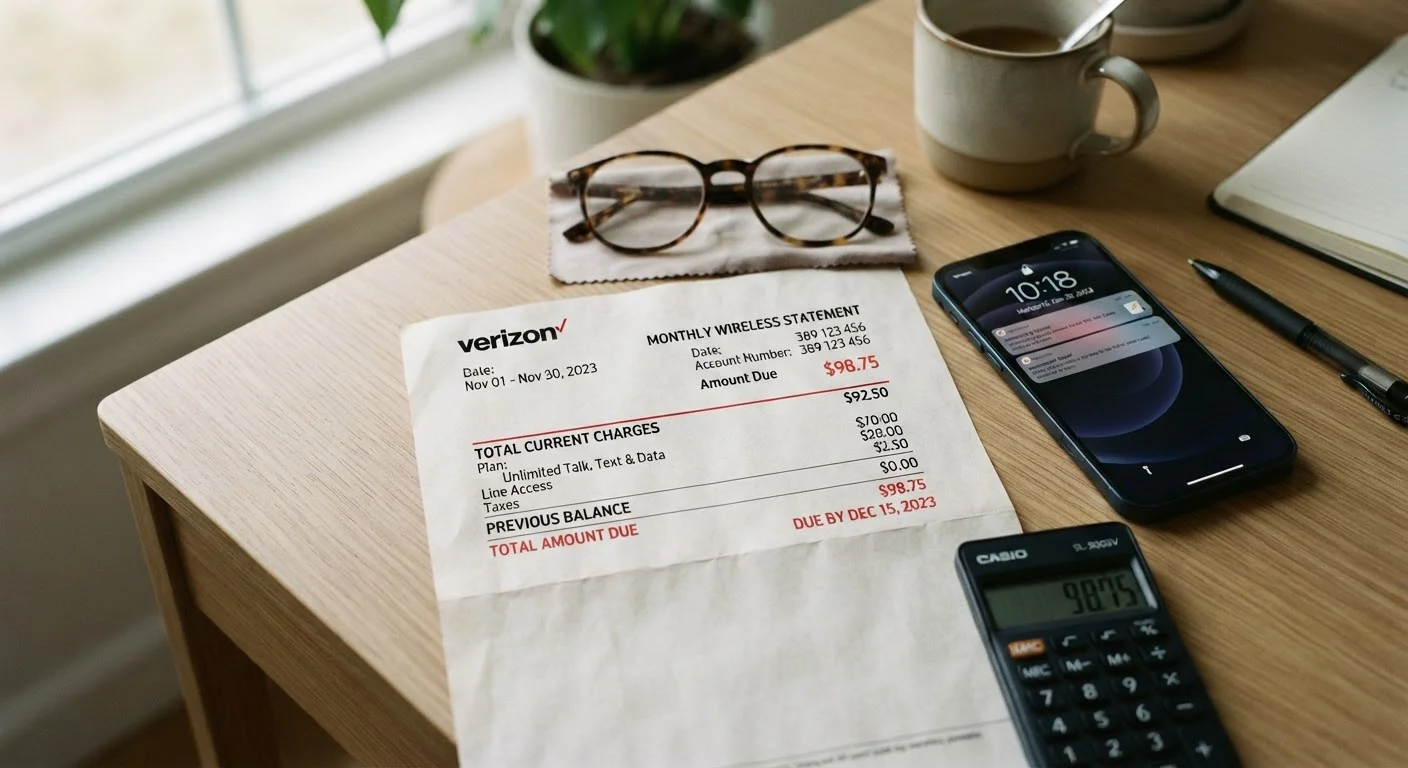
Photo: TrendingResults.net | Discover More, Trend More editorial
Key Takeaways
- The advertised plan price almost never reflects your total monthly bill.
- Surcharges like the 'regulatory recovery fee' are set by carriers, not the government.
- Device installment plans are separate from service charges and can last 24-36 months.
- Autopay and paperless billing discounts are real but usually require a specific payment method.
- Reviewing your bill each month helps catch unauthorized charges or 'bill shock' from overages.
- Some fees are negotiable or removable - it's worth calling your carrier to ask.
The Gap Between Advertised Price and Actual Bill
Wireless carriers advertise plan prices that represent only one portion of what you'll pay each month. That gap between the number in the ad and the total on your bill can be surprisingly wide - and understanding why requires breaking the bill into its core categories.
A typical wireless bill contains four broad buckets: service charges (your plan), device costs (if you financed a phone), government taxes and fees, and carrier surcharges. Each functions differently, and conflating them is exactly what leads to bill shock. Before you can spot a problem or negotiate a better deal, you need to know what each line is actually for.
For a deeper look at evaluating plans before you sign up, the phone plan shopping checklist covers what to confirm upfront - including fee transparency.
Taxes vs. Surcharges: Not the Same Thing
One of the most important distinctions on any wireless bill is between government-mandated taxes and carrier-imposed surcharges. They often appear in the same section of your bill, formatted similarly, but they are fundamentally different.
True government taxes - such as the Federal Universal Service Fund (USF) contribution, state sales tax on wireless service, and local utility taxes - are legally required and passed through to customers at set rates. You cannot negotiate these away.
Carrier surcharges, by contrast, are fees that wireless companies set themselves. Examples include administrative fees, regulatory recovery fees, and network access charges. Despite their official-sounding names, these are revenue-generating line items that carriers can increase at will. The FCC has taken note of this practice - sometimes called "junk fees" - because the labeling can mislead customers into thinking the charges are government-imposed when they are not.
Surcharge Names Sound Official - They're Not
If you want to decode more of the terminology on your bill, the wireless plan glossary breaks down common terms in plain language.
Device Installments, Add-Ons, and Autopay Discounts
If you financed your phone through the carrier, a device installment charge appears as a separate line item - usually for 24 or 36 months. This is not part of your plan cost. It's a loan repayment, and it typically doesn't disappear if you switch carriers - you may owe the remaining balance immediately upon leaving.
Add-ons such as device insurance, international calling packages, premium hotspot data, and streaming service bundles each carry their own monthly line. These are opt-in charges, but they're easy to lose track of, especially if they were added during a store visit or sign-up flow and never revisited.
Autopay and paperless billing discounts are legitimate savings, but they come with conditions. Most carriers require payment from a bank account or specific debit card - not a credit card - to qualify. The discount is applied per line, so a multi-line account can see meaningful savings, but missing a payment can temporarily remove the discount.
Check Advertised Prices Against Total Cost
If you're evaluating a new plan that advertises a per-line price, check whether that price already includes the autopay discount. Many carriers display the discounted rate prominently without making the payment-method requirement obvious.
How to Read Your Bill and Catch Problems Early
Most carriers provide itemized bills through their apps or online portals, and reviewing one monthly - even briefly - pays off. Look for: line items you didn't authorize, changes in surcharge amounts, device installments that should have ended, and third-party charges from services you don't recognize (a practice called cramming, where unauthorized subscriptions appear on wireless bills).
If you travel internationally, your bill is especially worth scrutinizing. Roaming charges are billed separately and can be substantial. The international roaming charges explainer covers how carriers calculate these costs and what your plan's fine print actually says.
~24%
Average tax and fee burden on wireless bills
Research by the Tax Foundation has found that combined federal, state, and local taxes and fees on wireless service average around 24% of the base rate in the U.S., though this varies significantly by state.
$5-$10
Typical autopay discount per line per month
Most major U.S. carriers offer a per-line monthly discount for enrolling in autopay with a qualifying payment method, commonly ranging from $5 to $10 per line.
24-36 months
Standard device installment plan length
Carrier device financing agreements in the U.S. typically run 24 to 36 months, meaning a phone's cost is spread across two to three years of billing cycles.
For a structured way to compare plans that factors in total cost - not just the advertised rate - the wireless plan evaluation framework provides a practical, budget-neutral approach. And if you're curious how wireless billing practices compare to home internet contracts, see what your ISP contract is actually telling you.
Frequently Asked Questions
The content on this site is provided for informational purposes only and should not be considered a substitute for professional advice. While we strive to provide accurate and up-to-date information, we make no guarantees regarding its completeness or accuracy. Always consult a qualified professional for advice specific to your circumstances before making any decisions.