
Certified Pre-Owned vs. Used: What the Designation Actually Guarantees

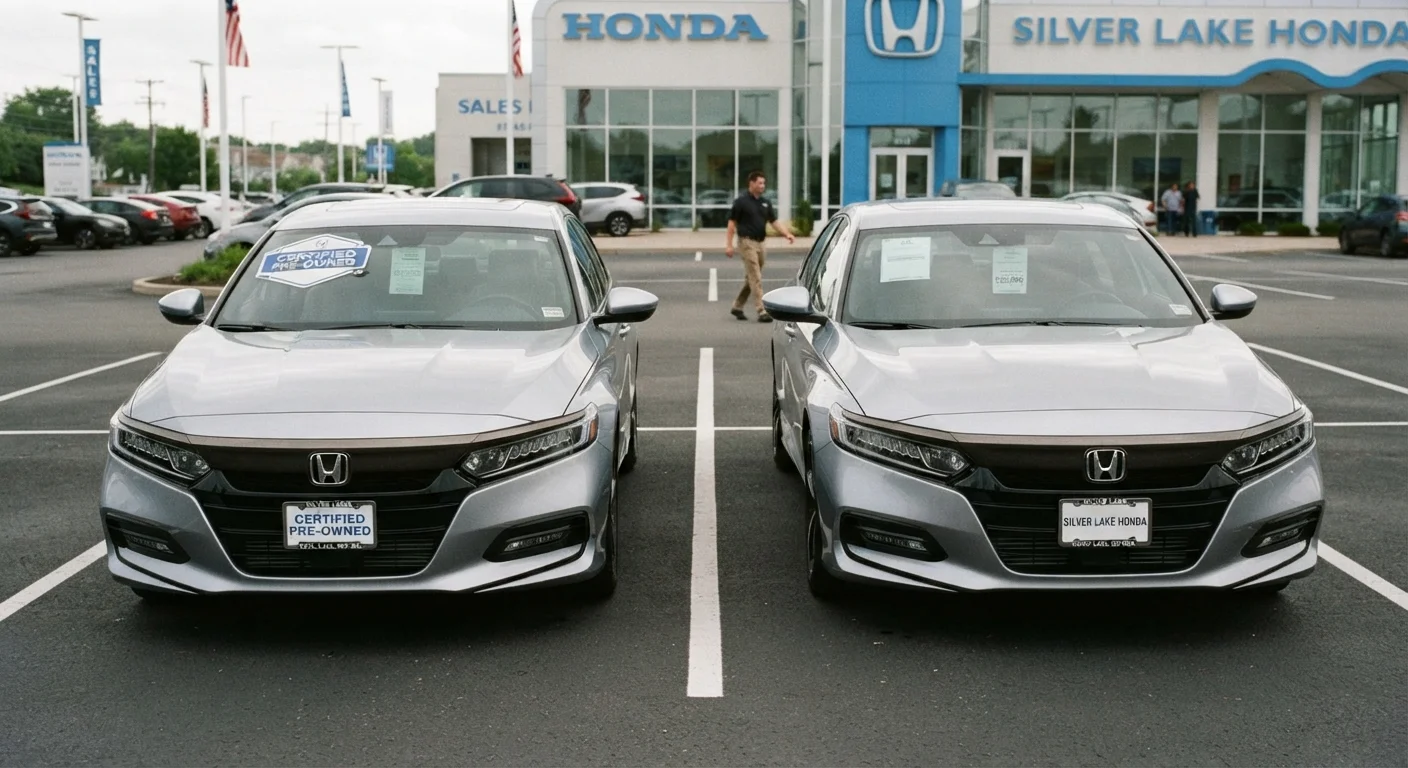
Photo: TrendingResults.net | Discover More, Trend More editorial
Key Takeaways
- CPO programs are not standardized - inspection checklists and warranty terms differ by manufacturer.
- A CPO badge does not mean the car is problem-free; it means it met a defined threshold at time of inspection.
- Standard used cars carry more buyer risk but typically cost less upfront than CPO equivalents.
- Independent pre-purchase inspections remain valuable regardless of CPO status.
- CPO warranties are generally manufacturer-backed, but always confirm coverage details in writing before signing.
What 'Certified Pre-Owned' Actually Means
The term Certified Pre-Owned (CPO) sounds reassuring, but it isn't a universal standard. Each automaker designs and administers its own program, which means a CPO vehicle from one brand may have undergone a 150-point inspection with a 7-year powertrain warranty, while another brand's CPO vehicle passed a 100-point inspection with just a 1-year limited warranty.
At its core, a CPO designation signals that the vehicle:
- Has been inspected by a franchised dealership technician against the manufacturer's checklist
- Met a defined age and mileage threshold at the time of certification (commonly under 6 years old and under 80,000 miles, though limits vary)
- Comes with some form of additional warranty coverage beyond what remained on the original factory warranty
- Often includes a vehicle history report
What CPO does not guarantee is perfection. Inspections are only as thorough as the checklist and the technician conducting them. Items outside the inspection scope - or problems that hadn't yet presented symptoms - won't necessarily be caught.
Only Franchised Dealers Can Certify Under Manufacturer Programs
Standard Used Cars: The Baseline Reality
A standard used car is any previously owned vehicle sold without manufacturer certification. This covers private-party sales, independent dealership sales, and even franchise dealership sales of vehicles that didn't qualify for - or weren't put through - a CPO program.
The absence of CPO status doesn't mean a vehicle is in poor condition. Many well-maintained, low-mileage used vehicles are sold without CPO designation simply because they're older than program age limits or were traded to a lot that doesn't offer manufacturer certification.
What buyers give up without CPO status:
- No structured inspection record from the manufacturer's program
- No added manufacturer-backed warranty (though dealers may offer independent third-party warranties)
- Greater reliance on the buyer's own due diligence
This is why a independent pre-purchase inspection from a trusted mechanic remains one of the smartest moves for any used-car buyer, CPO or not. A qualified technician can surface issues that no dealership checklist is designed to catch.
Head-to-Head: CPO vs. Standard Used
The comparison below reflects general program structures. Always request and read the specific terms for any CPO vehicle you're considering.
| Criterion | Certified Pre-Owned | Standard Used Car |
|---|---|---|
| Inspection | Manufacturer-defined multi-point checklist | None required; buyer's responsibility |
| Added Warranty | Manufacturer-backed CPO warranty included | No added warranty (as-is unless noted) |
| Vehicle History Report | Typically included | Varies; buyer may need to obtain independently |
| Availability | Franchised dealerships only | Dealerships, private sellers, independent lots |
| Price Premium | Higher than comparable non-certified vehicles | Lower upfront cost |
| Age/Mileage Limits | Manufacturer-set limits apply | No restrictions |
| Program Standardization | Varies by manufacturer | Not applicable |
Price is the most immediate difference buyers notice. CPO vehicles typically command a premium of several hundred to a few thousand dollars over comparable non-certified used vehicles, depending on the vehicle's age, mileage, and the strength of the manufacturer's program. Whether that premium is worth it depends on the specifics of what's being covered and for how long.
Evaluating Whether the CPO Premium Is Justified
Before paying extra for CPO status, ask these questions:
- What exactly does the inspection cover? Request the actual checklist. A 200-point inspection that focuses heavily on cosmetics may offer less mechanical reassurance than a tighter 100-point inspection centered on drivetrain and safety systems.
- What does the CPO warranty cover, and for how long? Powertrain-only coverage is more limited than bumper-to-bumper coverage. Confirm what's excluded - wear items like brakes and tires are almost always excluded.
- Is the warranty transferable? If you sell the car before the CPO term ends, a transferable warranty may add resale value.
- Does a factory warranty remain? Some late-model CPO vehicles still carry a portion of the original new-car warranty, stacking on top of the CPO term.
For buyers who want additional coverage beyond what CPO provides, or who are considering a standard used vehicle, extended warranty and prepaid maintenance plans are worth understanding in detail - including what they typically exclude.
Also review the vehicle history report carefully regardless of CPO status. A certified vehicle with a prior accident may carry more risk than a non-certified vehicle with a clean history. And use our used car inspection checklist to systematically assess condition before committing.
~$1,000-$3,500
Typical CPO price premium over comparable used vehicles
Industry estimates from automotive research organizations suggest CPO vehicles command a meaningful premium, though the exact gap varies by brand, model, and market conditions.
Varies widely
CPO powertrain warranty length across manufacturers
Some manufacturer programs offer powertrain coverage extending to 100,000 total miles while others cap it much sooner - making direct program comparisons essential before purchase.
The content on this site is provided for informational purposes only and should not be considered a substitute for professional advice. While we strive to provide accurate and up-to-date information, we make no guarantees regarding its completeness or accuracy. Always consult a qualified professional for advice specific to your circumstances before making any decisions.