
Buying a Car

Finalizing a Car Purchase: Documents to Review Before You Sign

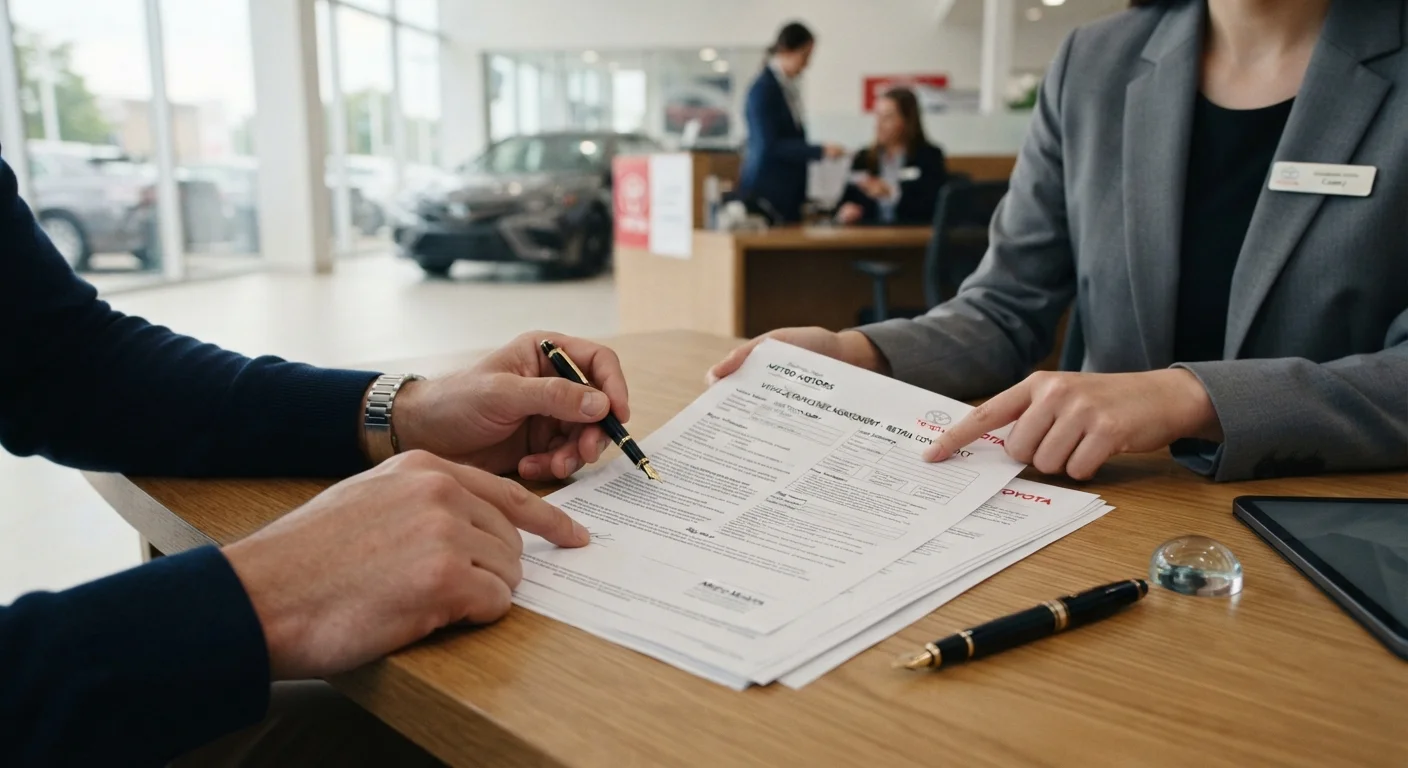
Finalizing a Car Purchase: Documents to Review Before You Sign

Photo: TrendingResults.net | Discover More, Trend More editorial

Rushing through paperwork is one of the most common buyer regrets. Know which documents to read carefully and what terms to verify.

Key Takeaways

  • The finance and insurance office is where most unexpected charges appear — read every line carefully.
  • Your agreed purchase price should appear verbatim in the sales contract before you sign anything.
  • Add-on products like extended warranties and paint protection are optional and always negotiable.
  • Federal and state disclosure documents carry legal weight — never skip them.
  • You have the right to take documents home to review before signing; a reputable dealer will allow this.

Why the Paperwork Phase Deserves Your Full Attention

For many buyers, the Finance and Insurance (F&I) office at the end of a car deal feels like a formality. You've already agreed on a price — what's left to do? Quite a lot, actually. This is the stage where the total cost of your purchase is locked in, where optional add-ons can quietly inflate your monthly payment, and where errors in key terms can follow you for years.

Research consistently shows that buyers who spend time reviewing documents carefully are less likely to report post-purchase regret about hidden fees or financing terms they didn't fully understand. Before you sign anything, treat each document as a contract — because it is.

If you haven't already completed a pre-purchase inspection, do that before reaching the paperwork stage. And for used vehicles, a thorough vehicle history report review is essential groundwork before any documents are signed.

Don't Let Time Pressure Rush Your Review

Dealership F&I offices are sometimes structured to move quickly, and you may feel pressure to sign without reading fully. Resist that pressure. You have the right to read every document before signing, and you can ask for time to do so. If a dealer refuses to let you review documents at your own pace, that itself is a red flag worth taking seriously.

The Documents You'll Encounter — and What to Verify

Every car purchase involves a stack of paperwork. Below is a breakdown of the most important documents you'll see, followed by the full checklist of items to verify in each one. Use the checklist as a literal walkthrough — check each item before moving to the next page.

Buyer's Order / Purchase Agreement

Confirm the vehicle's year, make, model, trim level, and VIN (Vehicle Identification Number) exactly match what you agreed to purchase. Must
Verify the negotiated selling price appears correctly — not the sticker price or a different figure. Must
Check that any trade-in value, down payment, or manufacturer incentive is accurately reflected as a deduction. Must
Review all fees line by line — documentation fees, dealer prep, and destination charges should have been disclosed earlier; flag any new ones. Must
Confirm there are no blank fields left to be filled in after you sign. Must

Retail Installment Contract (Financing Agreement)

Verify the Annual Percentage Rate (APR) matches what you were quoted — even a small difference significantly affects total cost over the loan term. Must
Check the loan term (number of months) and confirm it aligns with what you agreed to. Must
Review the monthly payment amount and confirm it matches your pre-signing calculations. Must
Note the total amount financed and the total amount you'll pay over the life of the loan — these are different numbers, and both matter. Must
Check for a prepayment penalty clause that could charge you for paying off the loan early. Should

Add-On Products and F&I Offerings

Identify every optional product bundled into the contract — extended service contracts, GAP insurance, paint protection, tire and wheel coverage — and confirm you agreed to each one. Must
Ask for the cost of each add-on to be itemized separately so you understand what each product is actually costing you. Should
Request written documentation of the cancellation or refund policy for each optional product before signing. Should
Remove any product you did not request or do not want — these are optional, and you are not required to accept them. Nice to have

Title, Registration, and Disclosure Documents

Confirm the name(s) on the title application are spelled correctly and match your legal ID. Must
Review the Federal Odometer Disclosure Statement on used vehicles and verify the mileage matches the vehicle. Must
For new vehicles, review the Monroney label (window sticker) one final time to confirm included features and any separately listed options. Should
If purchasing a used vehicle, review any As-Is disclosure or limited warranty documentation to understand what protection, if any, remains. Must

Warranty Documentation

Obtain the full written warranty terms — not just a verbal summary — and confirm coverage period, mileage limits, and what is and is not covered. Must
Verify any remaining factory warranty transfers correctly to you as the new owner. Should
If an extended service contract was purchased, get the full contract booklet before leaving — not just a summary sheet. Should

Once you've verified all key terms, take a moment to compare the total amount financed against what you originally expected to pay. Any significant discrepancy is worth raising before you sign. Remember: asking questions is not a delay — it's due diligence. Just as you'd review a contractor agreement carefully (see questions to ask before signing with a contractor), the same discipline applies here.

Once You Sign, Changes Are Very Difficult

A signed retail installment contract is a legally binding agreement. Disputing incorrect terms after signing is significantly harder than catching them before. If you spot a discrepancy — in price, APR, or any term — raise it immediately and do not sign until the document is corrected with a new printed copy. Never accept a handwritten correction on a contract as a substitute for a reprinted document.

After signing, keep copies of every document in a secure location. These records matter for registration, warranty claims, insurance, and future resale. Once your vehicle is yours, staying on top of routine car maintenance helps protect the investment you just made.

Autos Editorial Team

TrendingResults.net | Discover More, Trend More

Autos Editorial Team is the collective byline for our editorial team and contributor network. Articles published under this byline or an editorial pen name are researched, written, and reviewed according to our editorial standards for clarity, consistency, and independence before publication.

Car MaintenanceBuying a CarRoad & Safety
View author profile

The content on this site is provided for informational purposes only and should not be considered a substitute for professional advice. While we strive to provide accurate and up-to-date information, we make no guarantees regarding its completeness or accuracy. Always consult a qualified professional for advice specific to your circumstances before making any decisions.