
Tire Pressure and Why Getting It Wrong Costs You More Than You Think

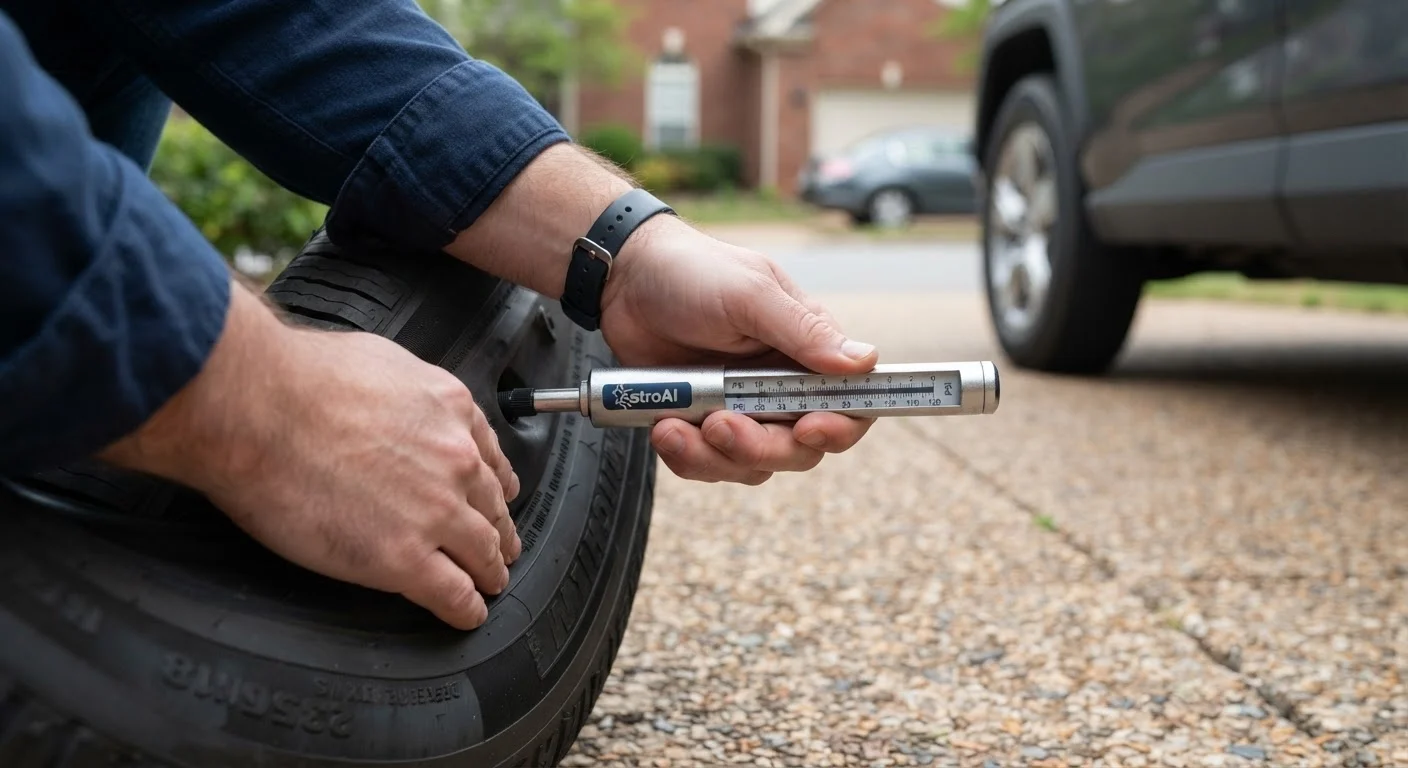
Photo: TrendingResults.net | Discover More, Trend More editorial
Key Takeaways
- Under-inflated tires increase rolling resistance, which burns more fuel on every trip.
- Over-inflated tires reduce the contact patch with the road, hurting traction and braking.
- Tires lose roughly 1 PSI per month naturally, and lose 1 PSI for every 10°F drop in temperature.
- The correct PSI is printed on a sticker inside your driver's door jamb - not on the tire sidewall.
- Checking pressure monthly with an inexpensive gauge is one of the simplest ways to protect your tires and your wallet.
The Hidden Cost of Ignoring Tire Pressure
Most drivers don't think about tire pressure until a warning light appears - and by that point, the damage is often already underway. Incorrect inflation quietly affects three things that hit you directly: your fuel costs, your tire lifespan, and your safety on the road.
Under-inflated tires flex more than they should as they roll, generating extra heat and resistance. That resistance forces your engine to work harder, which burns more fuel. The U.S. Department of Energy has noted that for every 1 PSI drop in pressure across all four tires, fuel economy can decrease by roughly 0.2%. That may sound small, but compounded across months of driving on tires that are 5-8 PSI low, the fuel cost adds up noticeably.
Over-inflation creates a different problem: the tire becomes a harder, rounder surface that contacts the road along a smaller area. Less rubber touching the road means reduced grip - exactly what you don't want during emergency braking or in wet conditions. It also accelerates wear down the center of the tread, shortening tire life unevenly. For a deeper look at what uneven wear actually signals, see why tires wear unevenly.
~0.2%
Fuel economy lost per 1 PSI drop (all four tires)
According to the U.S. Department of Energy's fueleconomy.gov resource on tire inflation and fuel efficiency.
1 PSI
Pressure lost per 10°F temperature drop
A well-established relationship in tire physics, referenced by the National Highway Traffic Safety Administration (NHTSA) in tire safety guidance.
25%+
Pressure drop before TPMS warning light activates
The TPMS threshold mandated by federal regulation for passenger vehicles sold in the U.S. since 2008.
Finding the Right PSI - and Where Drivers Go Wrong
One of the most common mistakes drivers make is reading the PSI number printed on the tire sidewall and treating it as the target. That number is the maximum pressure the tire can safely hold - not the ideal operating pressure for your vehicle.
Your car's recommended tire pressure is set by the vehicle manufacturer and accounts for the car's weight, suspension, and intended load. You'll find it on a sticker affixed to the inside edge of the driver's door frame, or in the owner's manual. Front and rear tires sometimes have different recommended pressures, so check both.
Check Pressure in the Morning, Not After Driving
It's also worth knowing that the TPMS (Tire Pressure Monitoring System) light many newer vehicles have is not a maintenance tool - it's an emergency alert. By the time it triggers, pressure has typically dropped 25% or more below the recommended level. Relying on the TPMS light instead of proactive monthly checks means your tires are routinely operating below optimal pressure for extended stretches.
How Temperature and Time Work Against You
Tire pressure isn't static. Even a tire in perfect condition with no puncture will lose roughly 1 PSI per month due to normal permeation - air molecules slowly escaping through the rubber. Seasonal temperature swings compound this further: for every 10°F drop in ambient temperature, tires lose approximately 1 PSI.
In practical terms, a car properly inflated at 35 PSI in August could register closer to 31-32 PSI by December in a cold climate - a meaningful drop that affects handling and economy without any visible sign from the outside. This is one reason tire pressure checks are particularly important heading into fall and winter.
Tire pressure is the kind of maintenance item that sits in the same category as air filter checks and fluid top-offs - easy to overlook until it causes a real problem. Our guide on commonly forgotten maintenance tasks covers several of these quiet performance drains together.
Checking and Adjusting Pressure the Right Way
Checking tire pressure correctly takes about five minutes and requires only an inexpensive gauge - the pencil-style, dial, or digital type all work reliably. For accurate results, check pressure when the tires are cold, meaning the car has been parked for at least three hours or driven fewer than a mile. Driving heats the air inside tires and temporarily increases pressure readings, which can give you a falsely optimistic number.
- Remove the valve cap from the tire stem.
- Press the gauge firmly onto the valve stem to get a reading.
- Compare the reading to the recommended PSI on your door sticker.
- Add air if pressure is low, or release air using the small pin inside the valve stem if over-inflated.
- Recheck after adjusting and replace the valve cap.
If you find yourself repeatedly dealing with tires that lose pressure faster than normal, it may signal a slow puncture or a faulty valve stem - both worth having inspected by a qualified technician. Proper tire pressure is also directly linked to handling and road safety, particularly in emergency maneuvers where grip and response time matter most.
Frequently Asked Questions
The content on this site is provided for informational purposes only and should not be considered a substitute for professional advice. While we strive to provide accurate and up-to-date information, we make no guarantees regarding its completeness or accuracy. Always consult a qualified professional for advice specific to your circumstances before making any decisions.