
How Drowsy Driving Compares to Drunk Driving - and Why It's Underreported

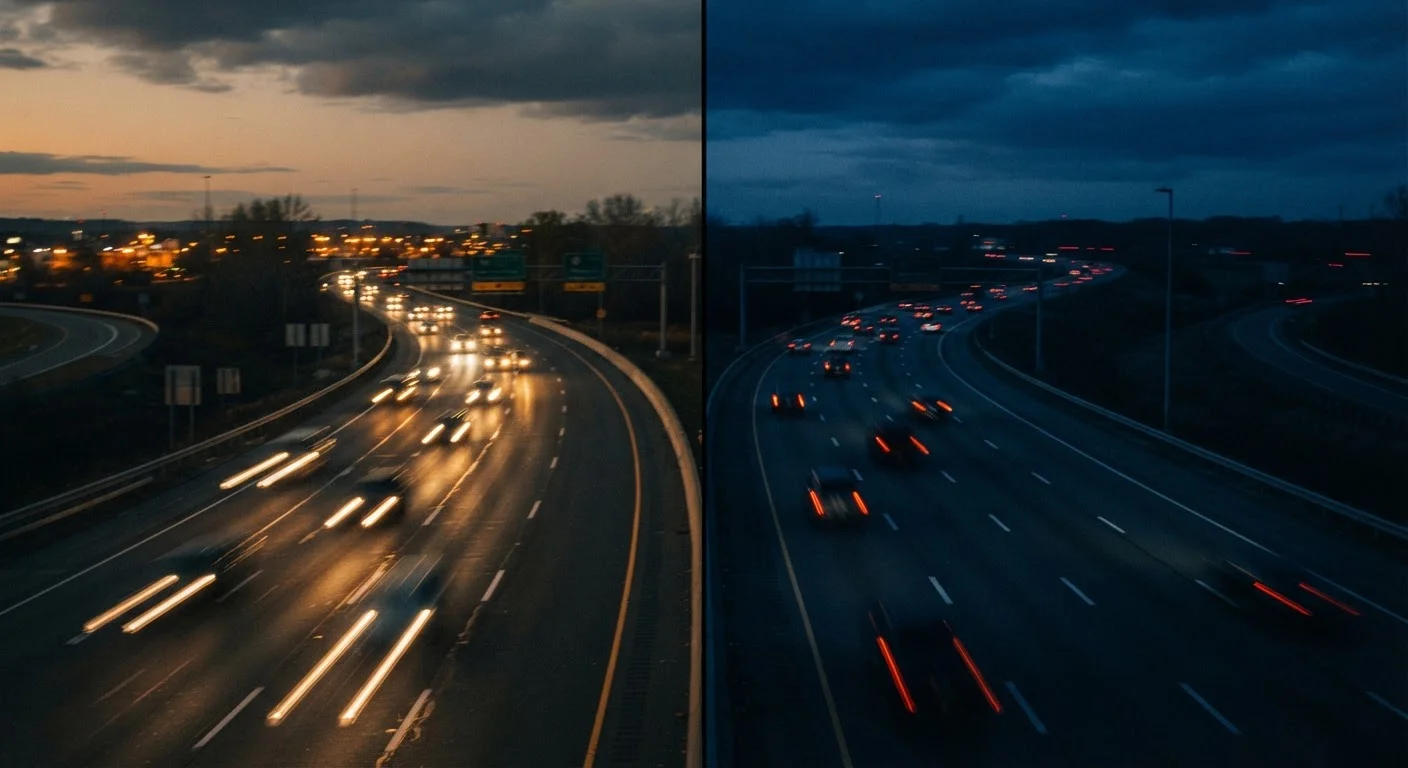
Photo: TrendingResults.net | Discover More, Trend More editorial
Key Takeaways
- Being awake for 18 hours produces impairment comparable to a 0.05% blood alcohol concentration, according to research.
- Drowsy driving is estimated to cause thousands of deaths annually in the U.S., but official figures likely undercount the true toll.
- Unlike alcohol, there is no roadside test for drowsiness, making enforcement and data collection far more difficult.
- Microsleeps - involuntary sleep episodes lasting just seconds - can occur without the driver noticing.
- Both forms of impairment slow reaction time, reduce situational awareness, and increase crash risk significantly.
How Each Type of Impairment Affects Your Driving
Alcohol impairs driving through well-understood mechanisms: it slows central nervous system function, reduces coordination, distorts judgment, and narrows a driver's field of vision. At a blood alcohol concentration (BAC) of 0.08% - the legal limit in all U.S. states - reaction times are measurably delayed and the ability to track moving objects deteriorates significantly.
Drowsiness operates differently but produces strikingly similar outcomes. Sleep deprivation reduces activity in the brain's prefrontal cortex, the region responsible for decision-making and impulse control. A fatigued driver loses the ability to sustain attention, underestimates risk, and may experience microsleeps - involuntary episodes of sleep lasting two to thirty seconds - without any awareness that they occurred. At highway speeds, even a two-second microsleep means traveling more than 170 feet effectively unconscious.
Research published by the AAA Foundation for Traffic Safety and studies from the journal Nature have suggested that going without sleep for 18 hours produces impairment similar to a BAC of approximately 0.05%, and 24 hours without sleep approaches 0.10% - above the legal limit. These are not equivalent processes, but the real-world effect on driving safety is comparable in magnitude.
| Criterion | Drunk Driving | Drowsy Driving |
|---|---|---|
| Primary impairment mechanism | CNS depression from alcohol | Sleep deprivation, microsleeps |
| Reaction time impact | Significantly slowed | Significantly slowed |
| Roadside detection method | Breathalyzer, field sobriety test | No standardized test exists |
| Legal threshold | 0.08% BAC in all U.S. states | No defined legal threshold |
| Crash reporting accuracy | Relatively consistent reporting | Widely believed to be underreported |
| Driver self-awareness of impairment | Often underestimated, but physical signs present | Frequently unrecognized; microsleeps go unnoticed |
| Peak risk period | Weekend late nights | Midnight-6 a.m. and early afternoon |
Why Drowsy Driving Stays Underreported
Drunk driving has decades of enforcement infrastructure behind it: breathalyzers, field sobriety tests, standardized legal thresholds, and mandatory reporting requirements. When a crash involves a drunk driver, investigators can often establish impairment with objective evidence.
Drowsy driving has none of that. There is no roadside test for sleepiness. A driver who falls asleep and causes a crash may not admit it - or may genuinely not remember dozing off. Police reports typically require visible evidence of impairment, and fatigue leaves no measurable trace after the fact. As a result, the National Highway Traffic Safety Administration (NHTSA) has long acknowledged that its drowsy driving crash statistics almost certainly undercount the true scope of the problem.
18 hrs
Awake time that may equal 0.05% BAC impairment
AAA Foundation for Traffic Safety and peer-reviewed sleep research suggest this rough equivalence in driving performance degradation.
~100,000
Estimated police-reported drowsy driving crashes per year (U.S.)
NHTSA estimates this figure, while acknowledging it likely represents a significant undercount of actual drowsy-driving incidents.
1 in 25
Adult drivers who report falling asleep at the wheel in the past month
According to CDC survey data, self-reported episodes of falling asleep while driving are alarmingly common among American adults.
Estimates from the NHTSA and the Centers for Disease Control and Prevention (CDC) suggest drowsy driving contributes to tens of thousands of crashes and hundreds to over a thousand deaths annually in the United States. However, some researchers believe the true figure could be substantially higher when accounting for crashes where fatigue was a contributing factor that went unrecorded.
This reporting gap matters. It shapes how much funding, research, and public attention the problem receives - and it may explain why many drivers still don't view drowsy driving as seriously as drunk driving, even when the physiological risks are comparable. For more on how environmental conditions stack additional risk, see our guide on night driving risks.
Warning Signs and What to Do
Recognizing drowsiness before it becomes dangerous is an essential driver skill. Key warning signs include: frequent yawning or blinking, difficulty remembering the last few miles driven, drifting from your lane, missing an exit, and the head drooping involuntarily. These are not minor inconveniences - they are indicators that your brain is struggling to stay awake.
The most effective immediate countermeasure is pulling off the road safely and resting. A short nap of 15-20 minutes can temporarily restore alertness. Caffeine can also provide a brief boost, but it takes roughly 30 minutes to take effect and is not a substitute for sleep. Opening a window or turning up the radio may feel helpful but provide minimal sustained benefit.
Planning ahead remains the most reliable strategy. Avoiding driving during peak drowsiness windows - typically between midnight and 6 a.m., and in the early-to-mid afternoon - reduces exposure significantly. Shift workers, long-haul drivers, and anyone who regularly sleeps fewer than seven hours a night face consistently elevated risk. Pairing fatigue awareness with a defensive driving mindset means proactively identifying your own limits before they become a crisis on the road.
Adverse weather adds another layer of risk to an already fatigued driver. Our article on driving in fog, ice, and heavy rain outlines how these conditions demand even faster reactions - reactions that drowsiness directly compromises.
The content on this site is provided for informational purposes only and should not be considered a substitute for professional advice. While we strive to provide accurate and up-to-date information, we make no guarantees regarding its completeness or accuracy. Always consult a qualified professional for advice specific to your circumstances before making any decisions.