
Driving in Fog, Ice, and Heavy Rain: How Conditions Change the Rules

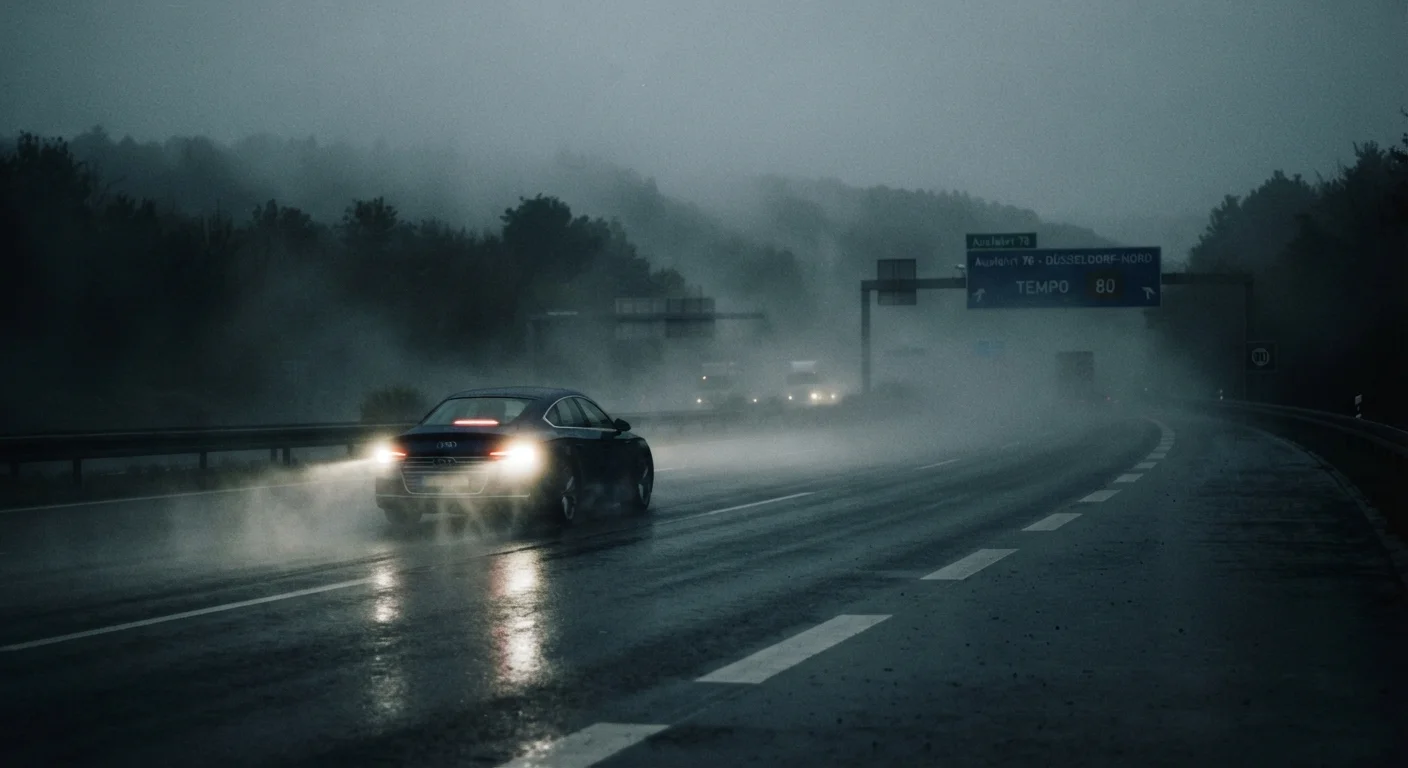
Photo: TrendingResults.net | Discover More, Trend More editorial
Key Takeaways
- Wet roads can double or triple stopping distances compared to dry pavement conditions.
- In fog, use low-beam headlights - high beams reflect off moisture and reduce visibility further.
- Ice requires following distances of eight to ten seconds, not the standard two to three.
- Speed limits are set for ideal conditions; drivers are responsible for adjusting in poor weather.
- Overconfidence and inadequate following distance are leading causes of weather-related crashes.
Why Adverse Weather Changes the Physics of Driving
Most drivers understand that rain, fog, and ice make roads more dangerous - but fewer grasp how fundamentally the physics of vehicle control change in those conditions. Friction, visibility, and reaction time all shift in ways that standard driving habits don't account for.
On dry pavement, a passenger vehicle traveling at 60 mph typically needs roughly 300 feet to come to a complete stop. On wet roads, that stopping distance can grow by 50% or more. On packed ice, it can extend to four or five times the dry-road figure, depending on temperature and tire condition. Your speedometer shows the same number regardless - the road does not.
Understanding the mechanics at play is the foundation of defensive driving in poor weather. Reactive responses - braking hard when you see danger - are rarely enough when conditions have already stretched your margin for error to nothing.
21%
Of all vehicle crashes linked to weather conditions
According to the U.S. Federal Highway Administration, approximately 21% of all vehicle crashes each year involve adverse weather conditions or slick pavement.
4-10x
Stopping distance increase on ice vs. dry pavement
Road safety research consistently shows that stopping distances on glare ice can be four to ten times longer than on dry asphalt at the same speed.
5,000+
Annual deaths in weather-related crashes in the U.S.
The Federal Highway Administration estimates more than 5,000 people are killed in weather-related vehicle crashes in the United States annually.
Best Practices for Every Major Weather Condition
Each type of weather introduces distinct hazards, and the adjustments that help in rain aren't always the same ones that matter most on ice. Here's what the evidence and road-safety guidance consistently support:
Reduce speed well below the posted limit when roads are wet, icy, or visibility is compromised.
Use low-beam headlights in fog - never high beams.
Brake gently and early on ice or snow - avoid sudden inputs to steering, acceleration, or braking.
Pull over and stop if fog reduces visibility to the point where you cannot see far enough to react safely.
Watch for hydroplaning signs and ease off the accelerator rather than braking hard if it occurs.
Turn on your vehicle's defrost systems and ensure all windows are fully clear before moving.
Quick Adjustments You Can Make Right Now
You don't need to wait for a dangerous weather event to prepare. Many of the habits that protect you in fog, ice, and rain can be adopted before you ever leave the driveway - and reinforced on every trip.
For a broader look at keeping your vehicle ready for changing seasons, see our seasonal car maintenance guide. Tires, wipers, and brakes that are in poor condition amplify every risk described here.
Following Distance: The Number Most Drivers Get Wrong
The standard two-second following distance is a minimum for dry, clear conditions - and even then, many drivers don't maintain it consistently. In adverse weather, the math changes dramatically.
The two-second rule is widely misunderstood even in ideal conditions. In heavy rain, safety experts broadly recommend doubling that gap to at least four seconds. On snow or slush, six seconds is a more appropriate baseline. On glare ice - particularly black ice, which is nearly invisible - eight to ten seconds may still leave insufficient room if speed isn't also reduced significantly.
One reliable method: pick a fixed landmark ahead (a sign, overpass, or painted marker). When the vehicle in front passes it, count slowly. If you reach that landmark before finishing your count, you are too close. This technique works in any condition and costs nothing to use.
State Laws on Adverse-Weather Driving
Visibility hazards like fog also interact directly with following distance. Because fog obscures how far ahead vehicles actually are, drivers routinely misjudge gaps and close in faster than intended. This compounds the reduced-friction problem on wet or icy roads. See also our article on vehicle blind spots - in poor weather, those unseen zones become even more consequential.
The content on this site is provided for informational purposes only and should not be considered a substitute for professional advice. While we strive to provide accurate and up-to-date information, we make no guarantees regarding its completeness or accuracy. Always consult a qualified professional for advice specific to your circumstances before making any decisions.