
Blind Spots Are Bigger Than You Think

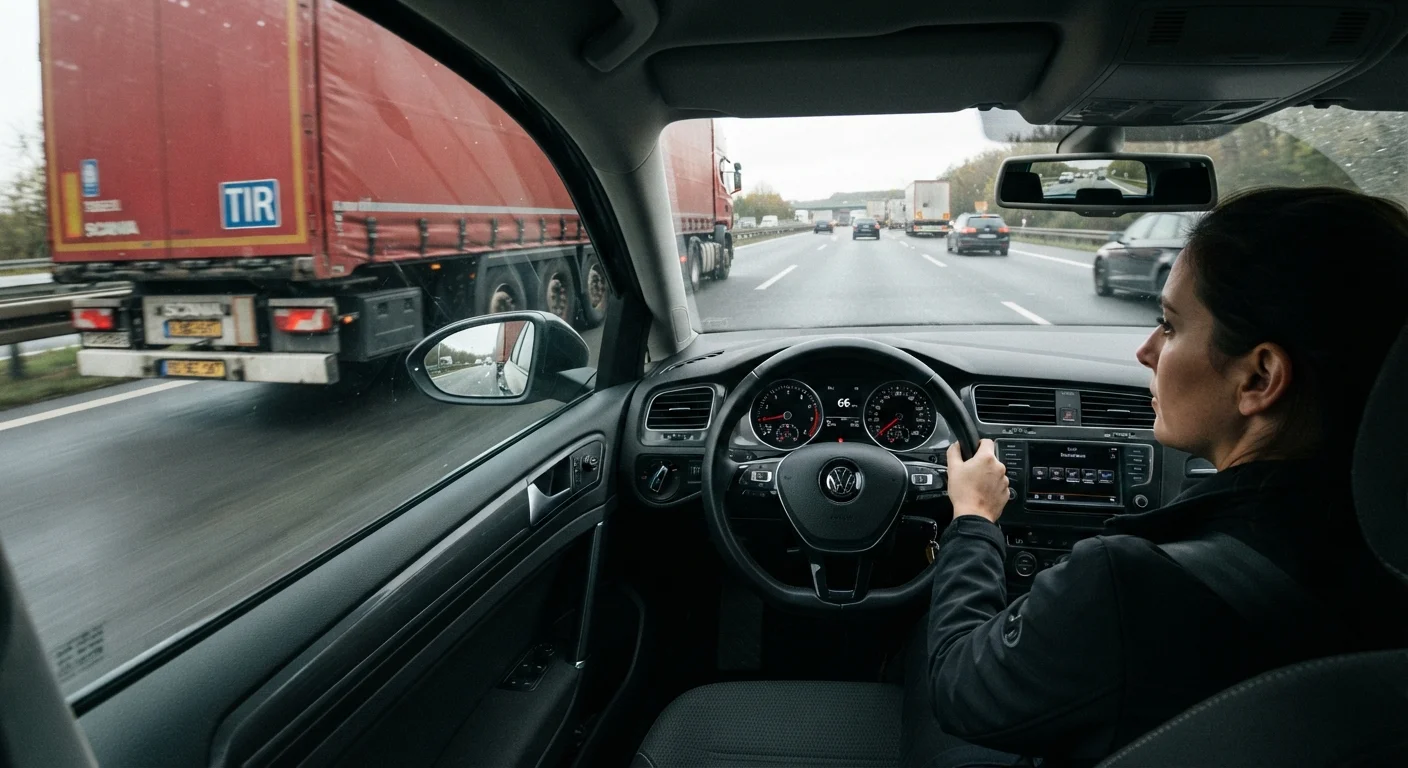
Photo: TrendingResults.net | Discover More, Trend More editorial
Key Takeaways
- Every vehicle has multiple blind spots that mirrors alone cannot eliminate.
- Larger vehicles - SUVs, trucks, vans - have considerably bigger blind zones than sedans.
- Proper mirror adjustment reduces blind spots but does not remove them entirely.
- A physical head-check (shoulder check) remains essential before lane changes and merges.
- Blind spot monitoring technology assists but should not replace active driver checks.
- Pedestrians and cyclists are especially vulnerable because they can disappear into blind zones quickly.
Why "I Checked My Mirrors" Isn't Enough
Most drivers develop a mirror-checking habit early, and that habit is genuinely important. But mirrors have a fundamental limitation: they show a continuous picture of some areas around your vehicle, not all of them. The zones they miss - your blind spots - are where a significant share of lane-change crashes originate.
The National Highway Traffic Safety Administration (NHTSA) has long identified improper lane changes as a leading contributor to multi-vehicle crashes, with failure to account for blind spots playing a consistent role. Mirrors are a tool, not a solution. Understanding what they can't show you is just as important as knowing how to use them.
New and experienced drivers alike tend to underestimate how large these zones actually are. New drivers in particular often build an early overconfidence in mirrors without ever learning the specific geometry of blind spots on their own vehicle.
~840,000
Estimated annual U.S. blind-spot-related crashes
NHTSA research has estimated hundreds of thousands of annual crashes involve blind spot or backing-related factors, with lane-change incidents among the most frequent.
30+ feet
Rear blind zone depth on large pickup trucks
Testing by consumer vehicle safety groups has shown full-size trucks and large SUVs can have rear blind zones exceeding 30 feet directly behind the vehicle.
2-3×
Larger blind zones in SUVs vs. sedans
Vehicle safety researchers generally note that larger body styles create proportionally bigger blind zones due to higher ride height, thicker pillars, and wider bodies.
Mapping the Blind Zones Around Your Vehicle
A standard passenger sedan typically has four main blind spot areas:
- Left rear quarter: The zone behind and to the left, roughly between your driver's-side mirror's field of view and what your center mirror captures. This is the most dangerous area during left lane changes on highways.
- Right rear quarter: A mirror image of the left side - and often larger, because the right side mirror is positioned further from the driver's eye, giving it a narrower effective viewing angle.
- Front corners: The areas immediately in front of each bumper corner, where pedestrians or cyclists can stand within feet of the car and go unseen.
- Directly ahead close-range: Less recognized but relevant in parking situations, particularly for tall vehicles where the hood obscures objects low to the ground in front of the bumper.
For SUVs, trucks, and vans, these zones expand - sometimes dramatically. A full-size pickup truck, for example, can have a rear blind zone extending over 30 feet behind the vehicle. That's enough space for a child, a cyclist, or even a small car to go undetected.
How Mirror Adjustment Actually Works
Many drivers position their side mirrors to show the rear quarter panel of their own car prominently. This feels intuitive - it creates a sense of orientation - but it actually wastes the mirror's field of view on your own vehicle instead of the lane beside you.
A more effective approach, often described in driver safety research, involves angling side mirrors outward so your own vehicle's body sits at the very inner edge of the mirror's view. This pushes the mirror's useful coverage further into the adjacent lane. Combined with your center mirror, you get a broader, more continuous field of view with smaller gaps.
Even with optimal positioning, a gap still exists. That gap is where your shoulder check comes in. Briefly turning your head to look through the rear side window before any lane change physically closes the coverage area your mirrors leave open.
Adjust Mirrors Before Every Drive
Technology Helps - But Has Limits
Blind spot monitoring systems, now common across many vehicle classes, use radar sensors mounted in the rear bumper to detect vehicles entering your blind zone and alert you with a light in or near the corresponding mirror. When a turn signal is activated while a vehicle occupies that zone, many systems also produce an audible warning.
These systems are genuinely useful. But they have documented limitations. They're typically calibrated to detect full-size vehicles traveling at highway speeds. Cyclists, motorcycles, and pedestrians may not register consistently. A fast-approaching car closing distance quickly may trigger a warning too late to be actionable. In slow parking-lot traffic, some systems disengage entirely.
Visibility challenges compound the issue. Just as adverse weather conditions change the rules for following distance and speed, sensor-based systems can also be affected by rain, ice, or debris on sensors. Treat blind spot monitoring as a backup confirmation layer, not a primary safety system.
Building the Right Checking Habit
Effective blind spot management comes down to a consistent sequence: mirrors, signal, shoulder check, then move. This order matters. Signaling before checking alerts other drivers to your intention and gives them a moment to respond. The shoulder check - a quick glance through the rear side window in the direction of travel - directly addresses the mirror gap.
On the highway, timing matters too. Check blind spots more frequently than you think necessary when traffic density is high, when merging, or when passing large vehicles. Keep in mind that you also occupy other drivers' blind spots - avoid lingering alongside trucks, SUVs, or buses in their adjacent lane for extended periods.
After dark, blind spot risk increases because reduced ambient light makes it harder to judge proximity and speed through a shoulder check. The principles remain the same - but the margin for error shrinks.
Frequently Asked Questions
The content on this site is provided for informational purposes only and should not be considered a substitute for professional advice. While we strive to provide accurate and up-to-date information, we make no guarantees regarding its completeness or accuracy. Always consult a qualified professional for advice specific to your circumstances before making any decisions.