
Saturated Fat vs. Unsaturated Fat: What the Distinction Means in Practice

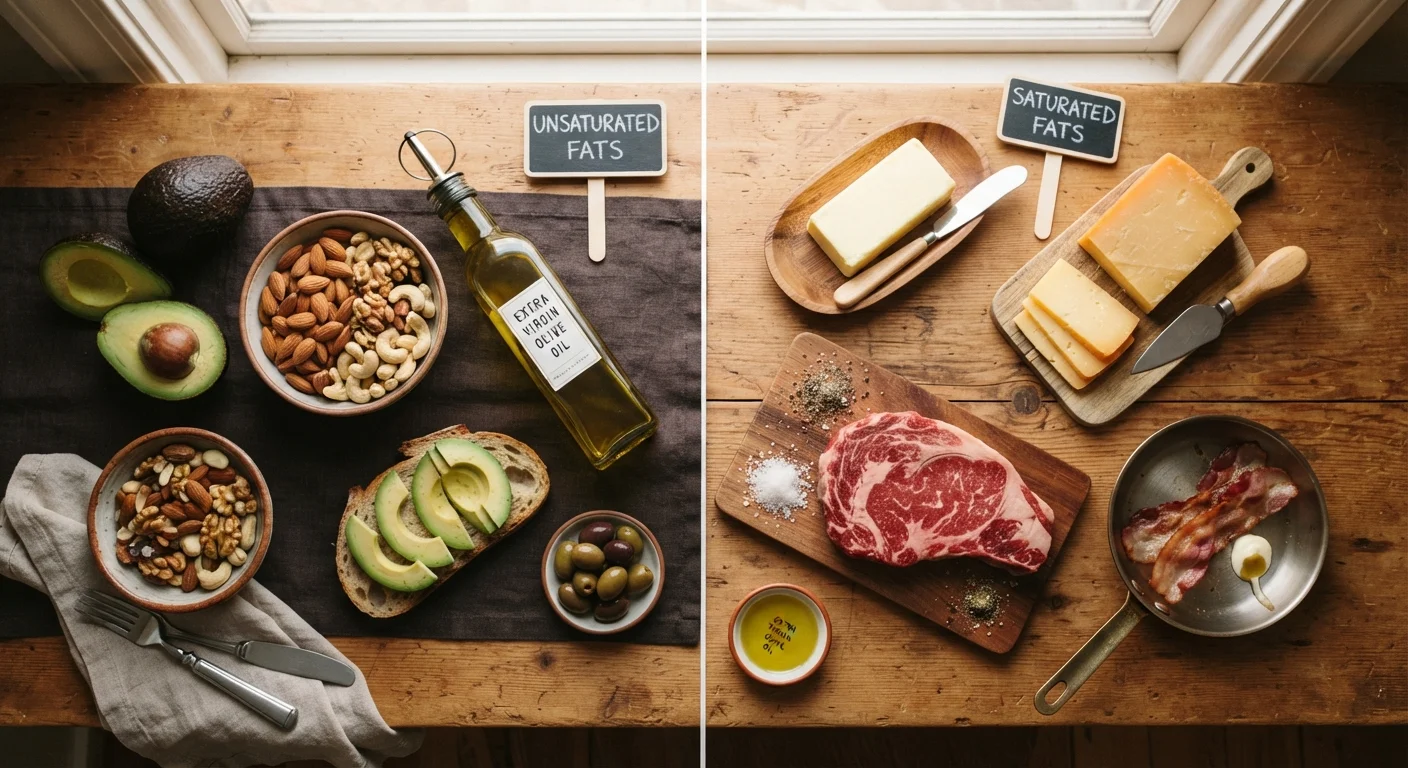
Photo: TrendingResults.net | Discover More, Trend More editorial
Key Takeaways
- Saturated fats are solid at room temperature and found mainly in animal products and some tropical oils.
- Unsaturated fats - mono and poly - are liquid at room temperature and linked to cardiovascular benefits in research.
- Most major health organizations recommend limiting saturated fat and favoring unsaturated fat sources in daily eating.
- Replacing saturated fat with highly processed carbohydrates does not appear to produce the same health benefit as replacing it with unsaturated fat.
- Both fat types provide essential energy; the goal is balance and food quality, not eliminating fat entirely.
What Makes a Fat Saturated or Unsaturated
Dietary fats are made up of molecules called fatty acids - chains of carbon atoms bonded to hydrogen atoms. The distinction between saturated and unsaturated comes down to chemistry: saturated fats have no double bonds between carbon atoms, meaning every carbon is fully "saturated" with hydrogen. Unsaturated fats have one or more double bonds, which creates a kink in the molecular chain and keeps them liquid at room temperature.
This structural difference isn't just academic - it directly affects how the fat behaves in the body and how it interacts with cholesterol levels. Saturated fatty acids tend to raise LDL (low-density lipoprotein) cholesterol in the bloodstream, while most unsaturated fats have a neutral or lowering effect on LDL. That's the core of why they're treated differently in nutrition guidance.
Unsaturated fats split into two subtypes. Monounsaturated fats (MUFAs) have one double bond; polyunsaturated fats (PUFAs) have two or more. Omega-3 and omega-6 fatty acids are both polyunsaturated and are considered essential - meaning the body cannot make them and must obtain them from food.
| Criterion | Saturated Fat | Unsaturated Fat |
|---|---|---|
| State at room temperature | Solid (e.g., butter, lard) | Liquid (e.g., olive oil, canola oil) |
| Chemical structure | No double bonds between carbons | One or more double bonds |
| Primary food sources | Meat, dairy, tropical oils | Fish, nuts, seeds, vegetable oils |
| Effect on LDL cholesterol | Tends to raise LDL | Neutral to lowering effect on LDL |
| Includes essential fatty acids | No | Yes (omega-3, omega-6) |
| Current U.S. dietary guidance | Limit to <10% of daily calories | Favor as primary fat source |
Where Each Type of Fat Shows Up in Food
Saturated fats appear predominantly in animal-based foods: fatty cuts of beef and pork, full-fat dairy products like butter, cheese, and cream, and the skin of poultry. Two plant-based sources - coconut oil and palm oil - are also high in saturated fat, which is relevant given how widely they're used in packaged and processed foods. Checking a Nutrition Facts label is one of the most reliable ways to see how much saturated fat a product contains. Learning to read the Nutrition Facts panel can help you spot saturated fat content quickly, even in foods you wouldn't expect.
Unsaturated fats are concentrated in plant-based foods and fish. Olive oil, canola oil, avocados, and most nuts are high in monounsaturated fats. Sunflower seeds, walnuts, flaxseed, and fatty fish like salmon and mackerel are rich in polyunsaturated fats, including omega-3s. These foods tend to appear more frequently in minimally processed whole-food eating patterns, which are broadly associated with better health outcomes.
Trans Fats: A Third Category Worth Knowing
What the Research and Guidelines Actually Say
For decades, dietary guidance in the United States has recommended limiting saturated fat intake. The current Dietary Guidelines for Americans suggest keeping saturated fat below 10 percent of total daily calories, while the American Heart Association recommends an even lower threshold - around 5 to 6 percent - for those managing cardiovascular risk. These recommendations are grounded in a substantial body of research linking high saturated fat intake to elevated LDL cholesterol, an established risk factor for cardiovascular disease.
However, the picture has nuance. What you replace saturated fat with matters enormously. Studies, including large analyses published in journals such as The BMJ and Circulation, suggest that replacing saturated fat with refined carbohydrates offers little cardiovascular benefit, while replacing it with polyunsaturated fat appears to reduce coronary risk. This finding is why nutrition researchers increasingly emphasize overall diet quality rather than targeting a single nutrient in isolation. Separating nutrition myths from evidence is important here - the idea that all fat is harmful has been largely updated by the research community.
<10%
Recommended daily cap on saturated fat
The Dietary Guidelines for Americans advises keeping saturated fat below 10% of total daily caloric intake for the general adult population.
~17%
Average American saturated fat intake
Research based on national dietary surveys has estimated that many Americans consume saturated fat above the recommended threshold, largely from animal-based foods and processed snacks.
2x
Cardiovascular risk reduction potential
Studies published in peer-reviewed journals suggest replacing saturated fat calories with polyunsaturated fat may reduce coronary heart disease risk by roughly 2-3% per 1% of calorie swap.
This article is for general informational purposes only and does not constitute medical or dietary advice. Please consult a qualified healthcare professional or registered dietitian for guidance specific to your health needs and circumstances.
The content on this site is provided for informational purposes only and should not be considered a substitute for professional advice. While we strive to provide accurate and up-to-date information, we make no guarantees regarding its completeness or accuracy. Always consult a qualified professional for advice specific to your circumstances before making any decisions.