
Whole Foods vs. Processed Foods: What the Difference Really Means for Your Diet

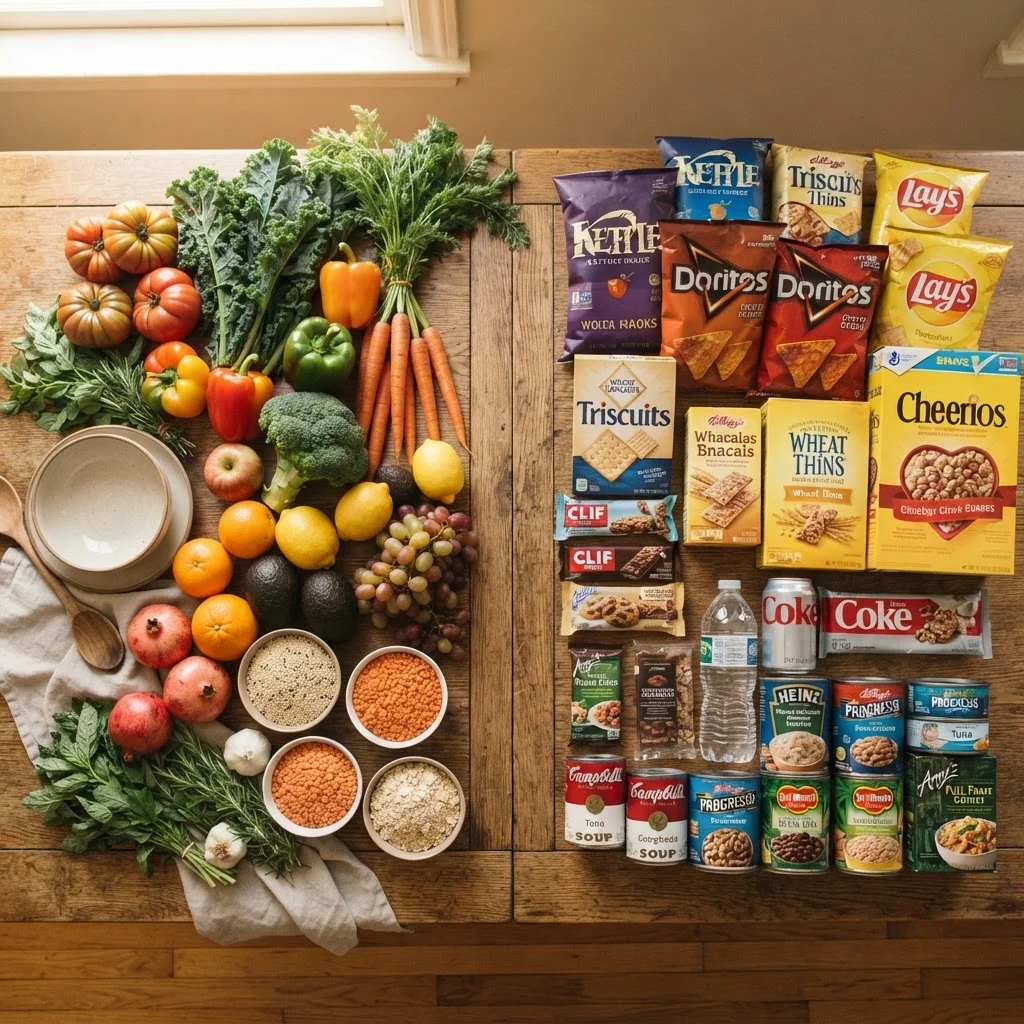
Photo: TrendingResults.net | Discover More, Trend More editorial
Key Takeaways
- Processing exists on a spectrum - frozen vegetables and packaged cookies are not nutritionally equivalent.
- Ultra-processed foods, not all processed foods, are most consistently linked to poorer health outcomes in research.
- Whole foods tend to deliver more fiber, micronutrients, and fewer additives per calorie.
- Reading ingredient lists is more informative than relying on front-of-package health claims.
- A practical diet can include some processed foods without undermining overall nutritional quality.
What 'Whole Food' Actually Means
A whole food is any food consumed in its natural state or very close to it - think an apple, a handful of walnuts, a raw chicken breast, or dried lentils. Nothing has been added, and nothing meaningful has been removed. The term is straightforward in principle, but it gets murkier at the edges. Is plain yogurt a whole food? What about rolled oats?
Nutritionally, whole foods tend to share common traits: they're high in fiber, rich in micronutrients (vitamins and minerals), and free from added sugars, sodium, and artificial preservatives. Because they haven't been refined, their cell structure and naturally occurring compounds remain largely intact - a quality researchers believe contributes to better satiety and metabolic function, though the full picture is still being studied.
The distinction matters most when you use it as a guide rather than a rigid rule. Foods like plain frozen broccoli or canned tomatoes with no added salt sit so close to their whole-food counterparts that nutritionists generally treat them the same way. See our overview of plant-based eating for how whole foods fit into different dietary patterns.
The Processing Spectrum: From Minimal to Ultra-Processed
"Processed" is not a single category - it's a wide spectrum, and where a food sits on that spectrum matters enormously. A useful framework, developed by Brazilian researchers and known as NOVA, divides foods into four groups:
- Unprocessed or minimally processed: Fresh produce, plain meats, eggs, dried legumes, plain frozen vegetables.
- Processed culinary ingredients: Oils, flour, salt, butter - used to prepare food but rarely eaten alone.
- Processed foods: Products made by adding salt, sugar, or oil to whole foods - canned fish, simple cheeses, cured meats, jarred tomato sauce.
- Ultra-processed foods (UPF): Industrially formulated products containing ingredients rarely found in home kitchens - emulsifiers, artificial flavors, color additives, and modified starches. Examples: packaged snack cakes, flavored chips, most fast-food items, many breakfast cereals.
| Criterion | Whole Foods | Ultra-Processed Foods |
|---|---|---|
| Fiber content | Naturally high | Typically low or absent |
| Added sugars | None | Often significant |
| Sodium | Naturally low | Frequently elevated |
| Micronutrient density | High - vitamins, minerals intact | Lower; some added back artificially |
| Ingredient list length | One ingredient or none | Long, with industrial additives |
| Satiety per calorie | Generally higher | Generally lower |
| Shelf stability | Low - spoils faster | High - engineered for long shelf life |
| Cost per serving | Varies; often reasonable in season | Often low, but varies widely |
The public health concern centers specifically on that fourth group. Multiple large observational studies have found associations between high UPF consumption and increased risk of cardiovascular disease, type 2 diabetes, and obesity - though observational research cannot by itself establish causation, and researchers continue to investigate the mechanisms involved.
Why the Distinction Matters in Practice
Understanding this spectrum reframes the conversation. The question isn't "did anything happen to this food before I bought it?" - almost everything did. The more useful questions are: How much has been done to it? What was added or removed? What does the ingredient list look like?
The 'Health Halo' Problem
Front-of-package labels like "natural," "wholesome," or "made with real ingredients" have no standardized regulatory definition and are not reliable guides to nutritional quality. The ingredient list on the back of the package is far more informative. Our article on reading a Nutrition Facts label walks through exactly what to look for.
A short, recognizable ingredient list generally signals less processing. A long list dense with chemical-sounding names - even if each individual ingredient is technically safe - often indicates a product engineered for palatability rather than nutrition. That engineering frequently means more added sugar, more sodium, and less fiber than whole or minimally processed alternatives. For a related breakdown, see our piece on added sugar vs. natural sugar.
This article is for general informational and educational purposes only and is not a substitute for personalized advice from a qualified healthcare or nutrition professional.
The content on this site is provided for informational purposes only and should not be considered a substitute for professional advice. While we strive to provide accurate and up-to-date information, we make no guarantees regarding its completeness or accuracy. Always consult a qualified professional for advice specific to your circumstances before making any decisions.