
The 50/30/20 Rule Explained - and When It Doesn't Quite Fit

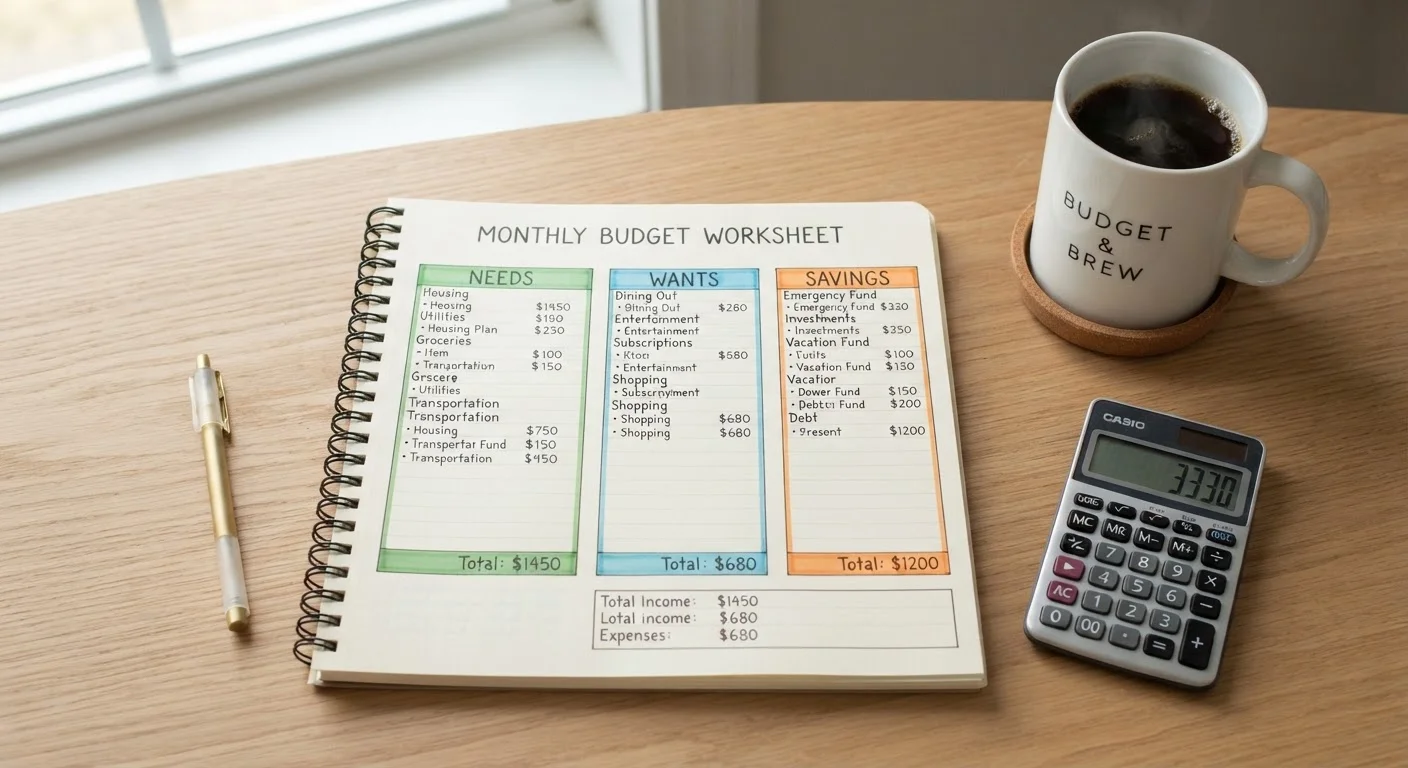
Photo: TrendingResults.net | Discover More, Trend More editorial
Key Takeaways
- The 50/30/20 rule splits after-tax income into needs, wants, and savings or debt repayment.
- It's a starting framework, not a rigid prescription - many households need to adapt the percentages.
- High housing costs in many U.S. cities can make the 50% needs target unrealistic without adjustments.
- The rule works best for people with steady, predictable income; it needs modification for variable earners.
- Even an imperfect application of the rule can create more financial clarity than having no budget at all.
How the Three Buckets Actually Work
The 50/30/20 framework, popularized in part by Senator Elizabeth Warren's personal finance book All Your Worth, groups every dollar of after-tax income into one of three buckets. Understanding what belongs in each is where most of the practical work lies.
Needs (50%): These are non-negotiable monthly expenses. Rent or mortgage payments, basic groceries, electricity and water, minimum required debt payments, health insurance premiums, and transportation to work all qualify. The defining test: if skipping it would cause immediate hardship or legal consequence, it's a need.
Wants (30%): These are discretionary expenses that genuinely improve your life but aren't survival-critical. Restaurant meals, streaming subscriptions, new clothes beyond the basics, weekend trips, and hobby spending fall here. Wants aren't frivolous - this category exists precisely because sustainable budgets leave room for enjoyment.
Savings and Debt Repayment (20%): This bucket funds your financial future. Emergency fund contributions, retirement account deposits, extra payments on student loans or credit card balances, and saving toward a down payment all live here. Minimum debt payments, by contrast, belong in needs because they're mandatory.
If you're still working on the habit of actually tracking where your money goes, this piece on why vague spending awareness isn't a real budget explains why rough mental estimates tend to fall short.
~33%
Average share of income spent on housing
According to the U.S. Bureau of Labor Statistics Consumer Expenditure Survey, housing typically represents around one-third of household spending - already straining the 50% needs target.
$5,300+
Average U.S. monthly household expenditure
The Bureau of Labor Statistics' Consumer Expenditure Survey reports average annual household spending exceeding $63,000, reflecting how costs vary widely by region and income level.
57%
Americans living paycheck to paycheck
Multiple annual surveys, including those by PYMNTS Intelligence and LendingClub, have consistently found that a majority of U.S. adults report spending most or all of their monthly income on expenses.
Where the Rule Works Well - and Where It Strains
The 50/30/20 rule performs best for households with a stable, moderate-to-upper-middle income, low consumer debt, and housing costs that don't dominate take-home pay. In those conditions, the percentages align naturally, and the rule offers a low-effort way to stay on track without obsessive tracking.
But the rule strains under several common real-world conditions:
- High housing markets: In cities like San Francisco, New York, or Boston, rent alone can consume 40-50% of take-home pay for a single earner. Adding groceries, utilities, and transportation makes the 50% needs ceiling nearly impossible to hit.
- Lower income households: When income is modest, basic expenses take a larger proportional share. A household earning $35,000 a year after taxes has far less flexibility than one earning $90,000, even if both spend similar amounts on needs in dollar terms.
- Variable income earners: Freelancers, gig workers, and hourly employees whose income fluctuates month to month can't reliably apply fixed percentages to an unstable base. Budgeting with variable income requires a different structural approach altogether.
- High-debt households: If you're carrying significant credit card or student loan balances, funneling only 20% toward repayment may feel too slow. Many people in this situation shift temporarily to a 50/20/30 split or even a 60/10/30 arrangement, devoting more to debt elimination.
Start With Your Real Numbers
Adjusting the Framework to Fit Your Reality
The most useful thing to understand about the 50/30/20 rule is that it's a guideline, not a regulation. Personal finance educators broadly agree that the value lies in the act of categorizing and intentionally directing income - not in hitting exact percentages.
A practical adaptation process might look like this:
- Calculate your actual monthly after-tax income, including all sources.
- List every recurring expense and assign each to needs, wants, or savings/debt.
- Total each category and convert to a percentage of income.
- Compare those real percentages to the 50/30/20 target and identify where the gaps are.
- Adjust deliberately - either by reducing spending in an overweighted category or by accepting a modified split that reflects your genuine circumstances.
For example, if needs consume 60% of your income, you might reduce wants to 20% and keep savings at 20%. That's a 60/20/20 split - still structured, still intentional, still far more useful than no framework at all.
Couples navigating shared finances may find the framework especially valuable as a neutral starting point for conversations. Structuring shared finances without conflict explores how pairs can align on money using approaches like this one.
Once you're comfortable with the categories, the next practical step is choosing how you'll actually track your spending. Paper budgets, spreadsheets, and budgeting apps each have real trade-offs worth understanding before committing to a method.
This article is for general informational purposes only and does not constitute personalized financial advice. Consider consulting a licensed financial professional for guidance tailored to your specific situation.
Frequently Asked Questions
The content on this site is provided for informational purposes only and should not be considered a substitute for professional advice. While we strive to provide accurate and up-to-date information, we make no guarantees regarding its completeness or accuracy. Always consult a qualified professional for advice specific to your circumstances before making any decisions.