
Credit Scores Decoded: What the Number Actually Measures

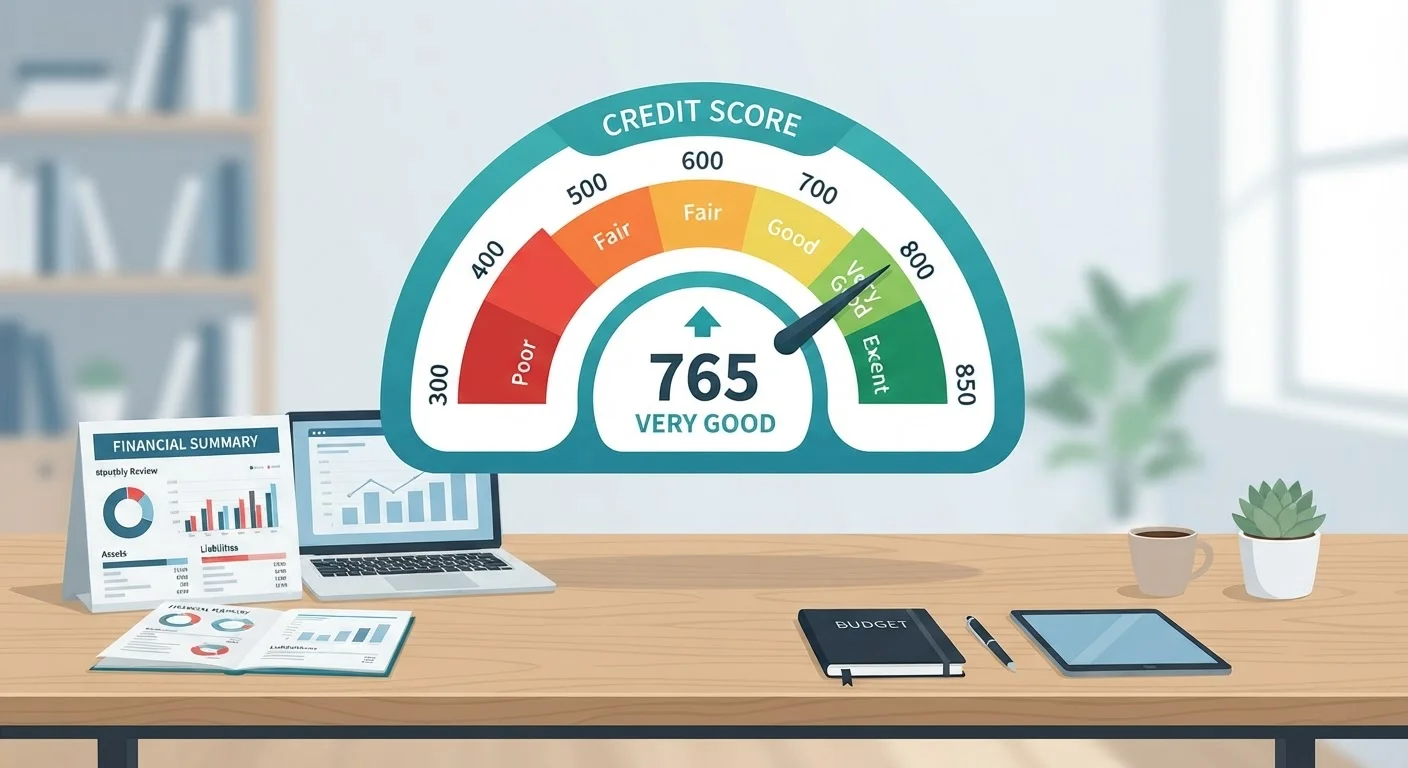
Photo: TrendingResults.net | Discover More, Trend More editorial
Key Takeaways
- Payment history is the single largest factor in most credit scoring models, accounting for roughly 35% of a FICO Score.
- Credit utilization - how much of your available revolving credit you're using - is the second most influential factor.
- The length of your credit history, types of accounts, and recent applications also shape your score.
- Your score is not static; it recalculates each time a lender requests it, based on your current credit report data.
- Multiple scoring models exist, so the number you see may differ from what a specific lender uses.
- Errors on your credit report can drag down your score - reviewing your report regularly is worthwhile.
The Five Factors Behind the Number
A credit score is not a judgment of character - it is a statistical estimate of repayment likelihood, built from five distinct categories of information. Understanding how each is weighted helps demystify why scores move the way they do.
- Payment history (≈35%): Whether you have paid past credit obligations on time. A single missed payment can cause a meaningful drop, particularly on an otherwise clean record.
- Amounts owed / credit utilization (≈30%): How much of your available revolving credit is currently in use. Keeping balances low relative to your credit limits signals lower risk. See our full explainer on credit utilization for a deeper look at this factor.
- Length of credit history (≈15%): The age of your oldest account, your newest account, and the average age of all accounts. Longer histories generally support higher scores.
- Credit mix (≈10%): Having experience with different account types - credit cards, mortgages, auto loans - can positively influence a score. Installment loans and revolving credit are evaluated differently within this category.
- New credit / recent inquiries (≈10%): Applying for multiple new accounts in a short span can temporarily lower a score, as it may signal increased financial stress.
These percentages reflect the FICO model's general guidance. Exact weights shift based on the overall profile of a given individual's credit file.
35%
Weight of payment history in FICO Score
According to FICO, payment history is the single largest contributor to a standard FICO Score calculation.
300-850
Standard FICO Score range
The FICO Score scale used by most U.S. lenders runs from a low of 300 to a perfect score of 850.
7 years
How long most negative items remain on a credit report
Under the Fair Credit Reporting Act (FCRA), most adverse information must be removed from credit reports after seven years.
Where the Data Comes From
A credit score is only as accurate as the data feeding it. Scores are calculated from information contained in your credit report - maintained separately by the three major bureaus: Equifax, Experian, and TransUnion. Lenders are not required to report to all three, so your reports can differ across bureaus, which explains why scores sometimes vary from one source to another.
Your credit report typically includes:
- Account details: open and closed accounts, credit limits, balances, and payment history
- Public records: certain bankruptcies and civil judgments
- Hard inquiries: lender requests made when you apply for credit
Errors in these reports are not uncommon. The Consumer Financial Protection Bureau (CFPB) and Federal Trade Commission (FTC) both advise consumers to review their reports periodically. Under federal law, you are entitled to a free copy from each bureau annually through AnnualCreditReport.com. Our guide to reading a credit report walks through each section in detail.
Soft vs. Hard Inquiries: An Important Distinction
Why Your Score Changes Over Time
A credit score is not a fixed label - it recalculates each time it is requested, drawing on the current state of your credit file. Several routine events can push the number up or down:
- Paying down revolving balances typically reduces utilization and can lift a score relatively quickly.
- Missing a payment creates a delinquency record that lenders report, often causing a sharp drop.
- Opening a new account adds a hard inquiry and lowers the average age of accounts - both modest short-term negatives that usually fade within a year.
- Closing an old account can reduce total available credit and shorten average account age, both of which may lower a score.
- Negative items aging off the report (typically after seven years) can improve a score as that data is no longer factored in.
Because so many variables interact, a score that seems inexplicably different from one month to the next usually reflects a specific data change in the underlying report. Understanding those mechanics is the foundation for building credit responsibly over time.
This article is for general informational and educational purposes only and does not constitute personalized financial or legal advice. Consult a licensed financial professional for guidance specific to your situation.
Frequently Asked Questions
The content on this site is provided for informational purposes only and should not be considered a substitute for professional advice. While we strive to provide accurate and up-to-date information, we make no guarantees regarding its completeness or accuracy. Always consult a qualified professional for advice specific to your circumstances before making any decisions.