
Installment Loans vs. Revolving Credit: How Each Affects Your Score Differently

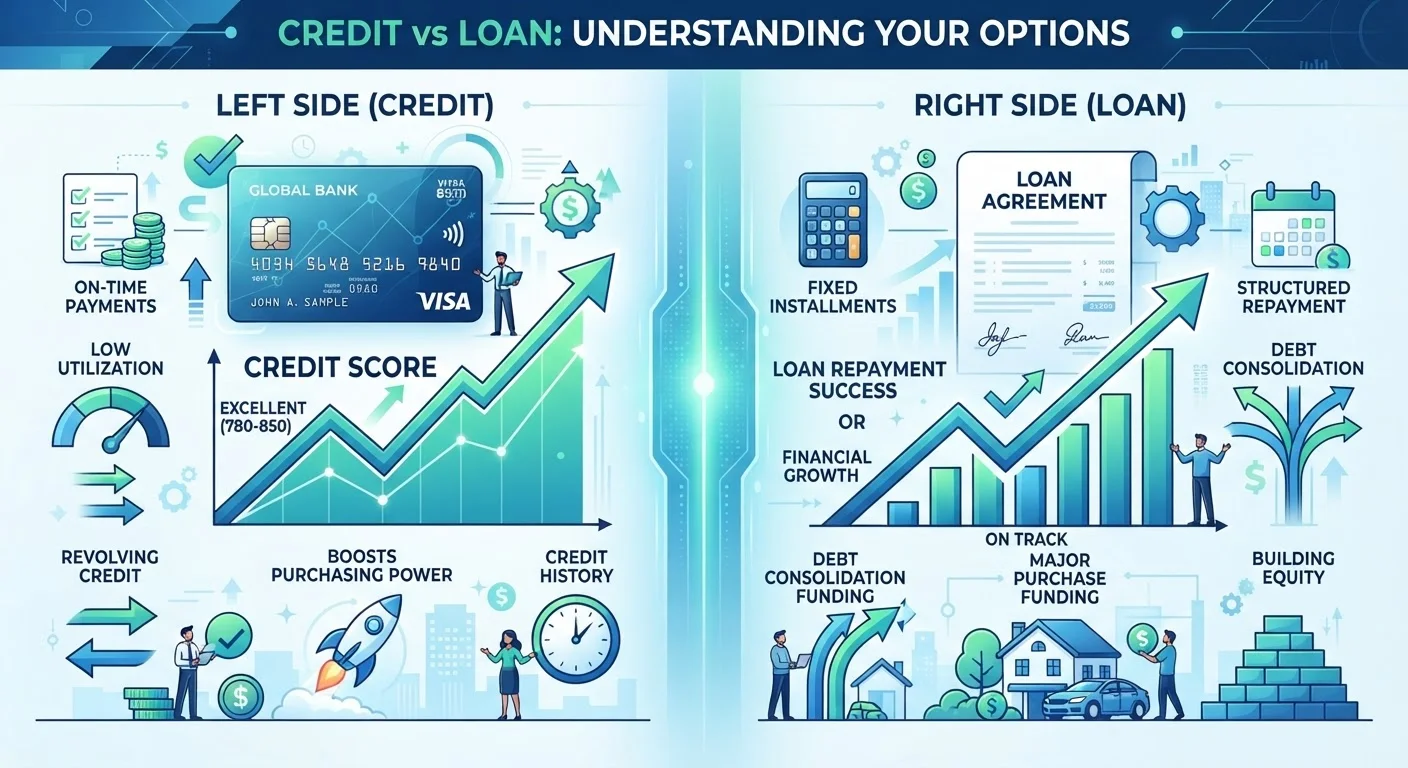
Photo: TrendingResults.net | Discover More, Trend More editorial
Key Takeaways
- Credit scoring models treat installment loans and revolving credit accounts differently in their calculations.
- Revolving credit utilization - how much of your available limit you use - has an outsized effect on your score.
- Installment loans demonstrate long-term repayment discipline but do not carry a utilization ratio.
- Having both types of credit can improve your credit mix, which accounts for roughly 10% of a FICO score.
- Missed payments on either type can significantly damage your score regardless of account category.
- Understanding how each account type is scored helps you make more informed borrowing decisions.
What Makes These Two Credit Types Different
At the most basic level, credit accounts fall into two broad categories: installment credit and revolving credit. Understanding the structural difference is the first step to understanding how each is scored.
Installment loans are borrowed in a lump sum and repaid through fixed, scheduled payments over a set period. Mortgages, auto loans, student loans, and personal loans are classic examples. Once the balance is paid off, the account is closed.
Revolving credit works differently. A lender extends a credit limit, and the borrower can draw on it, repay it, and draw again - repeatedly, within the limit. Credit cards and home equity lines of credit (HELOCs) are the most common forms. The balance fluctuates month to month based on spending and payments.
This structural difference - fixed payoff versus open-ended access - is exactly why credit scoring models handle them separately. See our guide to secured vs. unsecured debt for more on how debt category shapes your borrowing terms.
How Revolving Credit Affects Your Score
Revolving accounts have a scoring mechanic that installment loans simply don't: credit utilization. This ratio compares your current revolving balances to your total revolving credit limits. For example, if you have a $500 balance on a card with a $2,000 limit, your utilization on that card is 25%.
FICO and VantageScore models weigh utilization heavily within the "amounts owed" category, which accounts for approximately 30% of a FICO score - making it the second most influential factor after payment history. Scoring models evaluate utilization both per card and across all revolving accounts combined.
Generally, lower utilization is associated with higher scores. Many credit professionals point to staying below 30% as a common guideline, though the relationship is continuous - there's no hard threshold that suddenly boosts or penalizes a score. Paying down revolving balances can produce relatively quick score movements because utilization is recalculated each time balances are reported.
| Feature | Installment Loans | Revolving Credit | |
|---|---|---|---|
| Structure | Fixed term, fixed payments | Flexible, reusable credit limit | |
| Utilization ratio scored | Minor influence | Major scoring factor (~30%) | |
| Primary score impact | Payment history, account age | Utilization, payment history | |
| Score change speed | Gradual over loan term | Can shift quickly with balance changes | |
| Account closure effect | Closed when paid off | Remains open if not cancelled | |
| Credit mix contribution | Yes | Yes |
For a deeper look at how this ratio functions in practice, see our article on credit utilization and how it shapes your score. For the mechanics of how unpaid revolving balances grow, how interest compounds on revolving debt is worth a read.
How Installment Loans Affect Your Score
Installment loans don't carry a utilization ratio, so they influence your credit profile through different channels. The most important are payment history and account age.
Payment history is the single largest factor in most scoring models, accounting for roughly 35% of a FICO score. Every on-time installment payment contributes positively to this category, while a missed or late payment creates a negative mark that can remain on your report for up to seven years.
Autopay Can Protect Your Installment Loan Record
Installment loans also contribute to the length of credit history category - particularly relevant when a loan spans many years, as a mortgage often does. A long-standing installment account with a clean payment record can anchor the average age of accounts in your credit file.
One important nuance: as you pay down an installment loan, the remaining balance shrinks relative to the original loan amount. Scoring models do consider this ratio for installment accounts, but its influence is far less significant than revolving utilization. Paying off an installment loan entirely can sometimes produce a slight, temporary score dip if it closes your only account in that category - a reflection of reduced credit mix diversity, not a sign that paying off debt is harmful.
Credit Mix: Why Having Both Types Can Help
FICO's scoring model includes a category called credit mix, which accounts for approximately 10% of your score. This factor considers whether a borrower has experience managing different types of credit responsibly. A profile containing only credit cards looks different to a scoring model than one that also includes an installment account with a clean record.
That said, 10% is a modest slice - it's generally not worth taking on new debt solely to diversify your credit mix. The benefit is most meaningful when new credit is genuinely needed and the borrower is prepared to manage it responsibly.
If you're building or rebuilding credit, establishing a track record across both account types over time tends to strengthen a profile more than concentrating entirely in one. See our guide to building credit responsibly for habits that support steady profile growth.
This article is for general informational purposes only and does not constitute personalized financial or credit advice. Consult a licensed financial professional before making decisions specific to your situation.
The content on this site is provided for informational purposes only and should not be considered a substitute for professional advice. While we strive to provide accurate and up-to-date information, we make no guarantees regarding its completeness or accuracy. Always consult a qualified professional for advice specific to your circumstances before making any decisions.