
Credit Utilization: The One Ratio That Quietly Shapes Your Score

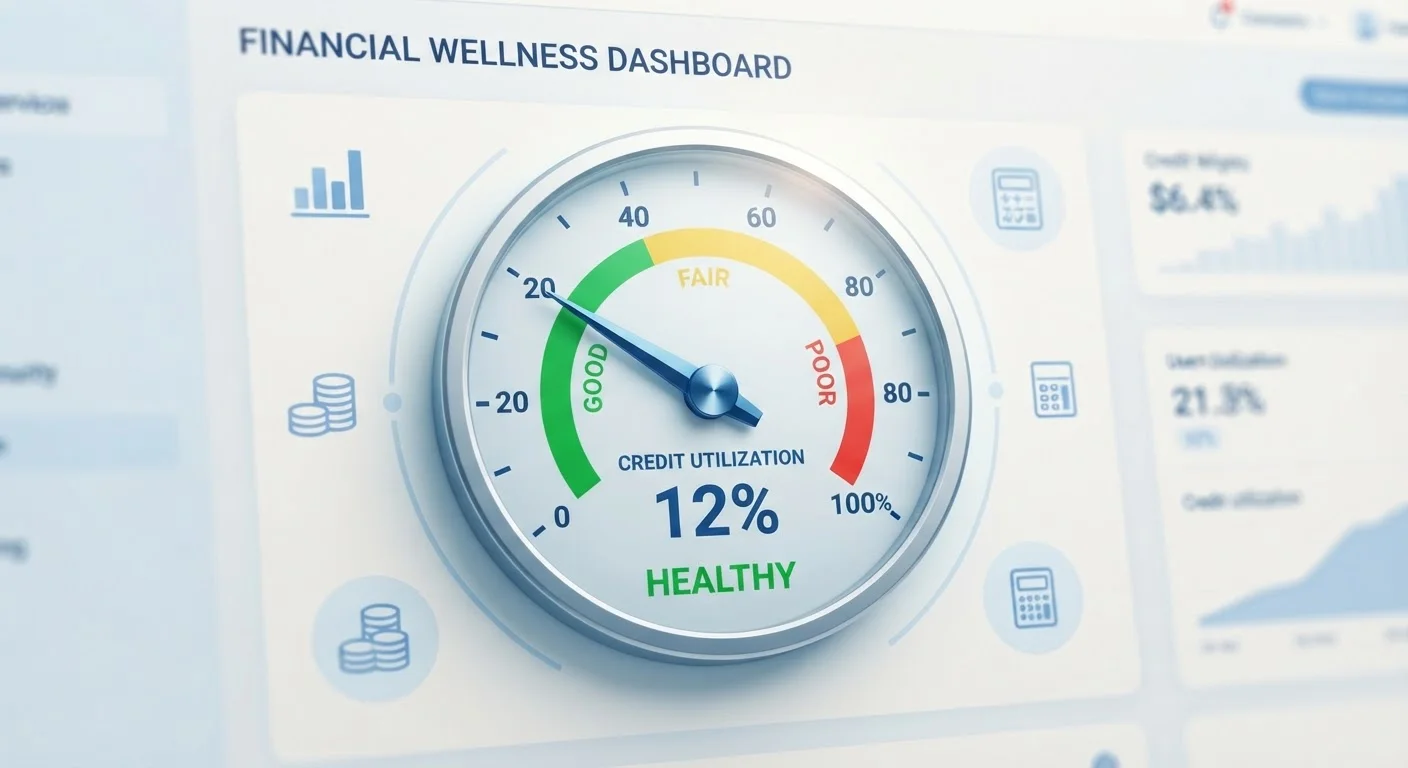
Photo: TrendingResults.net | Discover More, Trend More editorial
Key Takeaways
- Credit utilization measures how much of your available revolving credit limit you're currently using.
- Amounts owed - which includes utilization - makes up roughly 30% of a standard FICO score.
- Most credit experts suggest keeping utilization below 30%, with lower generally being better.
- Utilization is recalculated each billing cycle, so improvements can show up in your score relatively quickly.
- Both per-card and overall utilization figures influence your score.
- Closing a credit card reduces your total available limit and can inadvertently raise your utilization ratio.
How the Ratio Is Actually Calculated
The math behind credit utilization is straightforward. Divide your current revolving balances by your total revolving credit limits, then multiply by 100 to get a percentage. If you carry $2,500 across cards with a combined limit of $10,000, your overall utilization is 25%.
But scoring models don't just look at the aggregate. They also evaluate utilization on individual accounts. A single maxed-out card can weigh on your score even if your overall ratio looks healthy. This is why spreading balances thinly across accounts - rather than concentrating debt on one card - tends to produce better outcomes from a scoring perspective.
Utilization only applies to revolving credit, meaning credit cards and lines of credit. For a deeper look at how installment loans are treated differently by scoring formulas, see how installment and revolving accounts are scored differently.
~30%
Weight of 'amounts owed' in FICO scoring
According to FICO, the amounts owed category - which includes credit utilization - accounts for approximately 30% of a standard FICO score.
<10%
Utilization typical among highest scorers
FICO data indicates that consumers with scores above 800 tend to use less than 10% of their available revolving credit on average.
30%
Commonly cited utilization guideline threshold
Credit educators and financial institutions widely reference 30% as a general benchmark to stay below, though lower utilization continues to benefit scores.
Why Lenders Pay Close Attention to This Number
From a lender's perspective, utilization signals financial behavior in real time. Someone consistently using 80% of their available credit may be over-reliant on borrowed funds, which represents higher risk. Someone maintaining low balances relative to their limits signals discipline and financial cushion.
This is why the 'amounts owed' category - which encompasses utilization - carries roughly 30% of the weight in FICO scoring models, second only to payment history. It's not just about how much you owe in absolute dollars; it's about how close you are to your ceiling.
“Amounts owed is an important factor because it indicates how much of your available credit you are using. Using a large portion of your available credit may suggest you are overextended.”
— FICO, Developer of the FICO credit scoring model
Utilization is one of the few credit factors that updates frequently. Unlike account age or payment history, which build slowly over time, your reported balances can shift month to month - meaning this lever is one readers can realistically move in a relatively short window.
Common Mistakes That Push Utilization Higher
Several everyday decisions can inadvertently spike your utilization ratio without any new spending:
- Closing a credit card: Eliminating a card's limit shrinks your total available credit. If you have balances elsewhere, your ratio rises automatically. This is a dynamic explored in our piece on credit score myths that cost real money.
- Ignoring per-card limits: A card that's near its individual limit damages your score even if your overall ratio looks fine.
- Timing payments late in the cycle: Many cardholders don't realize that balances are reported to bureaus at the statement close date, not the payment due date. Paying after the statement is generated means higher balances get reported.
- Requesting a lower credit limit: Reducing a card's ceiling has the same mathematical effect as closing an account - it raises utilization on any carried balance.
Understanding your full credit picture, including how utilization appears on your report, is covered in detail in our guide to reading a credit report without getting lost.
Practical Ways to Manage Your Ratio
There's no single technique that fits everyone's situation, but several approaches are well-established:
- Pay down balances before the statement closing date rather than waiting for the due date. This reduces the figure your card issuer reports to the bureaus.
- Request a credit limit increase on existing accounts. A higher limit - with the same balance - mathematically lowers your ratio. Note that some limit-increase requests trigger a hard inquiry, so it's worth confirming with your issuer beforehand.
- Distribute balances across multiple cards rather than concentrating debt on one account.
- Avoid closing unused cards unless there's a compelling reason (such as an annual fee you can't justify), since each open account contributes available credit to your denominator.
Building these habits over time is part of a broader responsible credit strategy. For a fuller picture, see our guidance on building credit responsibly over time.
This article is for general informational purposes only and does not constitute personalized financial or credit advice. Readers should consult a qualified financial professional for guidance tailored to their individual circumstances.
Frequently Asked Questions
The content on this site is provided for informational purposes only and should not be considered a substitute for professional advice. While we strive to provide accurate and up-to-date information, we make no guarantees regarding its completeness or accuracy. Always consult a qualified professional for advice specific to your circumstances before making any decisions.