
The Debt Avalanche and Debt Snowball Methods, Side by Side

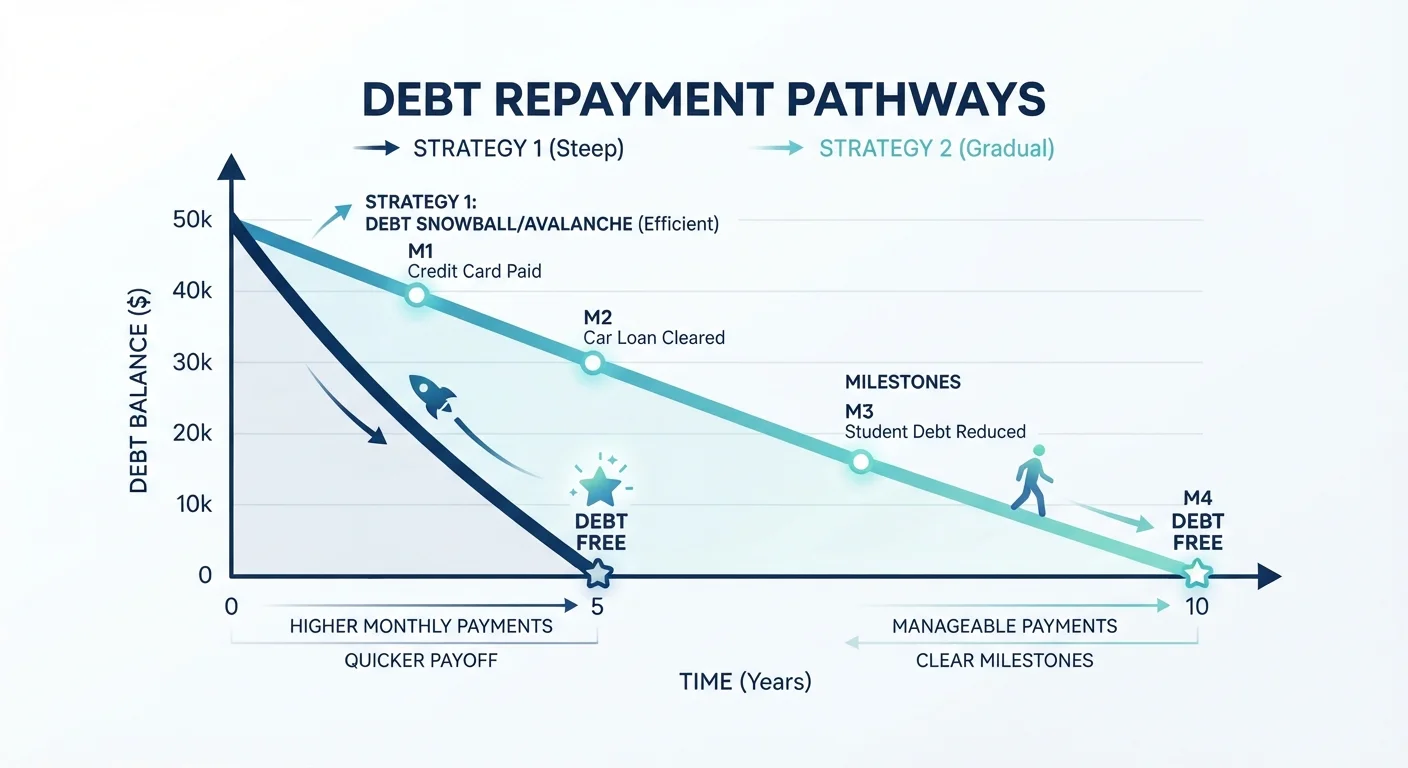
Photo: TrendingResults.net | Discover More, Trend More editorial
Key Takeaways
- The avalanche method targets the highest-interest debt first, minimizing total interest paid.
- The snowball method targets the smallest balance first, delivering faster early wins.
- Mathematically, the avalanche typically costs less - but the snowball often improves follow-through.
- Both methods require paying more than the minimum on at least one debt each month.
- The best method is whichever one you will actually stick with long enough to finish.
- Consulting a nonprofit credit counselor can help you tailor a repayment plan to your situation.
How Each Method Works
Both the debt avalanche and debt snowball are structured repayment strategies built on the same core principle: pay minimums on all your debts, then direct any extra dollars toward one target account at a time. Where they differ is in how they choose that target.
The debt avalanche ranks your debts by interest rate, from highest to lowest. You put every extra dollar toward the highest-rate balance while paying minimums on everything else. Once that balance reaches zero, you roll its payment into the next-highest-rate debt. The result is that you minimize the total interest paid over time.
The debt snowball, popularized by personal finance educator Dave Ramsey, ranks debts by balance size, from smallest to largest - regardless of interest rate. You attack the smallest balance first, eliminate it quickly, then redirect that freed-up payment toward the next-smallest. The result is faster early victories that can sustain motivation.
If you're new to how debt works in the first place, the plain-language credit and debt primer covers the fundamentals before diving into repayment strategies.
| Criterion | Debt Avalanche | Debt Snowball |
|---|---|---|
| Repayment order | Highest interest rate first | Smallest balance first |
| Total interest paid | Lower over full repayment | Typically higher |
| Time to first payoff | Longer (if high-rate debt is large) | Shorter early wins |
| Motivational structure | Math-driven, delayed gratification | Quick wins, momentum-based |
| Best suited for | Disciplined, numbers-focused savers | People who need tangible progress |
| Complexity | Requires tracking interest rates | Simple balance ranking |
What the Math Actually Shows
Consider someone with three debts: a $500 medical bill at 0% interest, a $3,000 credit card at 22% APR, and a $7,000 personal loan at 11% APR. They have $200 per month above minimums to apply.
Under the avalanche, they target the credit card first (22% APR), then the personal loan (11%), then the medical bill (0%). Because the most expensive interest stops compounding earliest, they pay less overall.
Under the snowball, they eliminate the $500 medical bill first, then the credit card, then the personal loan. The medical bill disappears in just a few months, providing an early win - but the high-rate credit card accrues interest longer, increasing the total cost.
~$1,000+
Potential interest savings with avalanche vs. snowball
Estimates vary by debt mix, but NerdWallet and similar calculators show avalanche savings of hundreds to over a thousand dollars on typical multi-debt scenarios with high-rate balances.
40%
Of U.S. adults carry credit card debt month to month
According to Federal Reserve survey data, a significant share of American households revolve a balance rather than paying in full each cycle.
22%+
Average credit card APR in recent years
Federal Reserve consumer credit data has shown average credit card interest rates climbing above 20% APR, making high-rate targeting especially impactful.
The difference in total interest paid between the two methods varies based on the specific balances and rates involved. In many realistic scenarios the gap is meaningful but not dramatic - a few hundred dollars over several years. The more significant factor is often whether a person finishes the plan at all. Research in behavioral economics, including work published in the Journal of Marketing Research, has found that focusing on clearing individual accounts (the snowball logic) can improve repayment persistence.
Understanding why minimum payments alone rarely make a dent is equally important - see why minimum payments keep people in debt longer than expected for a closer look at that math.
Choosing the Right Fit for Your Situation
Neither method is universally superior. The avalanche wins on a spreadsheet; the snowball wins where motivation is the binding constraint. A few factors worth considering:
- Interest rate spread: If your debts vary widely in rate - say, a payday loan at 300% alongside a 6% student loan - the avalanche's cost advantage becomes very large, very quickly.
- Number of accounts: Many small accounts favor the snowball; fewer, larger balances reduce the motivational edge of quick closures.
- Your track record: If you've started and abandoned repayment plans before, the snowball's early feedback loop may matter more than the math.
Both strategies work best when paired with a realistic household budget. The needs, wants, and savings framework can help you identify how much extra you genuinely have available to apply toward debt each month.
It's also worth noting that these strategies apply to unsecured debt - credit cards, personal loans, medical bills - and may interact differently with secured obligations. The difference between secured and unsecured debt matters when prioritizing which balances to tackle.
If your situation feels unmanageable, nonprofit credit counseling agencies - many affiliated with the National Foundation for Credit Counseling (NFCC) - offer free or low-cost guidance on building a repayment plan tailored to your actual circumstances.
This article is for general informational purposes only and does not constitute personalized financial or legal advice. Consult a qualified financial professional for guidance specific to your situation.
The content on this site is provided for informational purposes only and should not be considered a substitute for professional advice. While we strive to provide accurate and up-to-date information, we make no guarantees regarding its completeness or accuracy. Always consult a qualified professional for advice specific to your circumstances before making any decisions.