
Everything That Shapes a Smartphone's Camera Quality

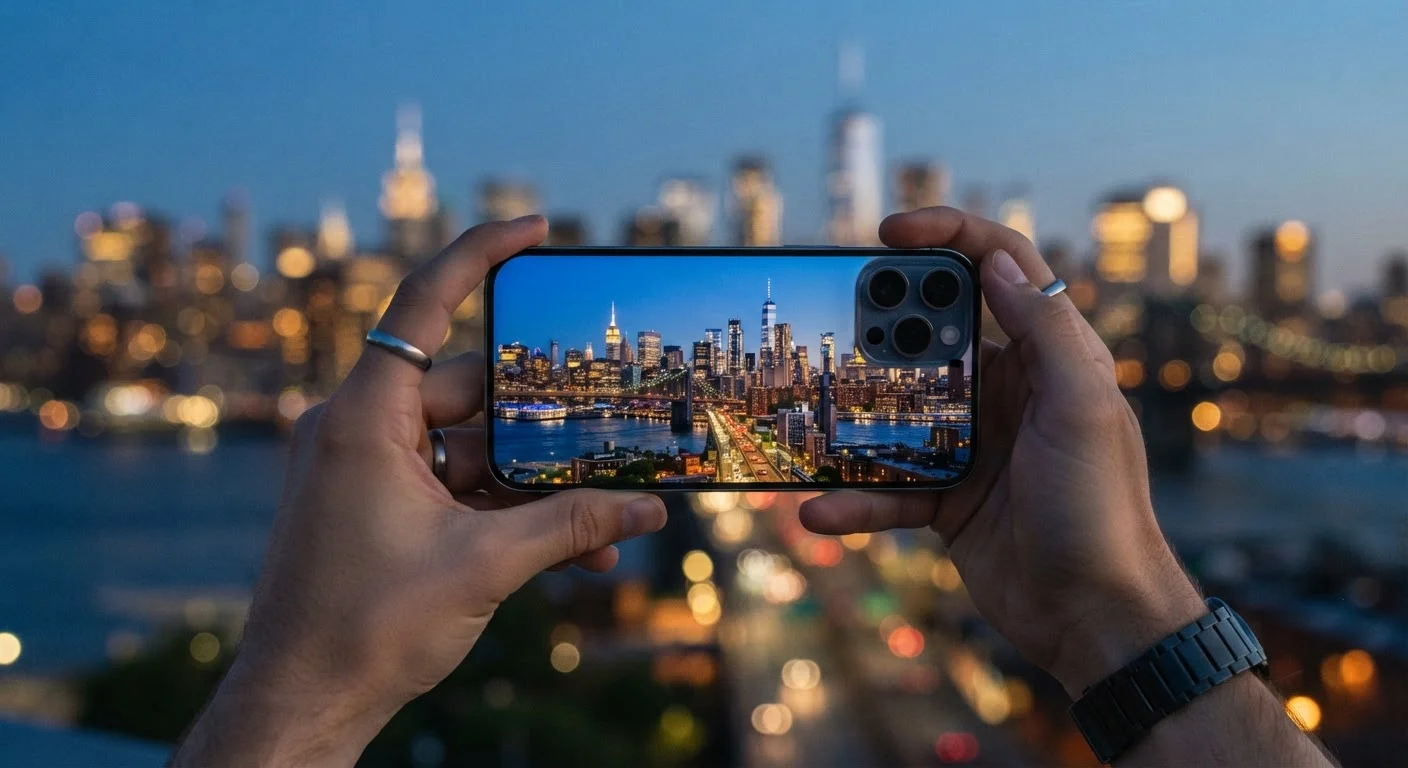
Photo: TrendingResults.net | Discover More, Trend More editorial
Key Takeaways
- Megapixel count alone is a poor predictor of real-world photo quality.
- Sensor size is one of the strongest indicators of how a camera handles light.
- Computational photography and image processing software heavily shape final image output.
- Optical zoom preserves image quality; digital zoom does not.
- Night mode performance varies significantly between devices even at similar price points.
- Video stabilization, codec support, and frame rate options matter as much as resolution.
Why Megapixels Are Overrated
Camera marketing on smartphones has long leaned on megapixel counts as a shorthand for quality. A 200MP camera sounds impressive on a spec sheet - but a megapixel simply measures how many individual pixels make up a photo. More pixels mean larger file sizes and the ability to crop aggressively, but they do not automatically produce sharper, more accurate, or better-looking images.
What matters more is the quality of each pixel, not the quantity. A sensor with fewer, larger pixels typically captures more light per pixel than one packed with tiny, high-density pixels - and light capture is the foundation of image quality. For most everyday shooting scenarios, a well-tuned 12MP camera will outperform a poorly optimized 50MP one.
For a broader breakdown of how camera specs fit alongside other hardware numbers, see our guide to decoding smartphone specs.
1/1.28"
Typical flagship smartphone sensor size
Larger sensors in this range capture significantly more light than the smaller sensors common in budget devices.
~12MP
Resolution used by many high-end phone cameras
Several leading flagship cameras use 12MP sensors, prioritizing larger pixel size and processing quality over raw pixel count.
f/1.5
Among the widest apertures found on smartphone lenses
Wider apertures allow more light to reach the sensor, improving performance in dimly lit environments.
Sensor Size: The Factor That Actually Moves the Needle
The image sensor is the physical component that converts light into digital information. Larger sensors capture more light, produce less digital noise (that grainy texture in dim photos), and allow for a shallower depth of field - the background blur often called bokeh.
Sensor sizes are typically expressed in fractions of an inch (e.g., 1/1.28"), which is counterintuitively labeled - a smaller denominator means a larger sensor. Flagship phones generally use sensors in the 1/1.3" to 1/1.56" range, while budget devices often use sensors around 1/2.8" or smaller. That difference in physical area translates directly into real-world image quality, especially in challenging lighting.
When comparing two phones at the same price, prioritize the one with a larger physical sensor over the one with a higher megapixel count - it will almost always perform better in real-world conditions, especially indoors.
Check whether optical image stabilization (OIS) is present on the main camera, not just listed as a feature on the telephoto lens - many phones include OIS only on select lenses.
Aperture and Optical Zoom Explained
Aperture refers to the opening in the lens that allows light to reach the sensor. On smartphones, it is expressed as an f-number (e.g., f/1.8, f/2.4). A lower f-number means a wider aperture and more light entering the lens - generally an advantage in low-light conditions and for subject isolation.
Zoom is where many buyers get misled. Optical zoom uses actual lens movement to magnify a subject without degrading image quality. Digital zoom simply crops and enlarges the image, reducing resolution and sharpness. A phone with 3x optical zoom delivers genuinely more detail at distance than one relying on digital zoom to hit the same apparent magnification. Multi-lens setups with dedicated telephoto cameras are the honest way to achieve real zoom capability.
Computational Photography: The Software Advantage
Modern smartphone cameras rely heavily on software to produce final images. This discipline - computational photography - involves the phone's processor and dedicated image signal processor (ISP) applying algorithms to combine multiple exposures, reduce noise, sharpen edges, and adjust tone in real time.
Techniques like HDR (High Dynamic Range) merge several frames taken at different exposures to preserve both highlight and shadow detail in a single photo. Portrait mode uses depth mapping to simulate the bokeh effect of a large-aperture lens. These features are only as good as the underlying algorithms and the processing power available to run them - which is why two phones with nearly identical sensors can produce noticeably different images.
Software updates can meaningfully improve camera performance over a phone's lifetime, making the manufacturer's track record for long-term support a relevant consideration when evaluating camera systems.
Low-Light and Night Mode Performance
Night mode - sometimes marketed under proprietary names - typically works by capturing multiple frames at lower shutter speeds and stacking them using software to reduce noise and brighten shadows. The quality of the result depends on sensor size, optical image stabilization (OIS), and the sophistication of the processing algorithm.
Optical Image Stabilization (OIS) physically compensates for hand movement during longer exposures, which is essential for night mode to work without blur. Electronic Image Stabilization (EIS) is a software alternative that works differently and is generally less effective for still photography in low light.
Low-light performance is one of the areas where real-world testing diverges most sharply from spec sheets. Two phones with the same aperture rating can deliver very different results indoors or at night depending on their processing pipelines.
Video Quality: What to Look For
Resolution (4K, 1080p) is only one part of video quality. Frame rate options - 24fps for cinematic feel, 60fps for smooth motion, 240fps for slow-motion - determine creative flexibility. Codec support matters too: phones encoding in more efficient formats like H.265/HEVC produce smaller files at equivalent quality compared to H.264.
Video stabilization in practice depends on whether OIS is engaged during recording, whether the phone uses gyroscope-based electronic stabilization as a supplement, and whether that processing introduces noticeable crop or latency. Audio capture - microphone placement, wind noise handling, and stereo separation - is frequently overlooked but directly affects how usable the footage is.
For a complete picture of how display quality affects how your photos and videos look on-screen, see our visual guide to screen resolution and display technology.
How to Evaluate Camera Quality Before You Buy
Spec sheets are a starting point, not a verdict. When researching a phone's camera, look for independent sample comparisons taken in controlled and real-world conditions - not manufacturer demo shots. Pay attention to how the camera handles mixed lighting, indoor environments, and fast-moving subjects, since these are the conditions where most cameras struggle.
Key questions to ask: Does the phone have OIS on the main lens? What is the sensor size, not just the megapixel count? Does telephoto zoom use actual optics or purely digital cropping? How does the manufacturer's software processing handle skin tones and color accuracy under artificial light?
Understanding these factors puts you in a much stronger position than comparing numbers on a retail tag. Camera quality is ultimately a system - hardware, software, and the conditions you typically shoot in all factor into whether a camera works well for you specifically.
The content on this site is provided for informational purposes only and should not be considered a substitute for professional advice. While we strive to provide accurate and up-to-date information, we make no guarantees regarding its completeness or accuracy. Always consult a qualified professional for advice specific to your circumstances before making any decisions.