
Everything You Need to Know Before Switching Wireless Carriers

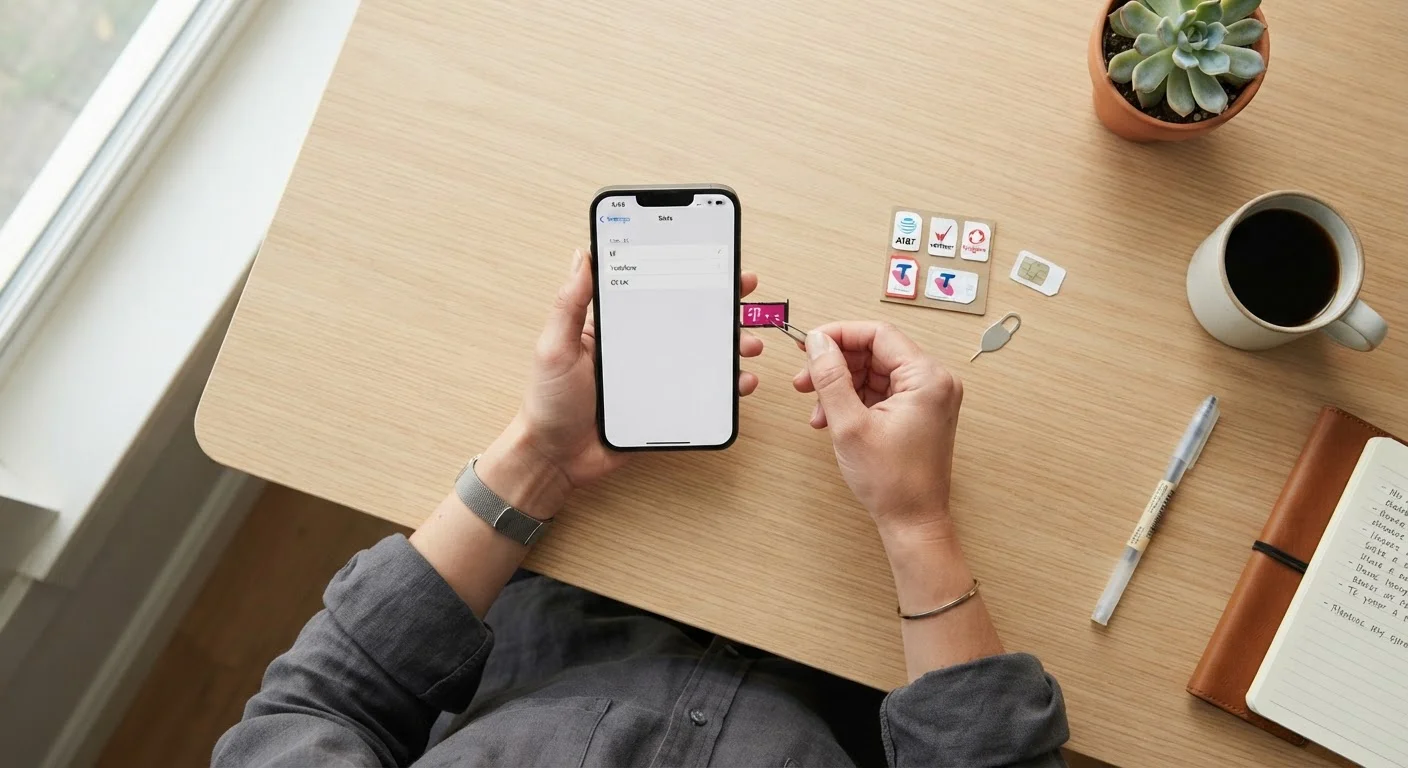
Photo: TrendingResults.net | Discover More, Trend More editorial
Key Takeaways
- Check for early termination fees or device financing balances before leaving your current carrier.
- Your phone must be fully unlocked to work on a new carrier's network.
- You can keep your existing number by porting it - don't cancel your old plan first.
- Coverage maps are a starting point; real-world performance varies significantly by location.
- Carrier advertised prices often exclude taxes, fees, and autopay discounts that change the real monthly cost.
- MVNOs (smaller carriers) run on the same networks as major carriers but often at lower prices.
Why People Switch Carriers
Most people switch wireless carriers for one of three reasons: they're paying more than they think they should, their coverage is unreliable, or their current carrier isn't offering what a competing plan does. All three are legitimate - but switching without a plan can create new problems rather than solving old ones.
The wireless market in the U.S. is structured around a handful of major network operators and dozens of smaller MVNOs that lease capacity from those same networks. Understanding this structure helps you make a smarter choice. See our guide to devices and connectivity for broader context on how your phone interacts with these networks.
Check Your Current Contract and Early Termination Fees
Before doing anything else, find out what leaving your current carrier will actually cost. Two scenarios can create exit costs:
- Early termination fees (ETFs): Less common with modern month-to-month plans, but some older or promotional contracts still include them.
- Device financing balances: If you bought a phone through your carrier on an installment plan, the remaining balance typically comes due when you leave - even if the phone is advertised as "free" over 24 or 36 months.
Call your carrier or log into your account to get the exact payoff amount. Some new carriers offer bill credits to offset switching costs, but those credits usually arrive over 12-24 months, so you'll need to cover the balance upfront. Learn more about the fine print on carrier-financed phones before assuming a promotional deal is straightforward.
Don't Assume 'Free Phone' Means No Strings
Unlocking Your Phone
A carrier-locked phone is programmed to work only on that carrier's network. Federal rules require U.S. carriers to unlock eligible devices upon request, but carriers define eligibility differently - typically requiring that the device be fully paid off and the account in good standing for a minimum period (often 60 days).
To check if your phone is unlocked, insert a SIM card from a different carrier. If it connects and makes calls, it's unlocked. If you see an error or "no service," contact your current carrier to request an unlock before you switch.
Before requesting an unlock, screenshot your device's IMEI number (dial *#06# on most phones) and confirm it matches what your carrier has on file - mismatches can delay the process.
When porting, request your transfer PIN or account number at least a day before you plan to switch - some carriers take time to issue them, and the clock only starts when your new carrier receives accurate credentials.
Porting Your Number
Keeping your phone number when switching carriers is a straightforward process called porting, and federal law protects your right to do it. Here's the critical rule: do not cancel your existing service before porting. Canceling first can release your number, making it impossible to transfer.
To port your number, you'll need your current account number and your account PIN or transfer code - both available from your current carrier. Provide these to your new carrier when signing up. The transfer typically completes within a few hours, though it can take up to 24 hours in some cases. Your old plan cancels automatically once the port is complete.
Evaluating Coverage and Network Quality
Every major carrier publishes coverage maps, but those maps show theoretical signal reach - not real-world performance inside buildings, in rural corridors, or during peak hours. Treat them as a rough guide, not a guarantee.
More reliable indicators include: asking people who live and work in your regular locations what their experience has been, checking independent coverage data from sources like the FCC's broadband map, or using a carrier's trial period (where offered) to test service before fully committing. Understanding what 5G and LTE actually mean for your daily usage is also worth a few minutes - our explainer on 5G, LTE, and Wi-Fi calling cuts through the marketing language.
~50%
U.S. adults who've switched carriers at least once
Pew Research Center surveys consistently show a majority of U.S. smartphone owners have changed wireless providers at some point.
$5-$15
Typical monthly taxes and fees added per line
Government taxes, regulatory fees, and carrier surcharges are commonly excluded from advertised plan prices.
Understanding What You're Actually Paying For
Wireless plan pricing is structured to look lower than it is. The advertised price often assumes autopay enrollment, may exclude taxes and regulatory fees (which can add $5-$15/month per line), and sometimes requires multiple lines to qualify. When comparing plans, build out the true per-line cost including all fees.
Also consider what's included beyond data: international calling or roaming, hotspot data (and whether it's throttled after a threshold), streaming quality, and whether deprioritization applies during network congestion. MVNOs often offer lower base prices on the same underlying network, but may have less priority during congestion. Our phone plan shopping checklist walks through every fee category to review before signing up.
Making the Switch Without Losing Service
The safest sequence for switching: confirm your phone is unlocked → gather your account number and PIN → sign up with the new carrier and initiate the port → wait for confirmation that the port is complete → verify service works on the new carrier before doing anything else. Your old service cancels automatically at port completion.
If you're switching home internet at the same time, the sequencing considerations are different. See our guide on switching internet providers without the headaches for a parallel walkthrough. Plan the wireless switch for a day when you're near Wi-Fi, in case there's a brief gap during the transfer window.
MVNO Plans Use the Same Towers
The content on this site is provided for informational purposes only and should not be considered a substitute for professional advice. While we strive to provide accurate and up-to-date information, we make no guarantees regarding its completeness or accuracy. Always consult a qualified professional for advice specific to your circumstances before making any decisions.