
5G, LTE, and Wi-Fi Calling: Understanding How Your Phone Connects

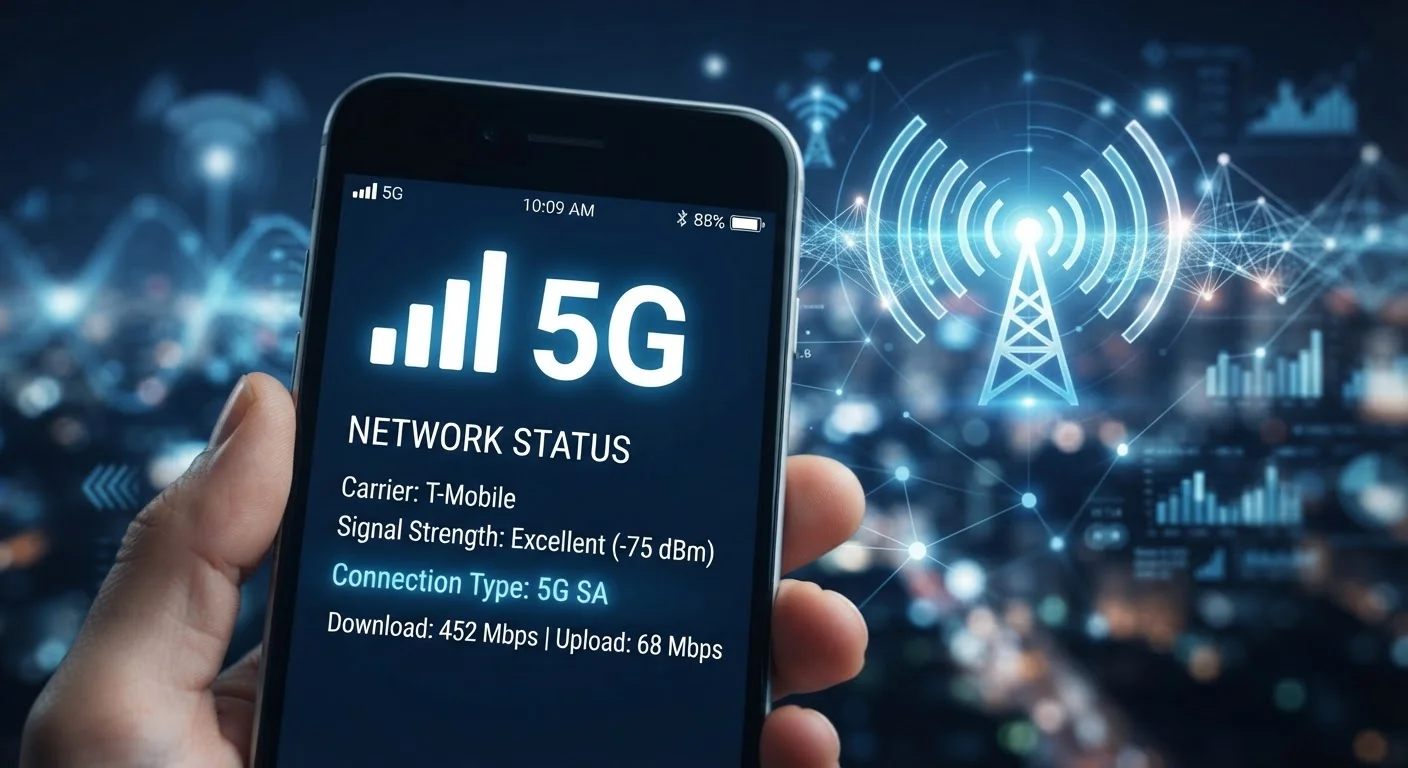
Photo: TrendingResults.net | Discover More, Trend More editorial
Key Takeaways
- LTE remains the most widely available and consistently reliable mobile standard in the U.S. today.
- 5G performance varies dramatically depending on which frequency band your carrier deploys in your area.
- Wi-Fi calling routes voice traffic over broadband instead of cellular towers, improving calls in weak-signal areas.
- Your phone's modem chip determines which network standards it can access - specs matter before you buy.
- Carrier marketing language around '5G' often overstates real-world speed gains for most users.
LTE: The Reliable Baseline Most Americans Still Rely On
LTE - Long-Term Evolution - is the mobile standard that underpins most U.S. wireless service today. Introduced broadly in the early 2010s, it replaced slower 3G networks and became the foundation for modern mobile data. When you stream music during a commute or load a map while traveling, you're likely on LTE.
LTE networks are mature, dense, and well-optimized. Coverage maps from major carriers show LTE reaching the vast majority of the U.S. population. Real-world download speeds typically fall between 10 and 50 Mbps under normal load - enough to handle video calls, navigation, and most streaming without issue.
Understanding LTE matters because it sets the baseline against which 5G improvements are measured. For most everyday tasks, a strong LTE connection is indistinguishable from entry-level 5G. See our wireless plan glossary for a plain-language breakdown of network terms you'll encounter when shopping.
~98%
U.S. population with LTE coverage
Major U.S. carriers report LTE reaching close to 98% of the U.S. population, making it the most universally available mobile standard.
10-50 Mbps
Typical LTE download speed range
Real-world LTE speeds vary by network load and signal strength; median speeds reported by network analysts commonly fall in this range.
200-400 Mbps
Mid-band 5G typical download speeds
Network testing organizations have documented mid-band 5G (including C-band) delivering speeds in this range under favorable conditions.
5G: What It Actually Delivers Depends on the Band
5G is not a single experience - it's a collection of technologies operating across different radio frequency bands, each with distinct trade-offs between speed and coverage.
- Low-band 5G (below 1 GHz): Covers wide areas and penetrates buildings well, but delivers speeds only marginally faster than LTE. This is the most common form of 5G in rural and suburban areas.
- Mid-band 5G (1-6 GHz, including the C-band): The sweet spot. Offers meaningfully faster speeds - often 200-400 Mbps in good conditions - with reasonable coverage range. Deployment is expanding in mid-sized cities and suburbs.
- mmWave 5G (above 24 GHz): Extremely fast but short-range. Signals struggle to pass through walls or travel more than a few hundred feet. Useful in stadiums or dense urban blocks, but rarely encountered elsewhere.
Carrier marketing frequently leads with "5G" without distinguishing which band you'll actually connect to. Our related article on what 5G actually delivers digs into these distinctions in detail. For context on how carriers frame these capabilities in advertising, carrier marketing language is worth reading before you commit to a plan.
“The biggest misconception about 5G is that all 5G is the same. The band matters enormously - low-band 5G and mmWave 5G are practically different technologies from a user experience perspective.”
— Telecommunications Industry Analyst, Independent wireless network researcher and industry commentator
Wi-Fi Calling: A Practical Fix for Coverage Gaps
Wi-Fi calling routes voice and SMS traffic through your broadband internet connection instead of a cellular tower. When enabled on your phone and supported by your carrier, the switch happens automatically - you often won't notice it's in use unless you check your status bar.
The practical benefit is straightforward: places where cellular signals struggle - basements, rural homes, older concrete buildings - often have Wi-Fi available. Wi-Fi calling bridges that gap. Call quality depends on your broadband connection's stability rather than tower proximity.
A few considerations worth knowing:
- Both your phone and your carrier must support Wi-Fi calling - most major U.S. carriers and modern smartphones do.
- Emergency calls (911) over Wi-Fi calling may not automatically relay your location to dispatchers; check your carrier's guidance on this.
- International travelers can sometimes use Wi-Fi calling to make domestic U.S. calls without incurring roaming charges, though carrier policies vary.
Wi-Fi calling is distinct from internet-based apps like messaging platforms that use VoIP. It operates through your carrier's network infrastructure, meaning your standard plan minutes and messaging apply. For a broader look at how mobile and home internet technologies compare, see our home internet guide.
What This Means Before You Buy a Phone or Plan
Understanding these connection types translates directly into smarter purchasing decisions. When evaluating a new phone, check which network bands its modem supports - a 5G phone that only supports low-band 5G won't deliver the mid-band speeds you might expect. Our guide to smartphone specs decoded explains how to read hardware specifications clearly.
When comparing plans, ask which 5G tier is included and what your carrier's coverage looks like in the specific areas where you spend most of your time - home, work, and frequent travel routes. A plan sold on 5G branding may deliver LTE-equivalent speeds in your neighborhood. Our phone plan shopping checklist walks through the key questions to ask before signing up.
Finally, if you experience dropped calls or poor voice quality indoors, enabling Wi-Fi calling costs nothing and can significantly improve reliability. It's one of the most underused settings on modern smartphones - and one of the most effective.
Frequently Asked Questions
The content on this site is provided for informational purposes only and should not be considered a substitute for professional advice. While we strive to provide accurate and up-to-date information, we make no guarantees regarding its completeness or accuracy. Always consult a qualified professional for advice specific to your circumstances before making any decisions.