
Why Road-Tripping the American South Is More Nuanced Than It Looks on a Map

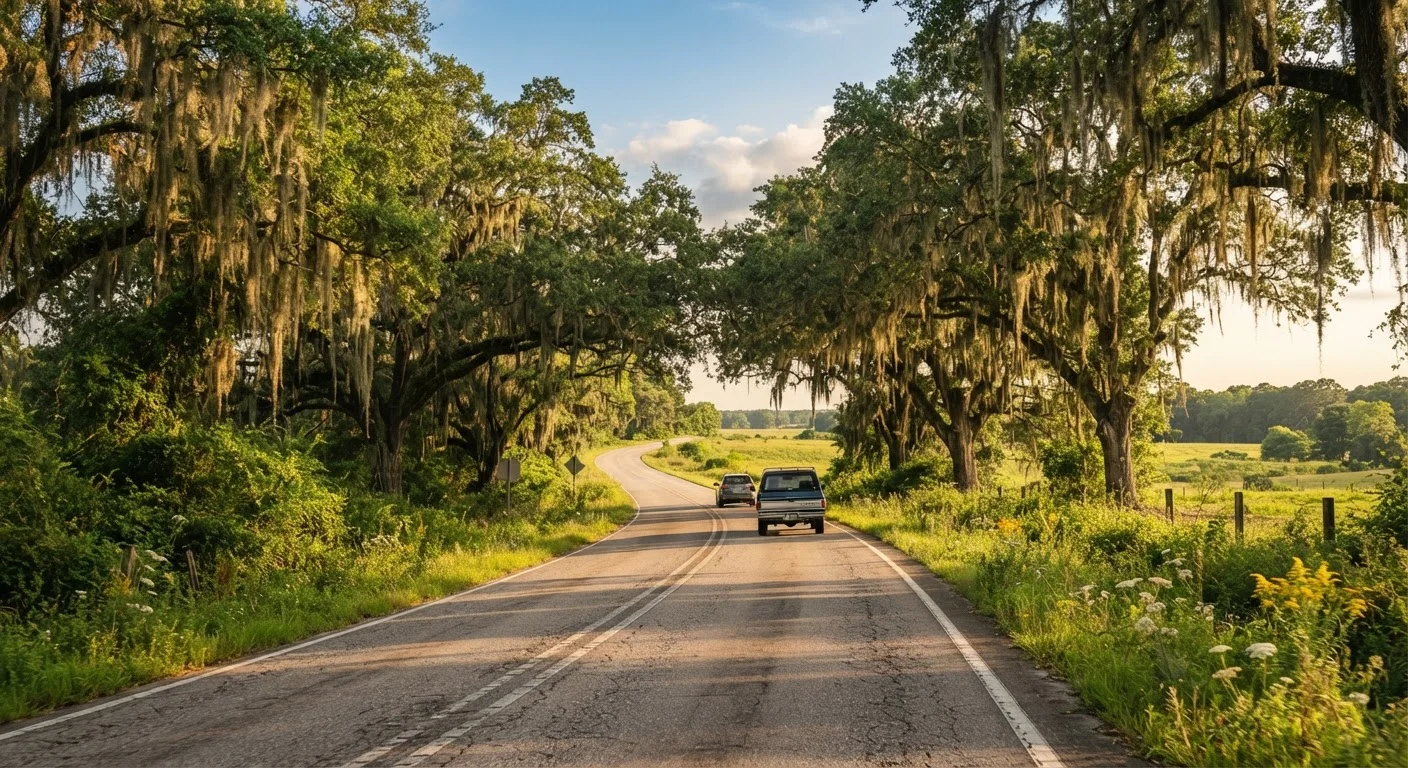
Photo: TrendingResults.net | Discover More, Trend More editorial
Key Takeaways
- Southern states span enormous distances; driving times routinely exceed what a map suggests.
- Heat, humidity, and storm season can significantly affect comfort, safety, and road conditions.
- Rural service gaps - fuel, food, cell coverage - require advance planning between major towns.
- The South is culturally and geographically diverse; treating it as one region leads to missed depth.
- Timing your trip around seasonal factors can make or break the overall experience.
The Map Lies: Distance and Driving Reality in the South
Look at a map of the American South and everything seems approachable - a handful of iconic cities connected by a web of highways cutting through green terrain. Book a week-long trip planning to hit Atlanta, Nashville, New Orleans, and Savannah, and you'll quickly discover the map was misleading you. Those cities can be 6 to 10 hours apart depending on your route. Add in two-lane highways, small-town speed limits, and inevitable stops, and drive times stretch further still.
This is the foundational mistake of Southern road trips: treating distance as mileage rather than time. The fix is straightforward - build your itinerary around drive-time estimates from the start, and be conservative. A realistic daily driving target for a trip that includes stops, meals, and exploration is often 3 to 4 hours behind the wheel, not 7. A well-structured travel itinerary accounts for this kind of friction before you leave home.
If you're curious how a Southern drive compares to another iconic American road trip, comparing routes like the Blue Ridge Parkway can help you calibrate your expectations for pace and planning style.
Service Gaps Are Real and Consequential
Common Mistakes That Catch Southern Road-Trippers Off Guard
Beyond distance, a handful of recurring planning errors tend to deflate what should be a fantastic trip. The mistakes below reflect patterns that show up repeatedly - and they're all avoidable with a bit of advance thinking.
Underestimating driving distances between destinations.
Treating the South as a single, uniform cultural region.
Planning a summer road trip without accounting for heat and humidity.
Failing to plan for rural service gaps in fuel, food, and connectivity.
Skipping the cultural and historical context of sites along the route.
Overloading the itinerary without rest or flexibility.
Budget-conscious travelers should also note that rural Southern routes often hide unexpected costs - last-minute lodging in small towns, premium fuel prices at isolated stations, and limited dining options that push you toward convenience-store meals. Thinking through your spending approach in advance pays off. Stretching your travel budget without sacrificing quality is entirely possible when you plan proactively.
Heat and Storm Season Demand Respect
Getting the Depth Right: Region, Culture, and Honest Expectations
The American South is not one place. Appalachian culture in East Tennessee shares almost nothing with the Cajun traditions of the Louisiana wetlands. The Mississippi Delta - birthplace of the blues, shaped by a history of deep agricultural poverty - is a world apart from the research-triangle cities of North Carolina. Travelers who approach the South as a monolith miss most of what makes it worth visiting.
Doing regional homework ahead of time pays dividends. Tourism marketing rarely captures the full complexity of a place - what's left out often matters more than what's promoted. If your route touches the Great Smoky Mountains, for example, understanding what the park actually involves before you arrive will help you avoid the most common visitor frustrations.
920 mi
Width of the American South (approximate)
Driving from the Texas-Louisiana border to the North Carolina coast covers roughly 920 miles - equivalent to New York to Kansas City.
Top 5
Most tornado-prone states include Southern states
According to NOAA, Alabama, Mississippi, and Tennessee consistently rank among the most tornado-active states, with peak risk in spring.
The most rewarding Southern road trips are built around honest curiosity - about history, food, landscape, and the people who live there. Go slow, go deep, and resist the urge to collect cities like souvenirs. That's when the South really opens up.
The content on this site is provided for informational purposes only and should not be considered a substitute for professional advice. While we strive to provide accurate and up-to-date information, we make no guarantees regarding its completeness or accuracy. Always consult a qualified professional for advice specific to your circumstances before making any decisions.