
New Car vs. Used Car: Weighing the Real Trade-Offs

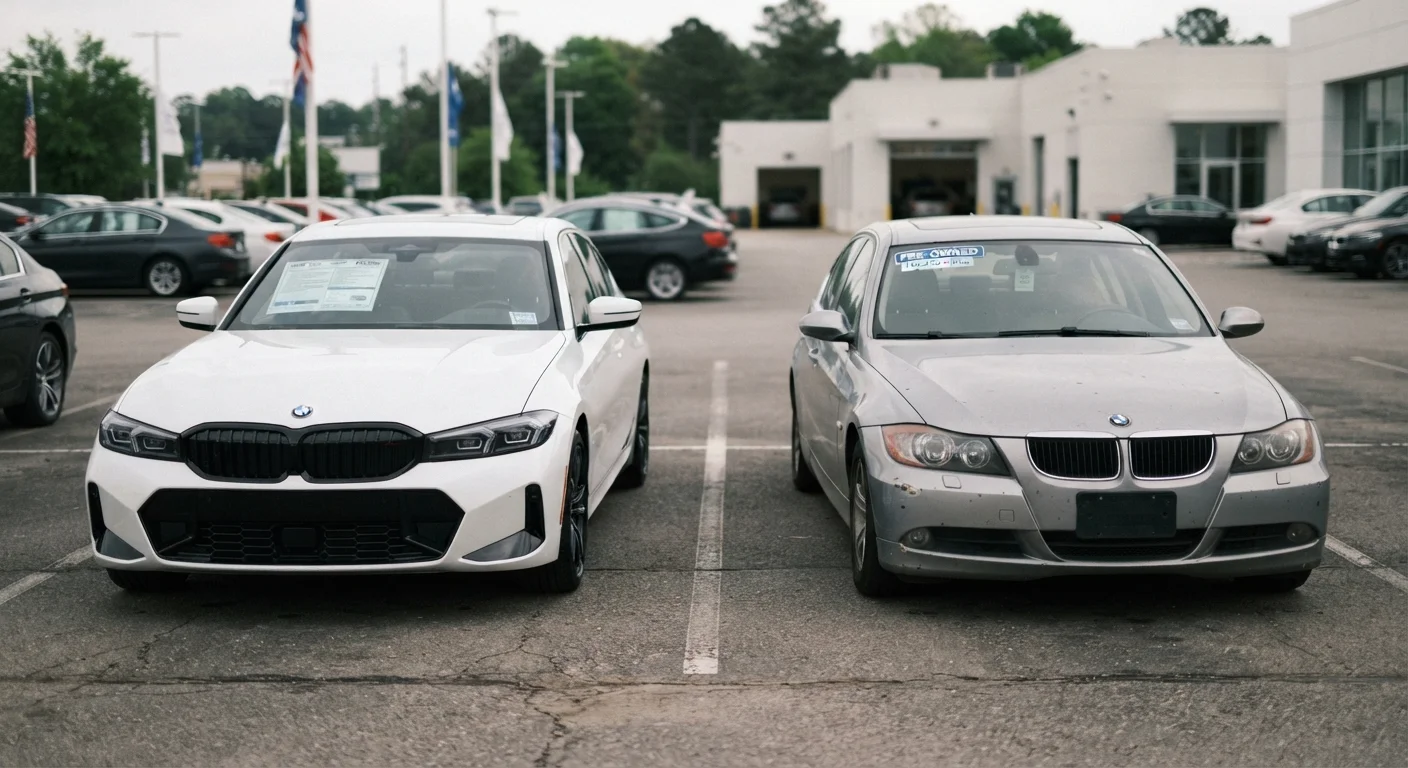
Photo: TrendingResults.net | Discover More, Trend More editorial
Key Takeaways
- New cars lose a significant portion of their value in the first one to three years of ownership.
- Used cars typically cost less upfront but may carry higher financing interest rates and repair risks.
- Certified pre-owned vehicles occupy a middle ground with added inspections and limited warranties.
- Your credit profile, budget, and planned ownership length should all influence which direction makes sense.
- Total cost of ownership - not just sticker price - is the most useful measure for comparing both options.
The Depreciation Reality
Depreciation is the single largest cost most drivers never think about - and it hits hardest in the first few years of a new vehicle's life. Industry data consistently shows that a new vehicle can lose a substantial share of its value within the first year alone, with the steepest slide occurring before the three-year mark. By the time a car is three to four years old, the rate of depreciation typically slows considerably.
This is why buying used often makes mathematical sense. When someone else absorbs that initial value drop, you can purchase a comparable vehicle - same trim level, similar mileage - for meaningfully less money. The trade-off is that you're buying a car with a history: wear, past ownership conditions, and a shorter remaining useful life under warranty.
For buyers planning to sell or trade within three to five years, depreciation is especially important to factor in. Understanding trade-in timing can help you think through when the math favors selling rather than holding.
| Criterion | New Car | Used Car |
|---|---|---|
| Purchase Price | Higher | Lower |
| Depreciation Rate | Steepest in years 1-3 | Slower, already absorbed |
| Financing Interest Rate | Typically lower APR | Typically higher APR |
| Warranty Coverage | Full manufacturer warranty | None to limited |
| Insurance Cost | Generally higher | Generally lower |
| Technology & Safety Features | Latest available | Varies by model year |
| Vehicle History Uncertainty | None | Present - varies by source |
| Selection | Current model year only | Wide range of years/trims |
Financing, Insurance, and Hidden Costs
New vehicles typically attract lower interest rates from lenders because they represent less risk - their value is known and their condition is certain. Used vehicles, by contrast, often carry higher APRs (annual percentage rates), which can partially offset the lower purchase price over the life of a loan. The gap varies based on your credit profile and the lender, so running the actual numbers for both scenarios is worth the effort before committing.
Insurance costs also differ. New vehicles - especially those with higher replacement value - generally cost more to insure, particularly for comprehensive and collision coverage. A three-year-old vehicle of the same model will typically carry a lower insurance premium. That said, newer vehicles with advanced driver-assistance systems may qualify for safety discounts depending on the insurer.
Registration fees, taxes, and dealer fees vary by state and transaction type, but new cars often come with higher initial registration costs tied to their purchase price. These are genuine ownership costs worth modeling before you sign anything. For a fuller picture, our guide to car ownership costs beyond the sticker price walks through how to estimate true annual expenses.
~20%
Avg. new car value lost in year one
Industry estimates from sources such as Edmunds and Kelley Blue Book suggest new vehicles commonly depreciate around 15-20% in their first year.
1-2%
Typical APR gap: new vs. used
Federal Reserve consumer credit data and lender surveys generally show used auto loan rates running higher than new-vehicle rates, though the spread varies by credit tier.
3-4 yrs
Age where depreciation typically slows
Automotive valuation analysts broadly agree that the depreciation curve flattens significantly by the third or fourth model year.
Warranty and Reliability Considerations
One of the clearest advantages of buying new is the manufacturer warranty - typically three years or 36,000 miles for basic coverage, with powertrain protection often extending to five years or 60,000 miles. These warranties cover most major repair costs during the early ownership window, which is a genuine financial safeguard.
Used vehicles may have no remaining factory warranty, meaning repair costs fall entirely on the owner. The risk level depends heavily on the vehicle's age, mileage, maintenance history, and make. A well-documented, low-mileage used car from a reliable brand can be a sound purchase; a high-mileage vehicle with spotty records is a different proposition entirely.
Certified pre-owned (CPO) programs sit between these extremes, offering multi-point inspections and limited warranty coverage on used vehicles. However, CPO programs vary widely by manufacturer - not all inspections or warranties are equivalent. Our CPO vs. used breakdown explains what those designations actually guarantee. If you're buying from a private seller rather than a dealer, you'll also want to weigh the advantages and risks of private-party purchases carefully, since protections are minimal.
Which Makes More Sense for You?
There's no universal answer - the right choice depends on your financial situation, how long you intend to own the vehicle, and what trade-offs you're comfortable accepting. A new car offers a clean slate, full warranty, and access to the latest technology; you pay for that certainty through a higher price and faster early depreciation. A used car requires more due diligence upfront - a thorough inspection, a vehicle history report, and ideally a pre-purchase check by an independent mechanic - but can deliver strong value when chosen carefully.
Two questions tend to clarify the decision for most buyers: How long do you plan to own the vehicle? And how much uncertainty are you comfortable carrying? If you plan to keep a car for 10-plus years, the depreciation advantage of buying used narrows over time. If you're buying for two to four years, letting someone else absorb the early loss is a financially sound strategy.
Whatever you decide, routine maintenance will have more bearing on your long-term costs than the new-or-used choice alone. A well-maintained used car can outlast a neglected new one by a wide margin.
The content on this site is provided for informational purposes only and should not be considered a substitute for professional advice. While we strive to provide accurate and up-to-date information, we make no guarantees regarding its completeness or accuracy. Always consult a qualified professional for advice specific to your circumstances before making any decisions.