
Navigating Roundabouts: Rules That Confuse Even Experienced Drivers

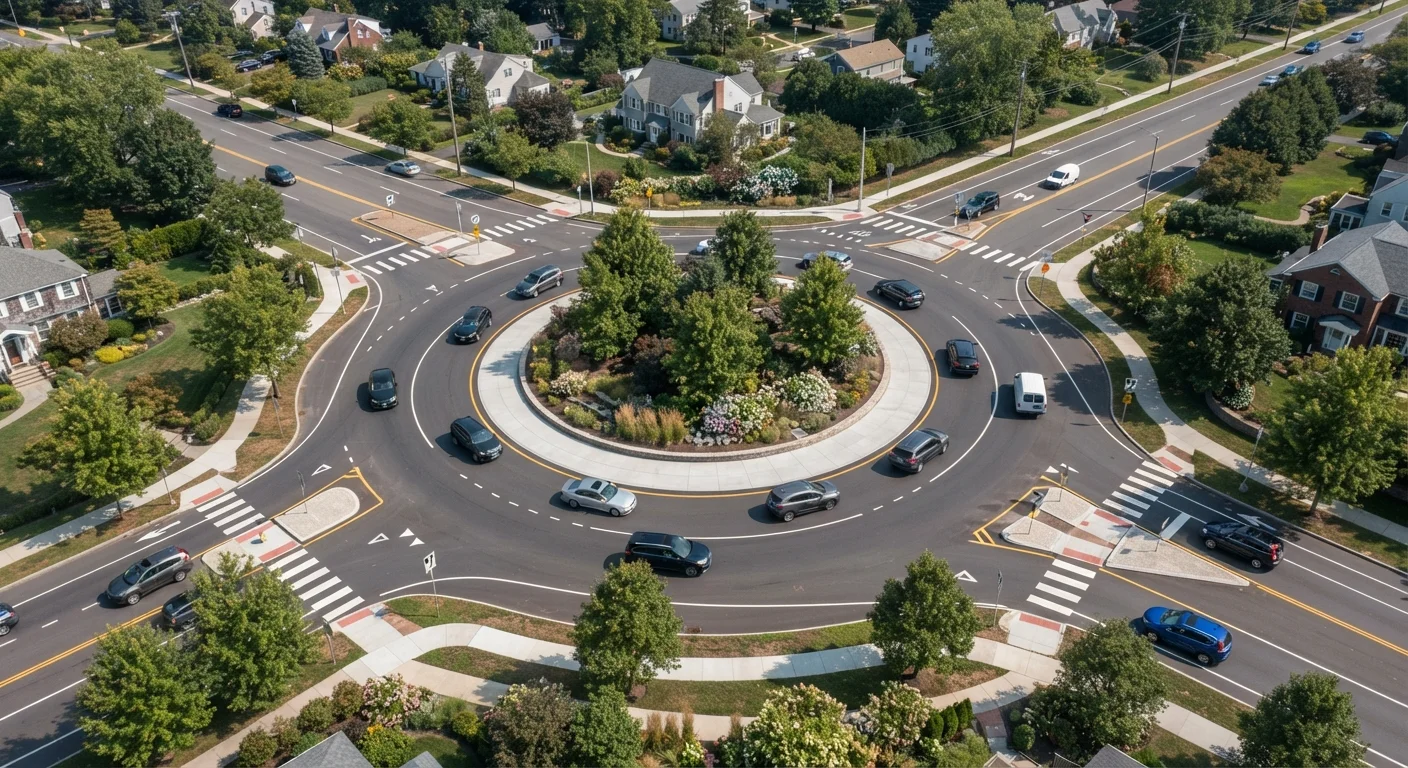
Photo: TrendingResults.net | Discover More, Trend More editorial
Key Takeaways
- Vehicles already in the roundabout always have the right of way over entering traffic.
- You must yield at the entry, not stop unless traffic requires it.
- Use your right turn signal when exiting, and avoid changing lanes inside the circle.
- Multi-lane roundabouts require choosing the correct lane before you enter.
- Pedestrians and cyclists have specific protections at roundabout crossings.
Why Roundabouts Confuse Even Experienced Drivers
Roundabouts are growing more common across the United States, replacing traditional signalized intersections in both urban and suburban settings. Research from transportation safety organizations consistently associates them with significant reductions in fatal and serious-injury crashes compared to conventional intersections - primarily because they eliminate left-turn conflicts and reduce vehicle speeds at the point of potential collision.
Yet for many drivers, roundabouts trigger uncertainty. Part of the confusion stems from how different they are from the stop-and-go logic most American drivers grew up practicing. There's no red light to wait for, no protected left-turn arrow, and no obvious queue. Instead, drivers must read traffic in real time and make active yielding decisions - a skill that takes practice.
Misunderstandings about right of way are particularly common. Some drivers believe the first vehicle to arrive at the entry has priority. Others stop unnecessarily inside the circle. A few attempt to change lanes mid-rotation in multi-lane designs. These errors are understandable but avoidable - and they're also covered well in our broader guide to right-of-way laws, which explains the legal framework behind yielding situations.
New and recently licensed drivers tend to find roundabouts especially stressful. If you're still building confidence in your early driving months, common first-year mistakes offers useful context on the broader habits that elevate early crash risk.
Yield on Entry - Not Inside
Step-by-Step: How to Navigate a Roundabout Correctly
The following steps apply to single-lane and multi-lane roundabouts in the United States. Multi-lane roundabouts add complexity at the entry and exit, but the core principles of yielding, lane discipline, and signaling remain the same.
What you will need
Turn signals
Used to communicate your intended exit to other drivers and pedestrians at roundabout crossings.
Advance signage awareness
Roundabout approach signs indicate lane assignments and exits - reading them early allows correct lane selection before entry.
Read the approach signs before you reach the roundabout
Roundabouts are typically preceded by warning signs and lane-assignment diagrams. As you approach, identify which exit you need and which lane corresponds to it. Slowing down to read signs inside the roundabout is not an option - lane selection must happen before you enter.
Slow down and yield at the entry
Every roundabout entry is governed by a yield sign - not a stop sign. That means you slow and check for gaps in circulating traffic. If the roundabout is clear, you may enter without coming to a full stop. If traffic is present, wait for a safe gap before proceeding. Treating the yield as a full stop when the circle is clear creates unnecessary congestion and rear-end risk behind you.
Enter and keep to your lane
Once you enter, maintain your lane position and travel at the posted speed - typically 15-25 mph inside the circle. Do not accelerate aggressively. Keep a safe following distance from the vehicle ahead of you, just as you would on any road. Understanding how speed and distance interact in tight spaces is covered in our guide to the two-second rule.
Signal your exit just before you reach it
Activate your right turn signal as you pass the exit before your intended exit. This alerts pedestrians at the crosswalk and other entering drivers that you are leaving the circle. Do not signal right from the moment you enter - this misleads drivers waiting to enter at the first exit.
Yield to pedestrians and cyclists at the exit crosswalk
After you've exited the circle but before you've fully rejoined the through road, crosswalks are typically present. Pedestrians and cyclists using these crossings have the right of way once you have exited the roundabout. Come to a complete stop if necessary before proceeding past the crosswalk.
When in Doubt, Go Around Again
Multi-Lane Roundabouts Require Early Lane Choice
Adverse conditions add another layer of difficulty. Wet pavement reduces braking distance, and fog can obscure vehicles already in the circle. Our article on driving in fog, ice, and heavy rain explains how to adjust your driving behavior when visibility or traction is compromised - advice that applies fully at roundabouts.
The content on this site is provided for informational purposes only and should not be considered a substitute for professional advice. While we strive to provide accurate and up-to-date information, we make no guarantees regarding its completeness or accuracy. Always consult a qualified professional for advice specific to your circumstances before making any decisions.