DIY vs. Hiring a Pro: A Room-by-Room Decision Framework

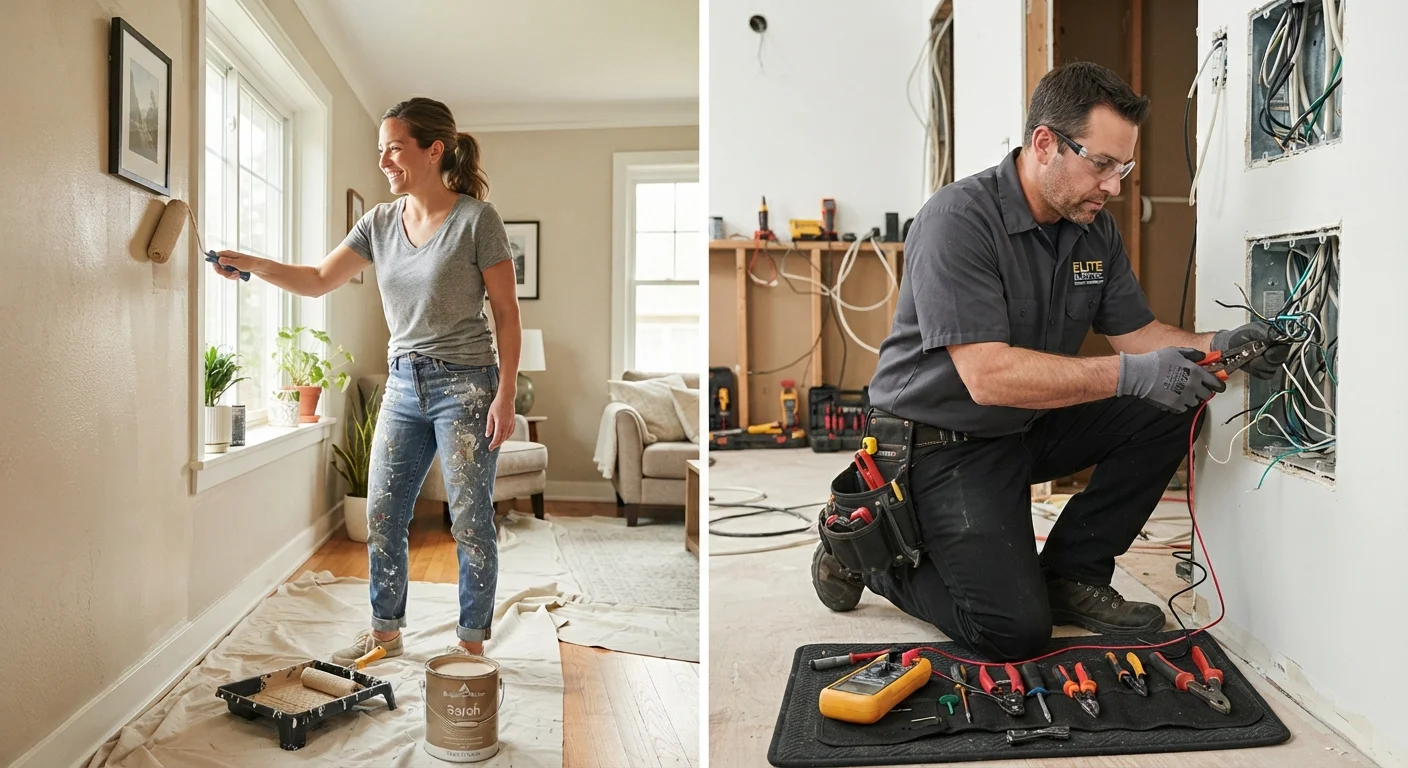
Photo: TrendingResults.net | Discover More, Trend More editorial
Key Takeaways
- Electrical, gas, and structural work almost always require a licensed professional due to safety and code requirements.
- DIY is well-suited to cosmetic updates like painting, caulking, and fixture swaps with no permit requirements.
- Permit requirements vary by municipality - always verify before starting any renovation work.
- Mistakes in high-stakes rooms like kitchens and bathrooms can cost significantly more to fix than hiring a pro upfront.
- Your skill level, available time, and risk tolerance should all factor into the DIY vs. pro decision.
The Core Decision Framework
Every home project sits somewhere on a spectrum from low-stakes cosmetic work to high-stakes structural or systems work. Before picking up a tool or dialing a contractor, run the task through four filters:
- Safety risk: Could a mistake injure you, your family, or a future occupant?
- Code and permit requirements: Does local code require licensed work or a permit and inspection?
- Reversibility: If you get it wrong, how costly is the fix?
- Skill and tool gap: Do you honestly have the knowledge and equipment to do it correctly?
If the answer to the first two questions is yes, stop there - hire a licensed professional. If not, the third and fourth filters help you decide whether the project is realistic for a capable DIYer. See our guide to setting expectations before your first renovation for a fuller look at planning your approach.
Start With a Permit Check
Room-by-Room Breakdown
Kitchen
Kitchens combine plumbing, electrical, and gas systems in a small space - making them one of the highest-risk rooms for DIY overreach. Painting cabinets, swapping hardware, and installing a new faucet (on an existing supply line) are reasonable DIY territory. Relocating plumbing, adding circuits, or tying into a gas line are firmly in licensed-contractor territory. Before demolishing walls for an open layout, read our article on what walls can and cannot come down - removing the wrong wall without engineering review is a serious structural risk. For a broader view of what a kitchen renovation actually involves, the kitchen remodel homeowner's roadmap is a useful starting point.
Bathroom
Replacing a toilet, caulking a tub surround, or installing a new vanity light are accessible DIY tasks. Re-tiling a shower floor is doable with patience and proper waterproofing. However, moving drain lines, replacing a shower pan with a mortar bed, or adding an exhaust fan that requires new wiring all warrant professional involvement. Water damage from poor waterproofing is expensive and can lead to mold.
Living Spaces and Bedrooms
These rooms offer the most DIY-friendly work in the house. Painting is the quintessential homeowner project - and it rewards careful prep. Surface preparation is where painting actually succeeds or fails, and skipping it produces results that look it. Installing trim, replacing interior door hardware, and patching drywall are also well within reach for a methodical beginner.
Electrical Throughout the Home
Replacing a standard outlet or light switch on an existing circuit is a task many homeowners complete safely - but only after shutting off the correct breaker and verifying the circuit is dead with a non-contact voltage tester. Adding new circuits, upgrading a panel, or doing any work in the main breaker box requires a licensed electrician in virtually every US jurisdiction. Unpermitted electrical work can create insurance complications and safety hazards for future buyers.
| Task Type | DIY | Hire a Pro | |
|---|---|---|---|
| Interior painting | Yes - low risk, reversible | Unnecessary for standard rooms | |
| Electrical panel / new circuits | No - permit & license required | Always required | |
| Toilet replacement | Yes - manageable with basic skills | Optional for complex installs | |
| Structural wall removal | No - engineering assessment needed | Always required | |
| Tile backsplash | Yes - low stakes, learnable | Good if layout is complex | |
| Gas line work | No - serious safety hazard | Always required | |
| Drywall patching | Yes - forgiving, low cost | Rarely necessary | |
| Shower waterproofing | Only with proper materials & method | Recommended for full rebuilds |
Knowing When the Math Favors the Pro
Labor costs sting upfront, but factor in the full picture: the cost of rental tools you don't own, materials wasted on learning curves, and - most significantly - the repair bill if a structural or systems mistake compounds into a larger problem. Managing a renovation project well includes knowing which decisions save money and which false economies cost more in the end.
The DIY vs. pro calculus is not entirely different from decisions in other domains - much like evaluating DIY car maintenance vs. taking it to a mechanic, the rule of thumb is consistent: low-risk, reversible, tool-accessible tasks favor doing it yourself; anything touching safety systems or requiring specialized licensing favors a professional.
When hiring, always verify that contractors hold a current state license and carry general liability and workers' compensation insurance. Ask for a written scope of work before any project begins, and confirm who is responsible for pulling required permits.
This article is for general informational and educational purposes only. Always verify local building codes and permit requirements with your municipality before beginning any home improvement project, and consult a licensed professional for electrical, gas, structural, or other regulated work.
The content on this site is provided for informational purposes only and should not be considered a substitute for professional advice. While we strive to provide accurate and up-to-date information, we make no guarantees regarding its completeness or accuracy. Always consult a qualified professional for advice specific to your circumstances before making any decisions.