
Whole-House Water Filtration: What It Does, What It Doesn't, and When It Makes Sense

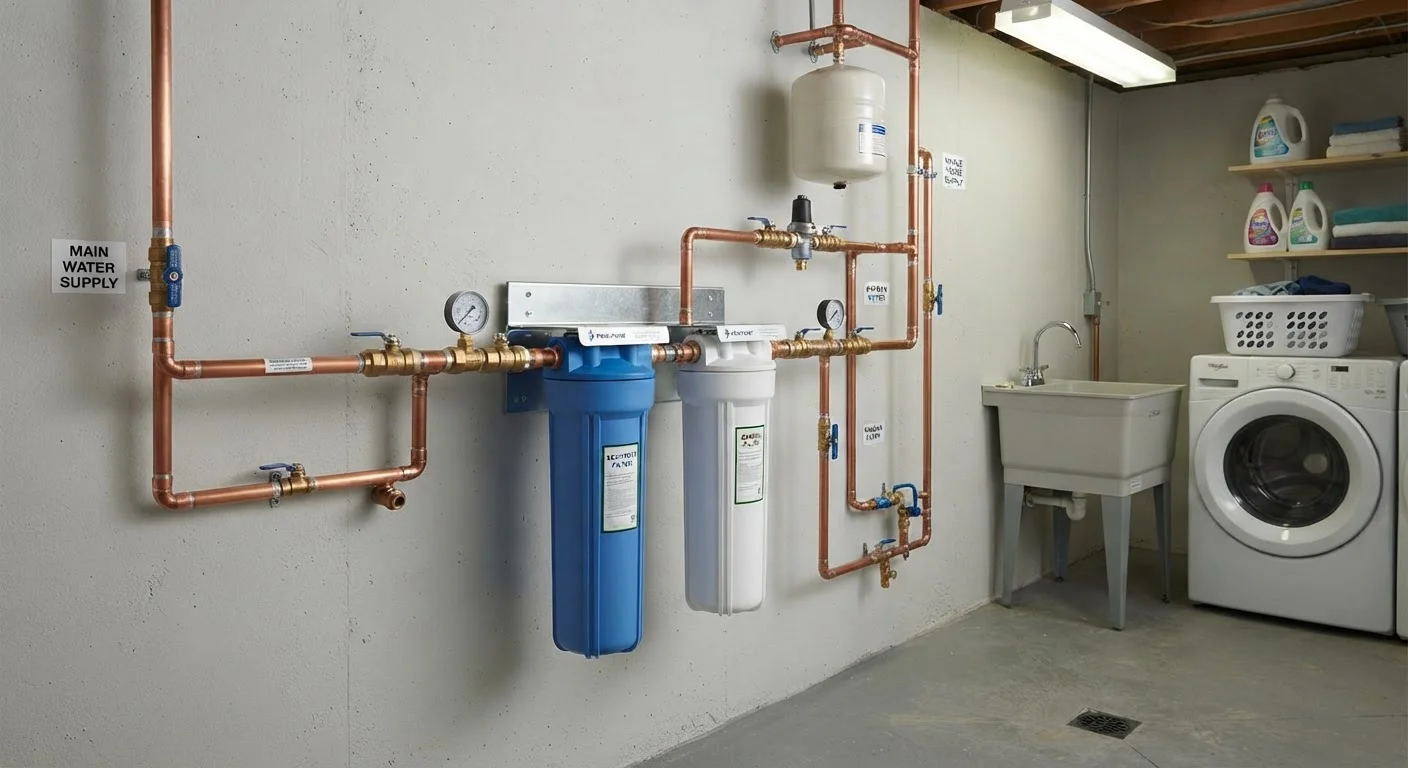
Photo: TrendingResults.net | Discover More, Trend More editorial
Key Takeaways
- Whole-house filters treat water at the point of entry, before it reaches any tap or appliance.
- No single system removes all contaminants - the right filter type depends on what's actually in your water.
- A water quality test should precede any filtration purchase to avoid buying the wrong solution.
- Installation and ongoing filter replacement add to the total cost of ownership.
- Municipal and well water users face different contaminant profiles and may need different system types.
Treats water at every outlet in the home
Unlike point-of-use filters, POE systems mean filtered water reaches every tap, shower, and appliance without individual unit installation at each location.
Protects plumbing and appliances from sediment and scale
Removing sediment and hardness minerals upstream can reduce scale buildup inside pipes and extend the service life of water heaters, dishwashers, and washing machines.
Can improve taste and odor throughout the house
Activated carbon stages reduce chlorine and certain compounds that affect taste and smell, benefiting both drinking water and the water used for cooking and bathing.
One system replaces multiple point-of-use solutions
For households currently using multiple countertop or under-sink filters, a single POE system can simplify maintenance and provide more consistent treatment.
Essential baseline for private well users
Well water receives no municipal treatment, making a POE system - typically combining sediment filtration, carbon, and UV disinfection - a practical first line of defense.
Higher upfront cost than point-of-use filters
Whole-house systems range widely in price depending on type and capacity, and most require professional installation, adding to the initial investment.
Requires ongoing filter replacement and maintenance
Filter media has a finite lifespan measured in gallons or months. Neglecting replacement reduces effectiveness and may introduce new problems like bacterial growth.
No single system addresses all contaminants
A carbon filter won't remove nitrates; a softener won't kill bacteria. Multi-stage systems cost more and add complexity, but may still leave gaps for certain contaminants.
May reduce water pressure if undersized
A filter rated for a lower flow rate than your household demands can cause noticeable pressure drops, particularly during peak usage periods.
Installation typically requires a licensed plumber
Connecting to the main supply line is not a casual DIY project - improper installation can void warranties, create leak risk, or fail local code requirements.
How Whole-House Filtration Works
A whole-house water filtration system - also called a point-of-entry (POE) system - connects directly to your home's main supply line, typically near the water meter or pressure tank. Because every pipe in the house branches off from that single entry point, treated water flows to every faucet, showerhead, toilet, dishwasher, and water-using appliance.
This is the key difference from point-of-use (POU) filters, which treat water only at a single outlet, such as an under-sink reverse osmosis unit or a pitcher filter. POE systems offer broader coverage but generally involve higher upfront cost and professional installation. For an overview of how your water supply connects to other major home systems, see our guide to your home's hidden infrastructure.
Common Filter Types and What They Target
No single filter technology handles every contaminant. Systems are typically sold as standalone units or in multi-stage combinations:
- Sediment filters - Remove particles like sand, rust, and silt. Often used as a first-stage pre-filter to protect downstream equipment.
- Activated carbon filters - Reduce chlorine, chloramines, volatile organic compounds (VOCs), and many compounds affecting taste and odor.
- Water softeners - Technically not filtration, but ion-exchange softeners reduce hardness minerals (calcium and magnesium) that cause scale buildup in pipes, water heaters, and appliances.
- UV disinfection systems - Use ultraviolet light to neutralize bacteria, viruses, and other microorganisms. Common for private well users.
- Iron filters - Address elevated iron or manganese, which cause staining and metallic taste.
Well water and municipal water carry different contaminant profiles. Municipal supplies are regulated and treated, but may still contain chlorine byproducts or lead from aging service lines. Private wells carry no regulatory oversight, making independent testing especially important.
Filtration vs. Softening: A Key Distinction
Start With a Water Test, Not a System
The single most important step before purchasing any filtration system is testing your water. A basic test kit from a hardware store can detect hardness and pH, but a certified laboratory test gives you a more complete picture - including metals, bacteria, nitrates, and other contaminants relevant to your area.
Municipal customers receive an annual Consumer Confidence Report (CCR) from their water utility; reviewing it is a free starting point. Well owners should test annually, or after any flooding or nearby land-use change. Without knowing what's actually in your water, you risk buying a system optimized for the wrong problem.
~15 million
US households relying on private wells
According to the U.S. Environmental Protection Agency, approximately 15 million U.S. households depend on private wells, which are not subject to federal drinking water regulations.
90+
Contaminants regulated in public water systems
The EPA's National Primary Drinking Water Regulations set enforceable limits for more than 90 contaminants in public water supplies, but private wells fall outside this framework.
Pros and Cons of Whole-House Filtration
Like any major home system upgrade, whole-house filtration has genuine advantages and real limitations. Understanding both helps you decide whether it fits your situation.
Treats water at every outlet in the home
Unlike point-of-use filters, POE systems mean filtered water reaches every tap, shower, and appliance without individual unit installation at each location.
Protects plumbing and appliances from sediment and scale
Removing sediment and hardness minerals upstream can reduce scale buildup inside pipes and extend the service life of water heaters, dishwashers, and washing machines.
Can improve taste and odor throughout the house
Activated carbon stages reduce chlorine and certain compounds that affect taste and smell, benefiting both drinking water and the water used for cooking and bathing.
One system replaces multiple point-of-use solutions
For households currently using multiple countertop or under-sink filters, a single POE system can simplify maintenance and provide more consistent treatment.
Essential baseline for private well users
Well water receives no municipal treatment, making a POE system - typically combining sediment filtration, carbon, and UV disinfection - a practical first line of defense.
Higher upfront cost than point-of-use filters
Whole-house systems range widely in price depending on type and capacity, and most require professional installation, adding to the initial investment.
Requires ongoing filter replacement and maintenance
Filter media has a finite lifespan measured in gallons or months. Neglecting replacement reduces effectiveness and may introduce new problems like bacterial growth.
No single system addresses all contaminants
A carbon filter won't remove nitrates; a softener won't kill bacteria. Multi-stage systems cost more and add complexity, but may still leave gaps for certain contaminants.
May reduce water pressure if undersized
A filter rated for a lower flow rate than your household demands can cause noticeable pressure drops, particularly during peak usage periods.
Installation typically requires a licensed plumber
Connecting to the main supply line is not a casual DIY project - improper installation can void warranties, create leak risk, or fail local code requirements.
Maintaining your filtration system is also part of a broader home maintenance rhythm. The annual home systems maintenance checklist is a useful place to track filter replacement schedules alongside HVAC, water heater, and electrical inspections.
Impact on Plumbing and Appliances
Sediment and hard water minerals are among the leading causes of premature wear in residential plumbing. Scale deposits restrict flow in pipes, reduce heat-transfer efficiency in water heaters, and shorten the lifespan of washing machines, dishwashers, and ice makers. A well-matched filtration or softening system can reduce this wear, though individual results depend on water chemistry and usage patterns.
Water heaters are particularly sensitive. If you're also evaluating your hot water setup, the considerations around scale and sediment buildup are worth reviewing alongside tankless versus storage tank water heaters, since the two decisions often interact.
What Whole-House Systems Cannot Do
It's important to set realistic expectations. Even a well-chosen system has limits:
- POE filters do not guarantee drinking water safety on their own - for high-risk contaminants like lead or arsenic, a dedicated POU filter at the tap may still be needed.
- Activated carbon filters don't remove dissolved minerals, nitrates, or most heavy metals unless specifically rated to do so.
- Water softeners reduce hardness but don't remove bacteria, pesticides, or chemical contaminants.
- No filtration system eliminates the need for regular maintenance - clogged or expired filters can actually harbor bacteria or reduce water pressure.
Whole-house filtration is one layer of water quality management, not a complete solution for every possible concern.
The content on this site is provided for informational purposes only and should not be considered a substitute for professional advice. While we strive to provide accurate and up-to-date information, we make no guarantees regarding its completeness or accuracy. Always consult a qualified professional for advice specific to your circumstances before making any decisions.