
Your Home's Hidden Infrastructure: A Plain-Language Guide to Major Systems

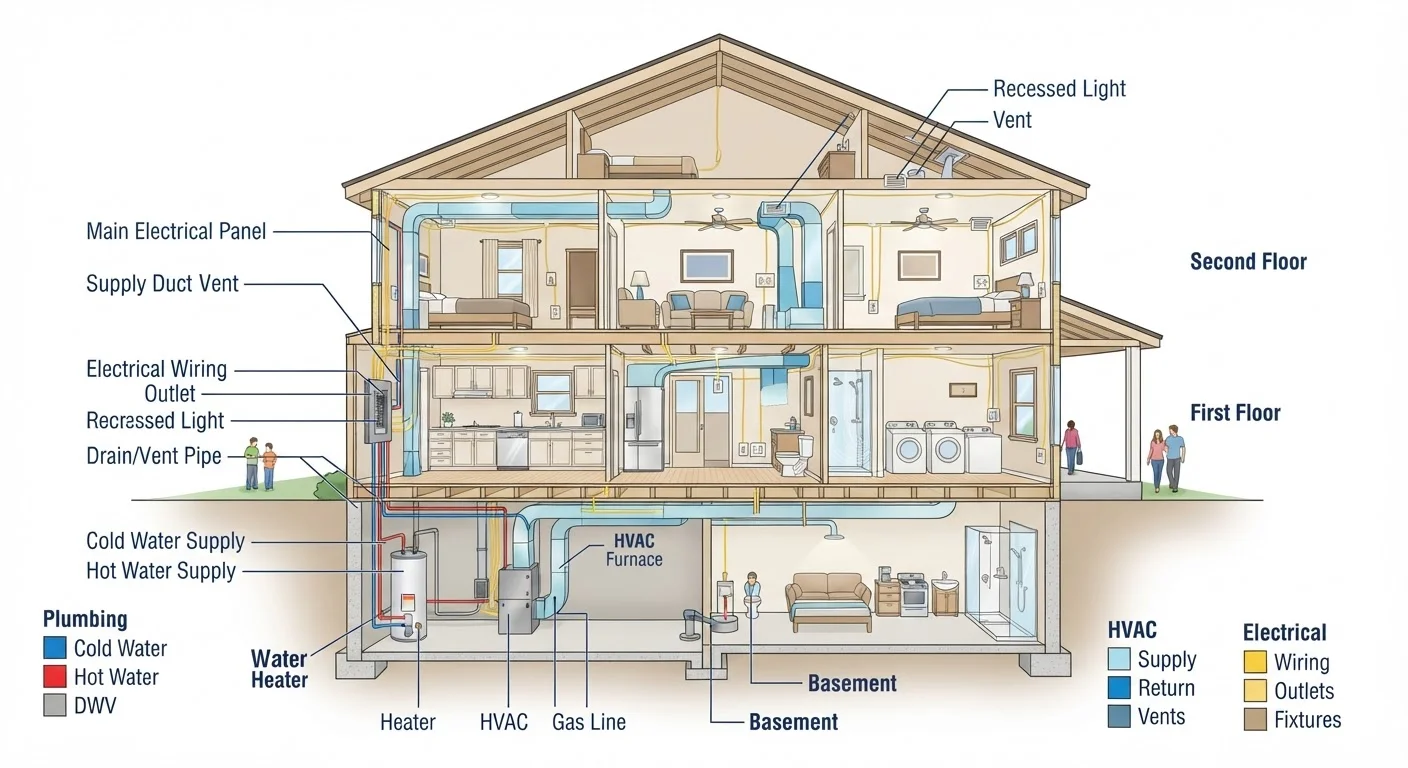
Photo: TrendingResults.net | Discover More, Trend More editorial
Key Takeaways
- Every home has three core systems - plumbing, HVAC, and electrical - that work together constantly.
- Most routine maintenance is DIY-friendly, but electrical, gas, and structural work requires a licensed professional.
- Knowing basic terminology helps you communicate clearly with contractors and understand estimates.
- Proactive seasonal maintenance is far less costly than emergency repairs after a failure.
- All three systems have finite service lives - knowing those ranges helps you plan and budget.
Why Home Systems Matter
Most homeowners interact with their home's infrastructure only when something breaks - and by then, a small, inexpensive problem has often become a large, disruptive one. The plumbing, HVAC, and electrical systems in your home account for a significant share of both its value and its daily livability. Understanding how they work, roughly how long they last, and what warning signs to watch for puts you in a far stronger position as a homeowner.
This guide gives you a plain-language foundation. It won't replace a licensed professional, but it will help you recognize a problem early, describe it accurately when calling for help, and evaluate the advice you receive. For a deeper look at how long individual components typically last, see our reference guide on home system lifespans.
Take a Systems Inventory When You Move In
Plumbing: Supply, Drain, and Venting
Your home's plumbing is actually two separate systems working in parallel: a pressurized supply side that brings clean water in, and a gravity-fed drain-waste-vent (DWV) side that takes wastewater out. Understanding the split helps you pinpoint problems faster.
Supply line
The pressurized pipes that carry fresh, clean water into your home and to individual fixtures like sinks, toilets, and showers.
DWV system
Drain-Waste-Vent - the network of larger pipes that removes used water and sewage from fixtures and uses venting pipes to prevent sewer gases from entering your living space.
Air handler
The indoor unit in a forced-air HVAC system that circulates conditioned air through ductwork and into each room of the house.
Circuit breaker
A safety switch inside your electrical panel that automatically trips (turns off) if a circuit draws more current than it can safely handle, preventing overheating and fire.
GFCI
Ground Fault Circuit Interrupter - an outlet or breaker that detects tiny current imbalances and shuts off power in milliseconds to protect against electric shock, required near water sources by US electrical code.
Heat pump
An HVAC system that moves heat between indoors and outdoors rather than generating it by burning fuel, providing both heating and cooling from a single unit.
P-trap
The curved section of pipe beneath every sink drain that holds a small amount of water, creating a seal that blocks sewer gases from rising up through the drain.
Load center
Another name for your main electrical panel - the metal box, usually in a utility room or garage, where power from the utility enters and is divided into individual circuits.
Supply Side
Pressurized water enters through a main shut-off valve - typically near the street-facing wall or in the basement. From there, pipes branch to every fixture. Cold water travels directly; hot water routes through the water heater first. Knowing the location of your main shut-off is essential: it's the first thing you turn in a leak emergency.
Drain-Waste-Vent Side
Used water exits through a series of sloped drain pipes that lead to either a municipal sewer or a private septic system. Every fixture drain passes through a P-trap - a curved pipe section that holds standing water, blocking sewer gases. Vent pipes running up through the roof equalize pressure in the drain lines and allow gases to escape safely outside. A gurgling drain or a sulfur smell indoors often signals a venting problem, not just a clog.
HVAC: Heating, Cooling, and Air Quality
HVAC encompasses everything that manages your home's temperature and indoor air quality. Most American homes use a forced-air system: a furnace or heat pump heats or cools the air, and an air handler pushes it through ductwork into every room. The same return-air ducts pull stale air back to be reconditioned.
The air filter sits at the return-air intake and is your most accessible maintenance point. A clogged filter forces the system to work harder, shortens equipment life, and degrades indoor air quality. Most 1-inch filters need replacement every 1-3 months.
Heating systems vary more widely than cooling. If you want to understand the practical differences between furnaces, heat pumps, and radiant systems, our breakdown of main heating system types explains each clearly. For cooling, the condenser unit outside and the evaporator coil inside work together - the refrigerant cycle moves heat from indoors to outdoors, not from outdoors to indoors, which is why air conditioning works even on very hot days.
Electrical: Panels, Circuits, and Safety Devices
Electricity enters your home through the utility's service lines, passes through a meter, and arrives at the main electrical panel (also called the load center or breaker box). There, it splits into individual circuits - each protected by a dedicated circuit breaker. The breaker trips automatically if a circuit is overloaded, preventing overheating and fire.
Never DIY Electrical Panel Work or Gas Lines
Safety Devices You Should Know
- GFCI outlets protect against shock near water. US code requires them in bathrooms, kitchens, garages, outdoor locations, and anywhere near a sink.
- AFCI breakers (arc-fault circuit interrupters) detect dangerous electrical arcing - the kind that starts fires inside walls - and are now required on most circuits in newer construction.
- Smoke and CO detectors aren't part of the wiring system, but they depend on it. Test them monthly; replace batteries annually at minimum.
If your home has an older panel with fuses instead of breakers, or a panel brand that has been identified in safety recalls, have a licensed electrician evaluate it. Refer to our contractor terminology glossary if unfamiliar terms come up during that conversation.
How the Three Systems Interact
Plumbing, HVAC, and electrical rarely operate in true isolation. Your water heater needs electricity (or gas, which requires a gas line and often an electrical ignition). Your HVAC system uses electricity to run its motor and controls, and a gas furnace also requires a gas supply line and a flue. A heat pump moves refrigerant through an outdoor unit powered entirely by electricity.
This interdependence means a failure in one system can quickly affect another. A pipe that bursts near an electrical panel is both a plumbing emergency and an electrical hazard. An HVAC system short-cycling may point to an undersized electrical circuit, not a mechanical fault. Thinking of your home as an integrated system - rather than three unrelated boxes - leads to faster diagnosis and better repair decisions.
Smart home devices are increasingly layered on top of these systems. Thermostats, leak sensors, and smart breakers can all add monitoring capability, though they work best when the underlying infrastructure is already in good shape. For a realistic look at what these devices can and cannot do, see our honest overview of smart home device capabilities.
Keeping Your Systems Healthy
Routine maintenance is the single most effective thing a homeowner can do to extend system life and avoid costly emergency repairs. Most tasks are low-skill and low-cost; the challenge is simply remembering to do them on schedule.
Permits Protect You, Not Just the Contractor
A practical starting point:
- Plumbing: Flush the water heater annually to clear sediment. Check supply line hoses on washing machines and dishwashers every few years - they can fail without warning. Know where your shut-off valves are.
- HVAC: Change filters on schedule. Have the system serviced by a technician once a year - before the heating or cooling season, ideally. Keep the outdoor condenser unit clear of debris.
- Electrical: Test GFCI outlets and smoke detectors monthly. Don't daisy-chain power strips. If breakers trip repeatedly, call an electrician rather than assuming the appliance is to blame.
For a comprehensive, season-by-season maintenance plan, our annual home systems checklist walks through every major task in sequence. And if you're interested in applying these maintenance habits to home improvement projects more broadly, that hub covers renovations and upgrades across your entire property.
Annual Home Systems Maintenance Checklist
A season-by-season checklist covering HVAC filters, water heater flushing, electrical inspections, and more - built for US homeowners who want to stay ahead of issues.
Home Systems Terminology Glossary
Plain-language definitions of the terms contractors use - from SEER ratings to AFCI breakers - so you can follow the conversation and ask better questions.
The Real Lifespan of Home Appliances and Systems
A reference guide to how long water heaters, furnaces, panels, and other home systems realistically last, and what factors affect those timelines.
Frequently Asked Questions
The content on this site is provided for informational purposes only and should not be considered a substitute for professional advice. While we strive to provide accurate and up-to-date information, we make no guarantees regarding its completeness or accuracy. Always consult a qualified professional for advice specific to your circumstances before making any decisions.