
Prepaid vs. Postpaid Phone Plans: What Changes Beyond the Payment Timing

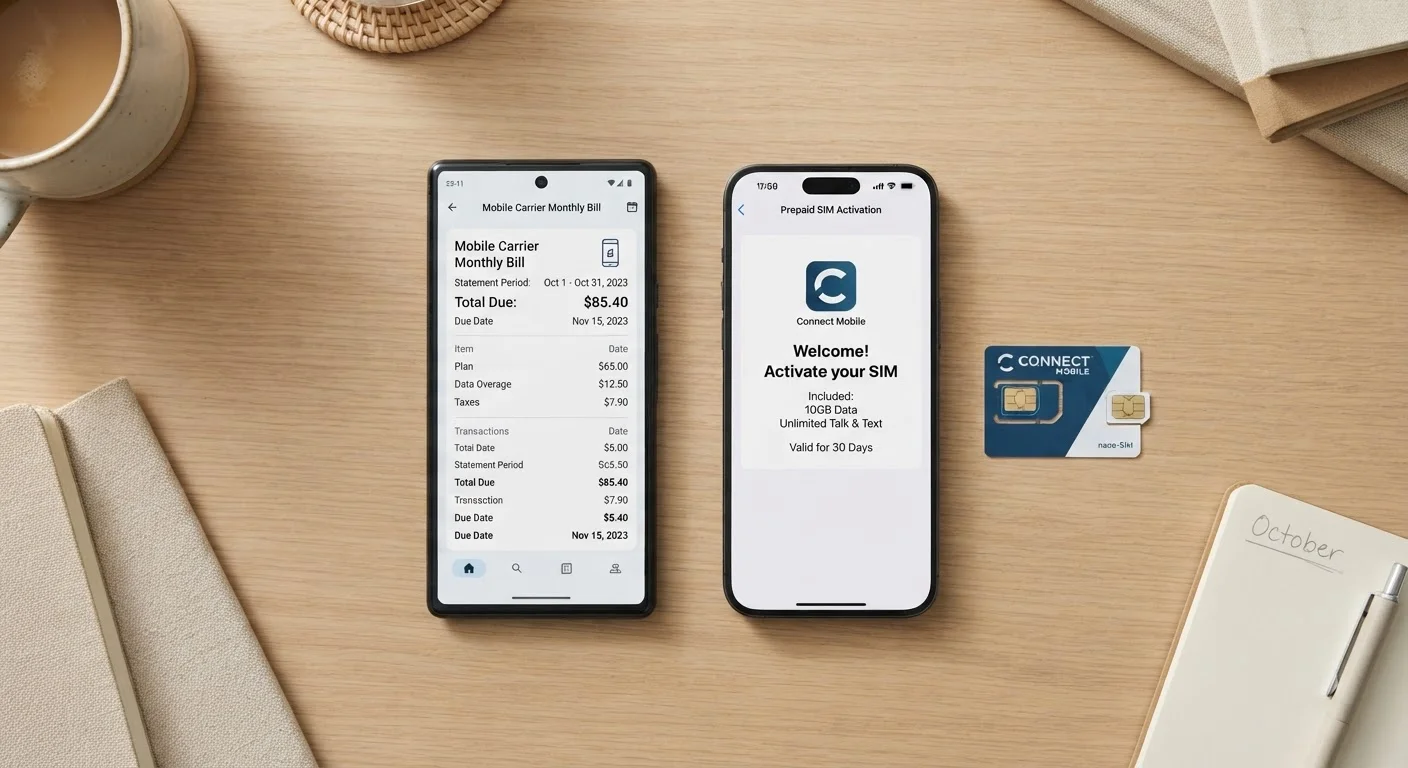
Photo: TrendingResults.net | Discover More, Trend More editorial
Key Takeaways
- Prepaid plans require payment before service; postpaid plans bill you after each monthly cycle.
- Postpaid subscribers often receive higher network priority during congestion under carrier policies.
- Prepaid plans generally offer stronger spending control with no risk of overage surprises.
- Device financing through installment plans is typically limited to postpaid accounts.
- Prepaid customers can switch carriers more freely since no installment balance ties them to a network.
- Both plan types can run on the same physical network infrastructure - coverage maps alone don't tell the full story.
The Core Difference - and Why It's Just the Starting Point
The names say it plainly: prepaid plans require payment before service activates each cycle, while postpaid plans bill you after the month ends. But that timing difference cascades into structural distinctions that affect your network experience, device options, and long-term flexibility.
Before assuming one is universally better, it helps to understand exactly where the two diverge. For a plain-language breakdown of terms you'll encounter while shopping, see the Wireless Plan Glossary - it covers concepts like deprioritization, eSIM, and hotspot data that come up across both plan types.
| Criterion | Prepaid | Postpaid |
|---|---|---|
| Payment timing | Pay before service activates | Billed after monthly cycle |
| Network priority | Often deprioritized at congestion | Generally higher priority |
| Device financing | Rarely available; bring own device | Installment plans widely offered |
| Carrier lock-in | Low - switch anytime | Higher if mid-installment |
| Bundled perks | Limited; varies by plan | Streaming, roaming, cloud common |
| Multi-line discounts | Less common | Standard on family plans |
| Credit check required | No | Typically yes |
| Overage risk | None - service pauses or slows | Possible depending on plan |
Network Priority: Same Towers, Different Treatment
One of the least-marketed differences is network prioritization. Most major carriers operate prepaid brands on the same physical towers as their postpaid flagship service - but that doesn't mean customers receive identical treatment when the network gets crowded.
Carriers commonly apply a policy called deprioritization: when a cell site reaches peak capacity, postpaid subscribers are served first. Prepaid customers on the same network may experience speed reductions during busy periods in dense areas. This doesn't affect everyone equally - rural or suburban users often notice no practical difference - but it's a real structural distinction that carrier coverage maps don't show.
~40%
U.S. wireless subscribers on prepaid
According to CTIA industry data, prepaid accounts have represented roughly 40% of U.S. wireless connections in recent years, reflecting growing adoption beyond budget-focused segments.
24-36 months
Typical device installment plan length
Most major U.S. carriers structure device financing over 24 to 36 monthly payments, tying postpaid customers to their network for the duration.
If consistent speeds in high-traffic areas matter to you, this is worth factoring into your decision alongside the advertised price.
Device Financing and Account Commitments
Device installment plans - where you pay off a phone over 24 to 36 months - are almost exclusively tied to postpaid accounts. This isn't arbitrary: carriers use the ongoing billing relationship to recoup the device subsidy. The practical effect is that postpaid customers who are mid-installment are financially anchored to that carrier until the balance is paid or bought out.
Prepaid customers typically need to bring their own device or buy one outright at activation. That upfront cost can be a barrier, but it also means no device-related lock-in. Our explainer on how installment plans are structured goes deeper on the mechanics - including what happens when you try to leave early.
It's also worth noting that carrier-sold devices sometimes come with software restrictions and SIM locks. The trade-offs of buying through your carrier covers that territory in detail.
Perks, Extras, and What Postpaid Bundles Actually Contain
Premium postpaid tiers frequently bundle third-party streaming subscriptions, international roaming allowances, device protection plans, and cloud storage. These additions have genuine value for some users - but they also inflate the monthly price, and not everyone uses every included perk.
Prepaid plans have grown more competitive in recent years, with some now offering comparable data caps, hotspot access, and even international calling features. The gap has narrowed, though postpaid still generally leads on bundled perks and multi-line family discounts.
The key question isn't which category sounds better - it's whether the extras bundled into a postpaid plan are things you'd actually pay for separately. If you'd use two or three of the included services anyway, the bundled price may make sense. If you'd ignore most of them, you may be paying for packaging you don't need.
Before committing either way, the phone plan shopping checklist walks through coverage, data caps, and contract terms to verify before you sign up.
The content on this site is provided for informational purposes only and should not be considered a substitute for professional advice. While we strive to provide accurate and up-to-date information, we make no guarantees regarding its completeness or accuracy. Always consult a qualified professional for advice specific to your circumstances before making any decisions.