
Tire Blowouts at Highway Speed: What to Do in the Moments That Matter

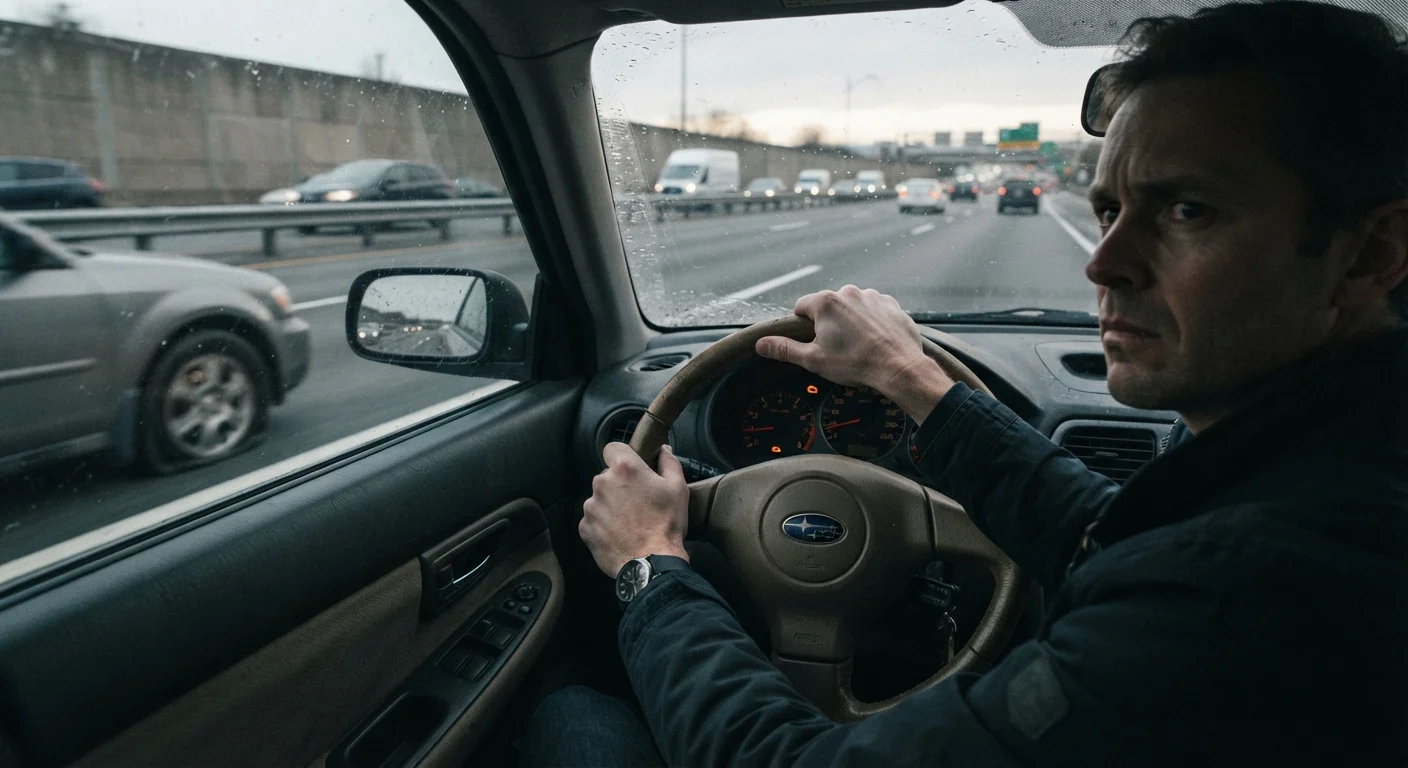
Photo: TrendingResults.net | Discover More, Trend More editorial
Key Takeaways
- Do not brake immediately after a blowout - it can cause the vehicle to spin or roll.
- Briefly maintaining or slightly increasing throttle helps stabilize the vehicle before controlled deceleration.
- Steer firmly and smoothly in your intended direction; avoid sharp corrections.
- Only move to the shoulder after speed has dropped substantially, using turn signals throughout.
- Routine tire pressure and tread checks are the most effective blowout prevention.
Why a Blowout Feels So Disorienting
A tire blowout at highway speed is one of the most startling events a driver can experience. The sudden loud bang, the violent pull to one side, and the vehicle's rapid change in handling all happen within a fraction of a second - before your brain has time to form a deliberate response. That initial instinct to slam the brakes is almost universal, and almost universally wrong.
Understanding what's physically happening helps. When a tire fails catastrophically, one corner of your vehicle loses its contact patch with the road. The remaining three tires now generate unequal friction forces, pulling or pushing the car in the direction of the failed tire. On a front tire, the pull is especially pronounced and immediate. On a rear tire, the vehicle may feel like it's swinging or fishtailing.
This is why preparation matters. Drivers who have mentally rehearsed the correct response - even just by reading this guide - are measurably more likely to execute it under stress. Interstate driving introduces additional complexity: speed, traffic density, and limited margin for error. Our guide to safe interstate driving covers the broader context of high-speed highway hazards.
Your Tire Pressure Monitoring System Is Not Enough
What You Should Do: Step by Step
Follow these steps in order. The sequence matters - executing them out of order, particularly braking too early, significantly increases your risk of losing control.
Resist the urge to brake
Your first instinct will be to hit the brakes. Suppress it. Hard braking immediately after a blowout transfers weight abruptly to the compromised corner of the vehicle, dramatically increasing the chance of a spin or rollover. Keep your foot off the brake pedal entirely for the first few seconds.
Grip the wheel firmly and steer straight
Place both hands on the steering wheel at the 9 and 3 o'clock positions if they aren't already. The vehicle will pull toward the blown tire - apply steady counter-pressure to keep the car tracking straight. Avoid sharp corrections; even a well-intentioned jerk of the wheel can cause overcorrection and a loss of control.
Gently maintain or briefly increase throttle
This step surprises most drivers. Briefly maintaining engine power - or applying a slight, momentary increase in throttle - helps stabilize the vehicle by keeping momentum balanced across all four wheels. It counteracts the drag from the deflated tire. You do not need to accelerate aggressively; just prevent an abrupt drop in speed for two to three seconds while you regain directional control.
Begin gradual, controlled deceleration
Once you have the vehicle tracking straight and feel in control of the steering, ease off the throttle smoothly. Let engine braking slow you down naturally. If you need to apply the brakes, do so gently and progressively - never in a single hard application. Your goal is to lose speed gradually rather than abruptly.
Signal and move to the shoulder
Once your speed has dropped to approximately 30 mph or lower, check your mirrors, activate your turn signal, and begin moving toward the right shoulder (or the left shoulder if that is closer and safer given traffic). Keep your movements smooth and deliberate. Driving on a flat tire for a short distance to reach safety is far preferable to stopping in a live traffic lane.
Activate hazard lights and secure the scene
As soon as you come to a complete stop, turn on your hazard lights. If you carry reflective triangles or road flares, place them 100-300 feet behind the vehicle to warn approaching drivers. Assess whether it is safe to change the tire yourself or whether you should stay in the vehicle and call for roadside assistance.
Once safely stopped on the shoulder, do not attempt to change the tire yourself if traffic is passing at speed. Turn on your hazard lights immediately, stay inside the vehicle if it's safer to do so, and call for roadside assistance. If you must exit, do so from the side away from traffic and move well beyond the guardrail.
Tire blowouts are closely linked to maintenance gaps. Chronically underinflated tires flex excessively, build heat, and eventually fail. See our guide on tire pressure for how to maintain correct inflation - it's one of the simplest things you can do to reduce blowout risk.
Do Not Attempt a Tire Change in Active Traffic
Prevention: Reducing Your Blowout Risk
While no tire is completely failure-proof, the majority of blowouts are preventable with consistent maintenance habits. Tires fail for a predictable set of reasons: sustained underinflation, overloading the vehicle beyond its rated capacity, severe tread wear, road hazard damage (such as hitting a pothole or debris at speed), and manufacturing defects.
Check tire pressure at least once a month and before any long highway trip - always when the tires are cold, as heat from driving temporarily increases pressure readings. Inspect your tread depth regularly; tires with less than 2/32 of an inch of remaining tread have significantly reduced blowout resistance. Uneven wear patterns are also an early warning sign - our article on uneven tire wear explains what those patterns mean and what typically causes them.
Rotate tires on the schedule in your owner's manual (typically every 5,000-7,500 miles), and have them inspected for sidewall cracks or bulges whenever you have other service done. A broader look at preventive vehicle upkeep can be found in our car maintenance hub. Adverse weather conditions can also stress tires; if you drive in rain or ice regularly, our guide on driving in poor conditions is worth reviewing alongside this one.
The content on this site is provided for informational purposes only and should not be considered a substitute for professional advice. While we strive to provide accurate and up-to-date information, we make no guarantees regarding its completeness or accuracy. Always consult a qualified professional for advice specific to your circumstances before making any decisions.