
Lawn Fertilizer Labels Decoded: N-P-K and What the Numbers Mean

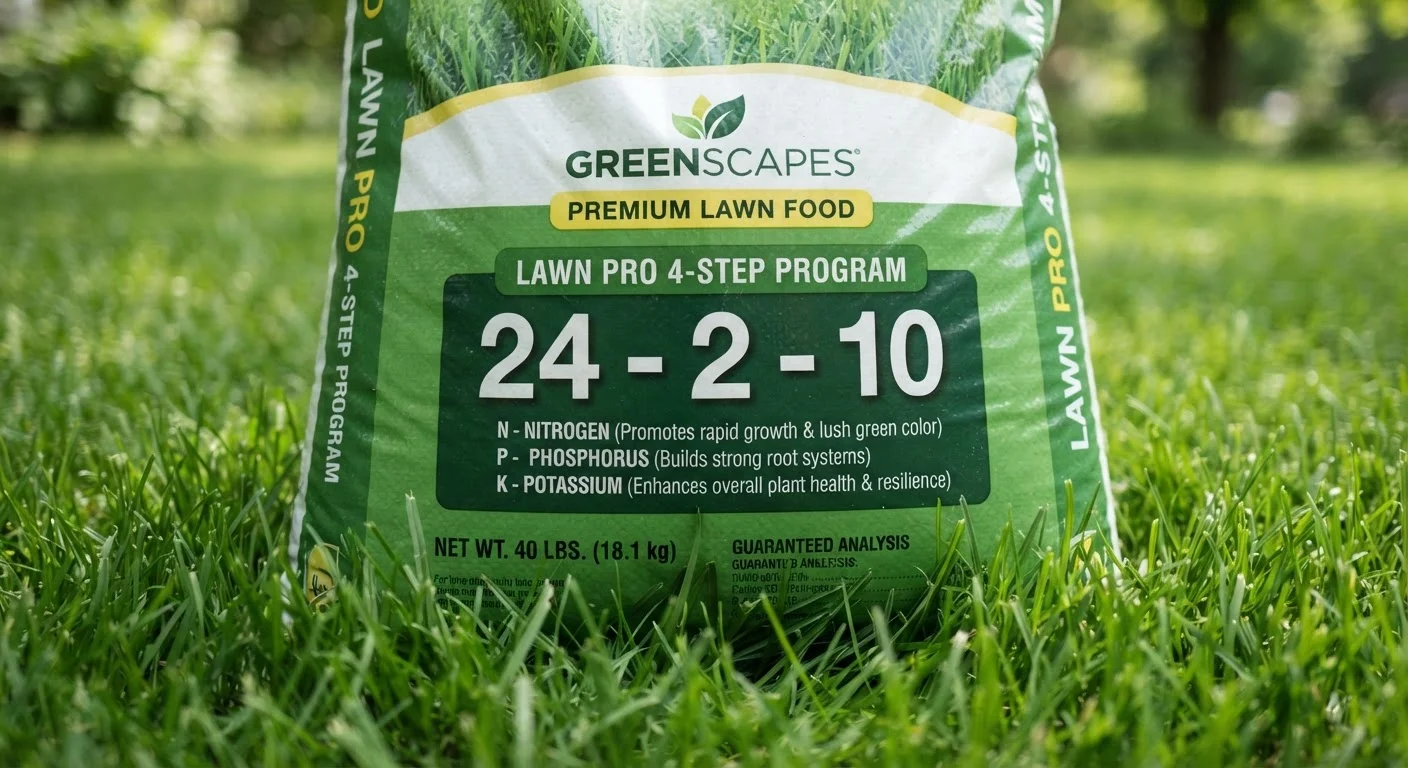
Photo: TrendingResults.net | Discover More, Trend More editorial
Key Takeaways
- The three numbers on a fertilizer bag always appear in N-P-K order: nitrogen, phosphorus, potassium.
- Nitrogen drives leafy green growth; too much can burn grass or promote disease.
- Phosphorus supports root establishment, making it most useful for new lawns or bare patches.
- Potassium strengthens grass against drought, cold, and disease stress.
- A soil test is the most reliable way to determine which ratio your lawn actually needs.
- The numbers are percentages - a 20-lb bag of 10-10-10 contains 2 lbs each of N, P, and K.
Why Those Three Numbers Matter
Flip any fertilizer bag around and you'll find three numbers separated by dashes - perhaps 28-0-6 or 10-10-10. These numbers follow a fixed, universal order: nitrogen (N), phosphorus (P), and potassium (K). Each tells you exactly what percentage of the bag's total weight is made up of that nutrient. The remaining weight is carrier material, added to help spread the product evenly across your lawn.
Reading these numbers is a little like reading a nutrition label on food - you're getting a precise breakdown of what's inside. If you want to go deeper on how percentage-based labeling works across different product types, our piece on reading product labels without getting lost offers a useful comparison framework.
Understanding the ratio helps you match the product to your lawn's actual needs rather than guessing at the store.
What Each Nutrient Does
Nitrogen (N) is the growth driver. It's the primary reason grass turns a deep, rich green and produces the dense leaf blades that give a lawn its lush appearance. Lawns consume nitrogen faster than any other nutrient, which is why most lawn fertilizers are heavily weighted toward it. However, too much nitrogen applied at once can scorch grass blades, stimulate overly rapid growth that weakens plants, and increase disease vulnerability.
Phosphorus (P) focuses its energy below the surface. It fuels root development and supports the energy transfer processes that help young plants establish themselves. This is why starter fertilizers - products designed for newly seeded or sodded lawns - tend to have a noticeably higher middle number. For mature, established turf, phosphorus is often already present in sufficient quantities. In fact, many states now restrict phosphorus use on established lawns due to runoff concerns affecting local waterways.
Potassium (K) works as the lawn's stress defense system. It regulates water movement within grass cells, which improves drought tolerance, cold hardiness, and overall disease resistance. Potassium is especially valuable heading into summer heat or fall cooling - seasons covered well in our month-by-month lawn care reference.
3
Primary macronutrients in every fertilizer label
Nitrogen, phosphorus, and potassium are classified as the three primary macronutrients by soil science standards, as they are required in the largest quantities for plant growth.
~46%
Nitrogen content in urea, a common fertilizer form
Urea is one of the most concentrated and widely used nitrogen sources in lawn fertilizers, reflecting how nitrogen-dense some formulations can be relative to other nutrients.
Every 2-3 years
Recommended soil testing frequency for home lawns
University cooperative extension programs generally recommend testing lawn soil every two to three years to track nutrient levels and adjust fertilization accordingly.
How to Choose the Right Ratio for Your Lawn
The best starting point is always a soil test. Conducted through a local cooperative extension office or a reputable soil laboratory, a soil test reveals not only which nutrients are already present in your soil but also your soil's pH - a factor that controls how effectively grass roots can even absorb nutrients in the first place. Without this baseline, you're effectively guessing.
For established lawns with no known deficiencies, a nitrogen-heavy, low-phosphorus formulation is typically appropriate. Look for ratios like 30-0-6 or 26-3-13, which prioritize the nutrient lawns consume most quickly while avoiding unnecessary phosphorus loading.
For new lawns or bare-patch repairs, a higher middle number helps young roots get established. A ratio like 18-24-6 delivers the phosphorus boost that seedlings need before transitioning to a maintenance formula once the grass is mature.
If your lawn is showing yellowing or thinning that you can't explain, that may be a nutrient signal worth investigating. Our guide on why grass goes yellow covers the full range of possible causes, including nutrient deficiencies.
Always Read the Label's Application Rate
Calculating Actual Nutrient Content
Knowing the ratio is only half the equation - understanding how much actual nutrient you're delivering per application is equally important. The math is straightforward: multiply the bag's total weight by the nutrient percentage as a decimal.
- A 40-lb bag of 20-5-10 contains 8 lbs of nitrogen (40 × 0.20), 2 lbs of phosphate (40 × 0.05), and 4 lbs of potash (40 × 0.10).
- Most lawn care guidance expresses nitrogen needs as pounds of actual nitrogen per 1,000 square feet per application - commonly ranging from 0.5 to 1.0 lbs depending on grass type and season.
Slow-release fertilizers spread that nitrogen delivery over weeks, reducing the risk of burn and cutting down the number of applications needed per season. Quick-release products act faster but require more careful measurement and timing. The label will indicate which type you're working with - look for terms like "slow-release," "controlled-release," or "water-insoluble nitrogen" (WIN).
Pairing the right fertilizer application with practices like aeration can also improve nutrient uptake. See our explainer on how lawn aeration works and when it helps for context on timing these two practices together.
Frequently Asked Questions
The content on this site is provided for informational purposes only and should not be considered a substitute for professional advice. While we strive to provide accurate and up-to-date information, we make no guarantees regarding its completeness or accuracy. Always consult a qualified professional for advice specific to your circumstances before making any decisions.