
Your Lawn Through the Seasons: A Month-by-Month Care Reference

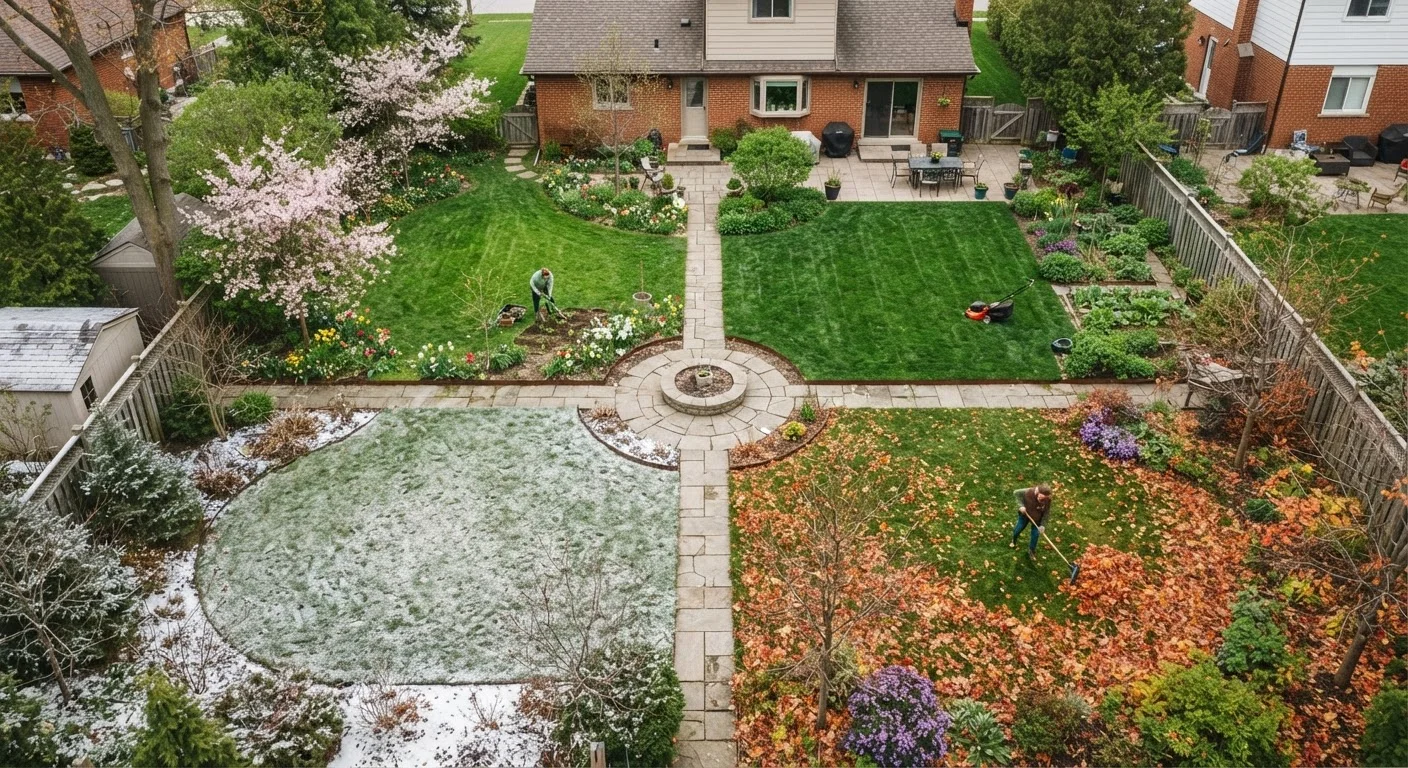
Photo: TrendingResults.net | Discover More, Trend More editorial
Spring (March-May): Wake-Up and Feed
As soil temperatures climb above 50°F, grass breaks dormancy and growth resumes in earnest. Spring is your most important window for setting the season's trajectory.
- March: Rake out matted thatch and dead grass from winter. Test your soil pH before applying anything - most grasses prefer 6.0-7.0.
- April: Apply a balanced starter or slow-release nitrogen fertilizer once consistent growth begins. Overseeding thin patches works best when soil temps are stable. For a full task list, see the Spring Yard Prep Checklist.
- May: Begin regular mowing, never removing more than one-third of the blade height at once. Apply pre-emergent herbicide before soil temps hit 55°F to suppress crabgrass germination.
Understanding your fertilizer bag's three-number ratio helps you choose the right product for spring growth. The N-P-K breakdown on fertilizer labels explains exactly what each nutrient does.
| Cool-season grass active growth | Spring and fall (soil temps 50-65°F) |
| Warm-season grass active growth | Late spring through summer (soil temps 65-80°F) |
| Ideal weekly water depth | ~1 inch, applied in 1-2 sessions |
| Mowing rule of thumb | Never remove more than ⅓ of blade height at once |
| Best aeration timing | Fall for cool-season; late spring for warm-season grasses |
| Soil pH target for most grasses | 6.0-7.0 (University cooperative extension services generally) |
Summer (June-August): Maintain and Protect
Heat and drought put grass under stress. The goal shifts from growth promotion to preservation.
- June: Water deeply and infrequently - roughly 1 inch per week, ideally in early morning to reduce evaporation and fungal risk. Raise mowing height by half an inch to shade root zones.
- July: Avoid fertilizing cool-season grasses (fescue, bluegrass, ryegrass) during peak heat. Warm-season grasses (Bermuda, zoysia) can receive a light nitrogen application mid-summer. Watch for yellowing, which can signal stress, nutrient deficiency, or pest pressure - the guide to yellow grass covers the main causes.
- August: Inspect for grub damage (spongy turf that lifts easily). Treat only if confirmed and if populations are high enough to cause meaningful damage.
If you're using irrigation, efficiency matters. Compare your options with this overview of drip, sprinkler, and soaker systems.
Fall (September-November): Repair and Strengthen
Fall is the single most productive season for lawn improvement, particularly for cool-season grasses. Mild temperatures and consistent moisture give grass ideal conditions to recover and store energy.
- September: Core aerate compacted lawns to improve oxygen and water penetration. Overseed immediately after aeration while soil is open. Not sure if aeration is right for your lawn? The lawn aeration explainer will help you decide.
- October: Apply a high-potassium winterizer fertilizer to support root development and cold hardiness. Continue mowing until growth actually stops - don't quit too early.
- November: Remove fallen leaves promptly; a thick layer blocks light and traps moisture, inviting disease. Cut grass to its lowest recommended height for your grass type before the first hard freeze.
Many quiet long-term problems - compaction, wrong mowing height, off-season feeding - become visible only after years of damage. Review what silently weakens a lawn to catch issues before fall ends.
Thatch
A dense layer of dead grass stems, roots, and debris that accumulates between the soil surface and live grass blades. A thin layer (under ½ inch) is normal; thicker thatch blocks water and nutrient absorption.
Core aeration
A mechanical process that removes small plugs of soil from the lawn, reducing compaction and allowing air, water, and fertilizer to reach grass roots more effectively.
Pre-emergent herbicide
A weed-control product applied to soil before weed seeds germinate. It does not kill existing weeds - timing relative to soil temperature is critical for effectiveness.
Winterizer fertilizer
A fall-applied fertilizer with a high potassium content designed to strengthen grass roots and improve cold tolerance before winter dormancy.
Dormancy
A seasonal state in which grass stops active growth to conserve energy during extreme heat or cold. Dormant grass often appears brown but is not dead.
Overseeding
The practice of spreading grass seed over an existing lawn without tilling, used to fill in thin or bare areas and improve overall turf density.
Winter (December-February): Rest and Plan
Dormant grass doesn't need feeding, watering, or mowing, but it does need protection from a few common hazards.
- December: Avoid walking on frost-covered grass - frozen blades snap easily and leave dead tracks. Store spreaders, mowers, and hoses properly after draining fuel and water lines.
- January: Use this downtime to review last season's results. Order soil test kits, research grass types suited to your climate, and order seed early.
- February: Sharpen mower blades and service equipment before spring demand. In warmer USDA zones (8-10), warm-season grasses may begin stirring as early as late February - watch for the first signs of green before resuming any care.
Winter is also a good time to evaluate your yard's overall design. A thoughtfully planned landscape naturally reduces the year-round maintenance burden - see low-maintenance yard design principles for ideas that pay off season after season.
The content on this site is provided for informational purposes only and should not be considered a substitute for professional advice. While we strive to provide accurate and up-to-date information, we make no guarantees regarding its completeness or accuracy. Always consult a qualified professional for advice specific to your circumstances before making any decisions.