
Garden Irrigation Options: Drip, Sprinkler, and Soaker Systems

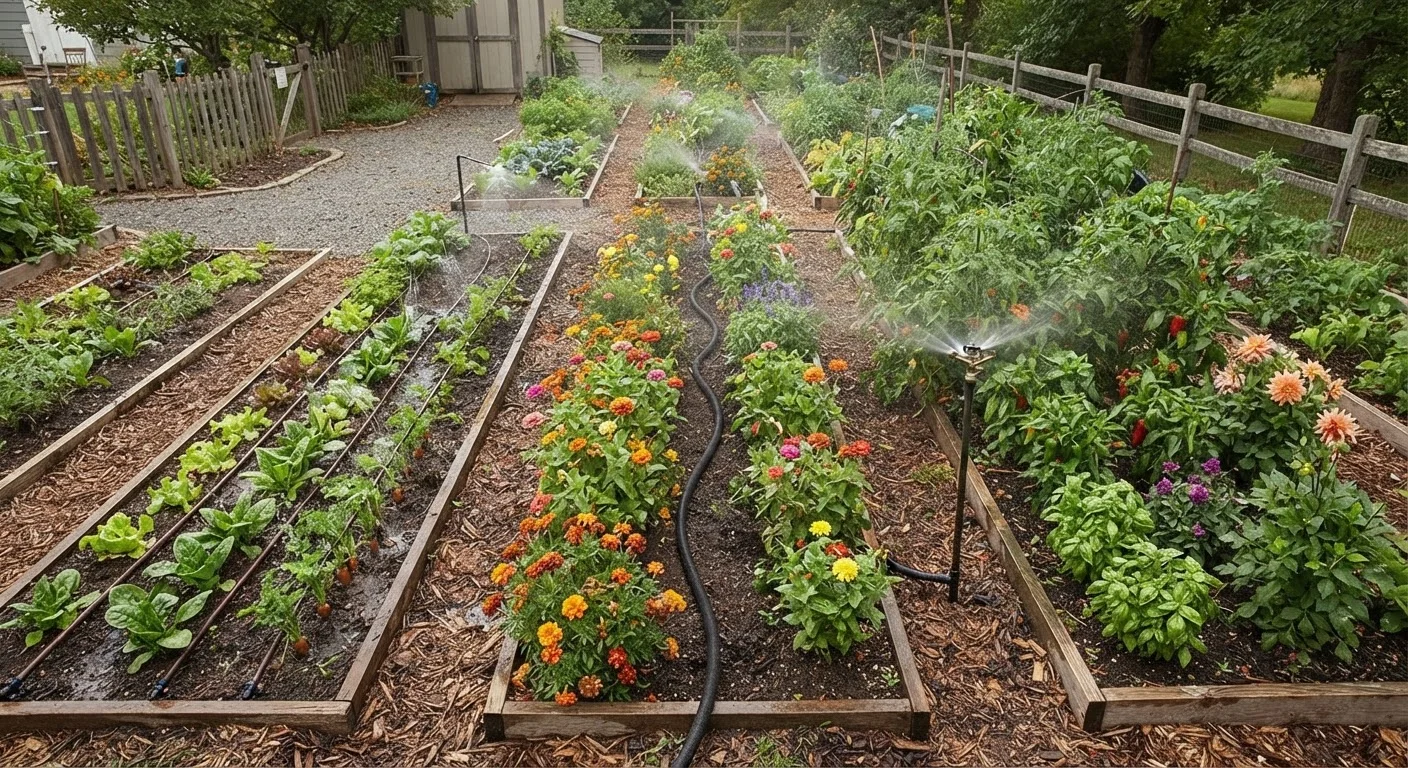
Photo: TrendingResults.net | Discover More, Trend More editorial
Key Takeaways
- Drip irrigation delivers water directly to root zones, making it the most water-efficient option for garden beds.
- Soaker hoses are a lower-cost alternative to drip lines, suited to rows and raised beds with simple layouts.
- Sprinkler systems cover large areas quickly but lose more water to evaporation and wind drift.
- Your plant types, yard layout, and water pressure all influence which system performs best.
- Pairing any irrigation system with mulch can further reduce moisture loss between watering cycles.
Why Your Irrigation Choice Matters
Water is one of the most critical inputs in any garden - and also one of the easiest to misuse. The method you choose to deliver it affects not just plant health but also water bills, weed pressure, and the time you spend managing your yard. Overhead watering can promote fungal disease on foliage; water applied too broadly encourages weeds between rows; and under-watering plant roots causes stress that weakens plants over time.
For gardeners investing in raised beds or native plantings, irrigation efficiency matters even more. See our guide to raised garden beds for a deeper look at how water needs shift when you garden above ground level.
Understanding how drip, soaker, and sprinkler systems each work - and where each falls short - is the first step to building a smarter watering routine.
Drip Irrigation: Precision at the Root Zone
Drip irrigation uses a network of tubing and small emitters to deliver water slowly and directly to the base of individual plants. Water seeps into the soil at a controlled rate, reducing runoff and minimizing evaporation. This targeted delivery means foliage stays dry, which can help limit fungal issues like powdery mildew.
Drip systems are well suited to perennial beds, vegetable gardens, orchards, and any situation where plants are spaced irregularly. They can be connected to timers and pressure regulators for fully automated watering, and emitter flow rates are adjustable to match the needs of different plants within the same system.
The trade-offs are setup complexity and upfront cost. Installing a drip network requires planning - mapping emitter placement, calculating flow rates, and accounting for system pressure. Emitters can also clog over time, especially in areas with hard water, requiring periodic flushing or filter maintenance. Despite the initial investment, drip systems generally pay back over time through reduced water use.
Filter Your Drip System to Prevent Clogging
Soaker Hoses: A Simpler Ground-Level Option
A soaker hose is a porous rubber or recycled-material tube that seeps water slowly along its entire length. You lay it along garden rows or in loops around planting beds, connect it to a standard spigot (often with a timer), and let it weep moisture directly into the soil.
Soaker hoses are easier to set up than drip lines and considerably less expensive. They work particularly well for row crops like tomatoes, peppers, and beans, and pair naturally with raised bed gardening where layouts tend to be linear and compact. Our guide to mulch types explains how covering a soaker hose with a layer of mulch can significantly extend how long moisture stays in the soil.
Limitations include uneven water distribution over long runs - pressure drops toward the far end of the hose, meaning plants closer to the spigot may receive more water. Soaker hoses also degrade faster than hard-line drip systems and typically need replacement every few seasons.
| Drip Irrigation | Soaker Hose | Sprinkler System | |
|---|---|---|---|
| Water Efficiency | Very high - root-zone delivery | High - ground-level seeping | Moderate - evaporation risk |
| Upfront Cost | Moderate to high | Low | High (in-ground); Low (portable) |
| Setup Complexity | Moderate - requires planning | Low - lay and connect | High (in-ground); Low (portable) |
| Best Plant Types | Shrubs, vegetables, perennials | Row crops, raised beds | Lawn, ground cover |
| Foliage Wetting | None | Minimal | Yes - disease risk possible |
| Automation Potential | High - timer/sensor compatible | Moderate - timer compatible | High - smart controller options |
| Durability | Several years with maintenance | 2-4 seasons typical | 10+ years (in-ground) |
Sprinkler Systems: Coverage Over Precision
Sprinkler systems - whether pop-up in-ground heads or portable oscillating units - broadcast water over a wide area. They are the standard choice for irrigating turf and open lawn spaces where ground-level delivery isn't practical. For a full picture of how grass actually responds to watering schedules, see our article on watering deeply vs. watering often.
The appeal of sprinklers is coverage speed and convenience. A single zone can water hundreds of square feet at once. In-ground systems can be zoned, timed, and connected to smart controllers that adjust output based on weather data.
The drawbacks are meaningful. Sprinklers lose a notable proportion of water to evaporation, especially during warm or windy conditions. Overhead watering also wets plant foliage, which can increase disease risk in dense garden beds. They are less efficient per gallon delivered than drip or soaker systems, and running them at midday in summer can waste a significant share of output before it reaches roots.
For yards combining lawn and planting areas, a hybrid approach - sprinklers for turf zones, drip or soaker for beds - often delivers the best balance. This kind of integrated thinking fits well into low-maintenance yard design principles.
Matching Your System to Your Yard
Before choosing a system, assess a few practical factors:
- Plant type and spacing: Widely spaced shrubs or vegetables benefit from targeted drip emitters. Dense row plantings suit soaker hoses. Lawns need sprinklers.
- Water pressure: Drip systems require regulated low pressure (typically 25-30 PSI); soaker hoses operate in a similar range. Standard sprinklers need higher pressure. Check your home's supply before purchasing equipment.
- Layout complexity: Curved beds with mixed plantings favor drip systems. Simple rectangular rows are well served by soaker hoses. Large, open flat areas make sprinklers practical.
- Budget and time: Soaker hoses cost least upfront and are quickest to install. Drip systems cost more and take longer to design but require less seasonal intervention. In-ground sprinklers carry the highest installation cost.
Whichever system you choose, pairing it with a seasonal watering plan improves results. Our month-by-month lawn care reference can help you align irrigation schedules to seasonal demand rather than running on a fixed calendar year-round.
The content on this site is provided for informational purposes only and should not be considered a substitute for professional advice. While we strive to provide accurate and up-to-date information, we make no guarantees regarding its completeness or accuracy. Always consult a qualified professional for advice specific to your circumstances before making any decisions.