
Things That Weaken a Lawn Over Time Without Obvious Warning Signs

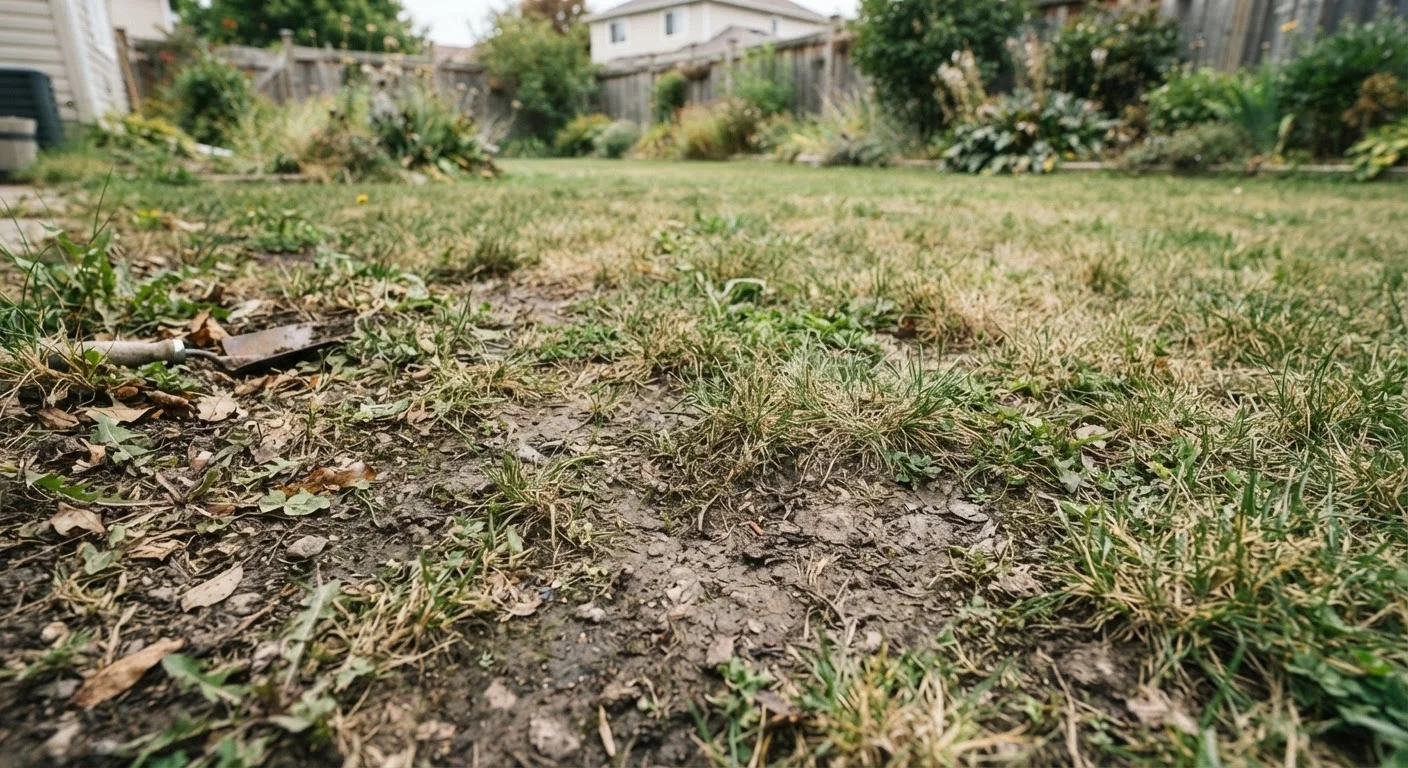
Photo: TrendingResults.net | Discover More, Trend More editorial
Key Takeaways
- Soil compaction is one of the most common and least visible causes of long-term lawn decline.
- Mowing too short repeatedly stresses grass roots and opens the door to weeds and disease.
- Fertilizing at the wrong time of year can feed weeds, burn grass, or deplete root reserves.
- Inconsistent watering habits - either too shallow or too frequent - train roots to stay near the surface.
- Thatch buildup beyond half an inch begins to block water, air, and nutrients from reaching roots.
- Off-season foot traffic on dormant or wet grass can cause lasting structural damage to the turf.
Why Lawn Problems Often Go Unnoticed Until It's Too Late
A lawn rarely collapses overnight. More often, it thins gradually - losing density across a season or two before bare patches, weed pressure, or disease become obvious. By the time a homeowner notices something is wrong, the root cause has typically been compounding for months.
The frustrating reality is that many of the habits that weaken lawns seem harmless or even helpful on the surface. Mowing frequently feels like good upkeep. Watering every day sounds generous. Fertilizing in fall feels proactive. But timing, depth, and frequency all matter enormously - and getting those wrong quietly chips away at turf health.
Understanding what's happening beneath the surface is the first step. For a broader picture of what your lawn actually needs throughout the year, see our month-by-month lawn care reference.
Mowing grass too short, too often - a practice sometimes called scalping.
Watering too shallowly and too frequently, which keeps roots near the surface.
Allowing thatch to build up beyond half an inch without addressing it.
Fertilizing at the wrong time of year for the grass type.
Walking or parking on dormant or saturated grass, which compacts the soil and damages crown tissue.
Ignoring soil pH and assuming lawn problems are always a feeding issue.
What to Watch For and How to Course-Correct
Most of these mistakes don't announce themselves with dramatic symptoms. Instead, look for early indicators: slower growth than neighboring lawns, slightly off-color turf, increased weed pressure in previously clean areas, or grass that wilts faster than it should after a dry week.
½ inch
Maximum healthy thatch layer thickness
University extension programs consistently note that thatch layers exceeding half an inch begin to impede water infiltration and root development.
⅓ rule
Maximum grass height to remove in one mow
Turfgrass specialists widely recommend never cutting more than one-third of the blade in a single session to avoid stressing the plant's photosynthetic capacity.
Soil compaction deserves particular attention because it amplifies every other problem. When soil particles are pressed tightly together - from foot traffic, heavy equipment, or clay-heavy composition - water pools on the surface rather than penetrating, roots can't expand, and nutrient uptake becomes inefficient. Core aeration is one of the most effective ways to address compaction, though timing and turf type affect how much benefit you'll actually see.
Yellow or pale patches can have overlapping causes, making them easy to misread. Our guide on why grass goes yellow walks through the most common culprits and how to distinguish between them.
Don't Assume Yellowing Means the Lawn Needs More Fertilizer
If your lawn consistently struggles despite reasonable care, it may be worth considering whether the current design is working against you. Low-maintenance yard design can reduce the workload significantly while supporting healthier turf over the long term.
The content on this site is provided for informational purposes only and should not be considered a substitute for professional advice. While we strive to provide accurate and up-to-date information, we make no guarantees regarding its completeness or accuracy. Always consult a qualified professional for advice specific to your circumstances before making any decisions.